Mona Lisa (short version)i: Great Art Explained
TL;DR
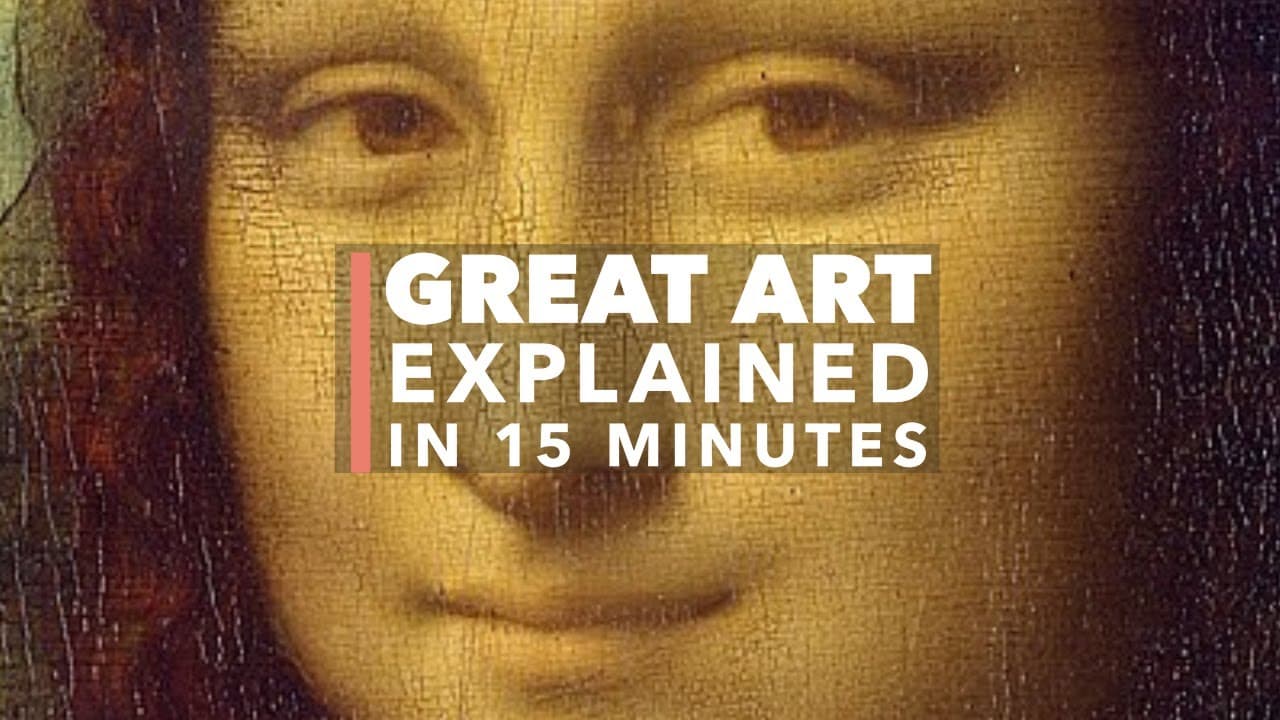
The Mona Lisa is a quiet yet contemplative portrait, representing the epitome of psychological depth and artistic mastery.
Transcript
Some people are dissapointed when they first see the most famous painting in the world. At first glance it doesn't have the "wow factor" that other paintings in the Louvre have. It lacks drama. But if we can ignore the hundreds of people that surround her. If we can turn down the volume and just push the "off button" for a second. What we actuall... Read More
Key Insights
- 🤭 The Mona Lisa is not the typical "wow factor" painting but rather a quiet and contemplative psychological portrait.
- 🙂 Leonardo's techniques, such as glazes, invisible brushstrokes, and a blend of light and dark contrasts, contributed to the painting's depth and luminosity.
- 🍉 The portrait deviates from traditional norms in terms of clothing, pose, gaze, and background, showcasing Leonardo's revolutionary approach.
- 😀 Mona Lisa's enigmatic smile is a result of how the human visual system functions, with our central and peripheral vision perceiving different aspects of her expression.
Install to Summarize YouTube Videos and Get Transcripts
Explore YouTube Video Summarizer or Get YouTube Transcript Extractor
Questions & Answers
Q: What techniques did Leonardo da Vinci use to create depth and luminosity in the Mona Lisa?
Leonardo used glazes with a small amount of pigment mixed with oil, allowing him to control the darkness and create a unifying effect. The lead white undercoat reflected light, adding depth and brightness to the painting.
Q: Why did Leonardo choose to depict Mona Lisa without extravagant clothing or jewelry?
By stripping away high-status symbols, Leonardo ensured that the viewer's attention remains on Mona Lisa's face. He wanted to paint a portrait that wasn't distracted by superficial elements, focusing solely on the subject's expression.
Q: How did Leonardo's depiction of Mona Lisa's pose and expression deviate from traditional portraiture?
Leonardo revolutionized portraiture by adopting a three-quarter length pose, filling the frame with the subject, and presenting her in a more relaxed and self-assured manner. Mona Lisa's direct gaze and content expression defied typical portrayals of women of that era.
Q: What visual techniques did Leonardo use to create a sense of movement and connection in the painting?
Leonardo employed aerial perspective, where the background becomes more blurred and out of focus, creating depth. He also subtly skewed the horizon, creating the illusion of slight movement in the figure, enhancing the overall dynamism of the piece.
Key Insights:
- The Mona Lisa is not the typical "wow factor" painting but rather a quiet and contemplative psychological portrait.
- Leonardo's techniques, such as glazes, invisible brushstrokes, and a blend of light and dark contrasts, contributed to the painting's depth and luminosity.
- The portrait deviates from traditional norms in terms of clothing, pose, gaze, and background, showcasing Leonardo's revolutionary approach.
- Mona Lisa's enigmatic smile is a result of how the human visual system functions, with our central and peripheral vision perceiving different aspects of her expression.
- The painting represents the accumulation of Leonardo's knowledge, blending art, science, and philosophy to create a profound reflection on humanity.
Summary & Key Takeaways
-
The Mona Lisa is a masterpiece painted by Leonardo da Vinci, showcasing his expertise in various fields like painting, engineering, and philosophy.
-
Leonardo utilized innovative techniques such as glazes, invisible brushstrokes, and a blend of light and dark contrasts to bring the painting to life.
-
The painting deviates from traditional portrait norms by focusing on the subject's face, employing a pyramid composition, and featuring a unique landscape background.
Read in Other Languages (beta)
Share This Summary 📚
Summarize YouTube Videos and Get Video Transcripts with 1-Click
Try YouTube Summary with ChatGPT & Claude or YouTube Transcript Generator
Explore More Summaries from Great Art Explained 📚
Summarize YouTube Videos and Get Video Transcripts with 1-Click
Try YouTube Summary with ChatGPT & Claude or YouTube Transcript Generator