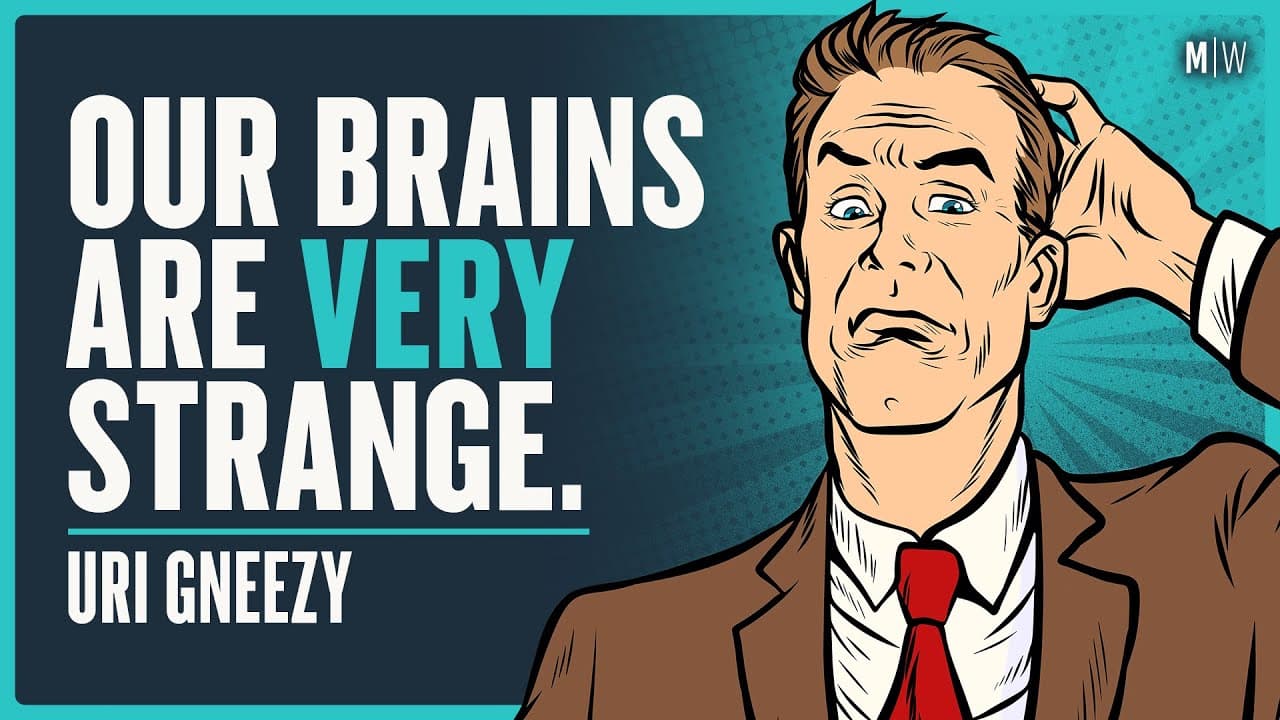
How To Understand Psychological Incentives - Uri Gneezy
TL;DR
Incentives play a crucial role in shaping human behavior, going beyond just monetary rewards and encompassing various factors such as status and signals. However, mixed signals and short-term goals often hinder the effectiveness of incentives.
Transcript
we always go to vacations when it's crowded and it costs much more because that's when the kids are off school so parents took their kids away from school either the week before or the week after it was much cheaper and much nicer vacation schools didn't like it what did they do put a fine of 60 pounds of parents coming late that mistake because no... Read More
Key Insights
- 💍 Incentives can be a powerful tool in shaping behavior by providing motivation to individuals who may not otherwise engage in certain actions.
- 🧑🏭 Monetary rewards are just one type of incentive, and factors such as status, recognition, and meaningful work can also play a significant role in motivating individuals.
- 🥺 Mixed signals, where desired behavior is encouraged but not rewarded or punished, can lead to confusion and reduce the effectiveness of incentives.
- 🍉 Short-term goals often take precedence over long-term goals, highlighting the challenge of balancing immediate rewards with long-term outcomes.
- 🍉 Designing incentives that align with long-term goals requires an understanding of individual preferences and effective communication to emphasize the benefits of sustained actions.
Install to Summarize YouTube Videos and Get Transcripts
Explore YouTube Video Summarizer or Get YouTube Transcript Extractor
Questions & Answers
Q: What types of incentives can motivate people, besides monetary rewards?
Incentives go beyond monetary rewards and can include various factors such as status, recognition, opportunities for growth, meaningful work, flexible schedules, and autonomy. People are motivated by different factors, and understanding individual preferences is crucial in designing effective incentives.
Q: How can mixed signals impact the effectiveness of incentives?
When desired behavior is encouraged but not rewarded or punished, it sends mixed signals and can confuse individuals. This inconsistency decreases the effectiveness of incentives as people become uncertain about what actions will be truly rewarded or discouraged.
Q: Why do short-term goals tend to take precedence over long-term goals?
Short-term goals often offer more immediate rewards, and individuals are naturally inclined to prioritize instant gratification. Balancing long-term goals with short-term results is challenging, as individuals tend to undervalue delayed benefits and overemphasize immediate gains when making decisions.
Q: How can incentives be designed to align with long-term goals?
To align incentives with long-term goals, it is important to encourage behavior that considers the bigger picture. This can be achieved by emphasizing the long-term benefits, creating feedback loops, providing support and resources, and setting achievable milestones to track progress towards the desired outcomes.
Summary & Key Takeaways
-
Incentives are powerful tools that can motivate individuals to take actions they wouldn't normally do, but economists often overlook the complexity of human behavior and the role of signals in decision-making.
-
Mixed signals, where desired behavior is encouraged but punished or not rewarded, can lead to confusion and hinder the effectiveness of incentives.
-
Short-term goals often take precedence over long-term goals, as individuals prioritize immediate rewards and face challenges in bridging the gap between short-term results and long-term goals.
Read in Other Languages (beta)
Share This Summary 📚
Summarize YouTube Videos and Get Video Transcripts with 1-Click
Try YouTube Summary with ChatGPT & Claude or YouTube Transcript Generator
Explore More Summaries from Chris Williamson 📚






Summarize YouTube Videos and Get Video Transcripts with 1-Click
Try YouTube Summary with ChatGPT & Claude or YouTube Transcript Generator