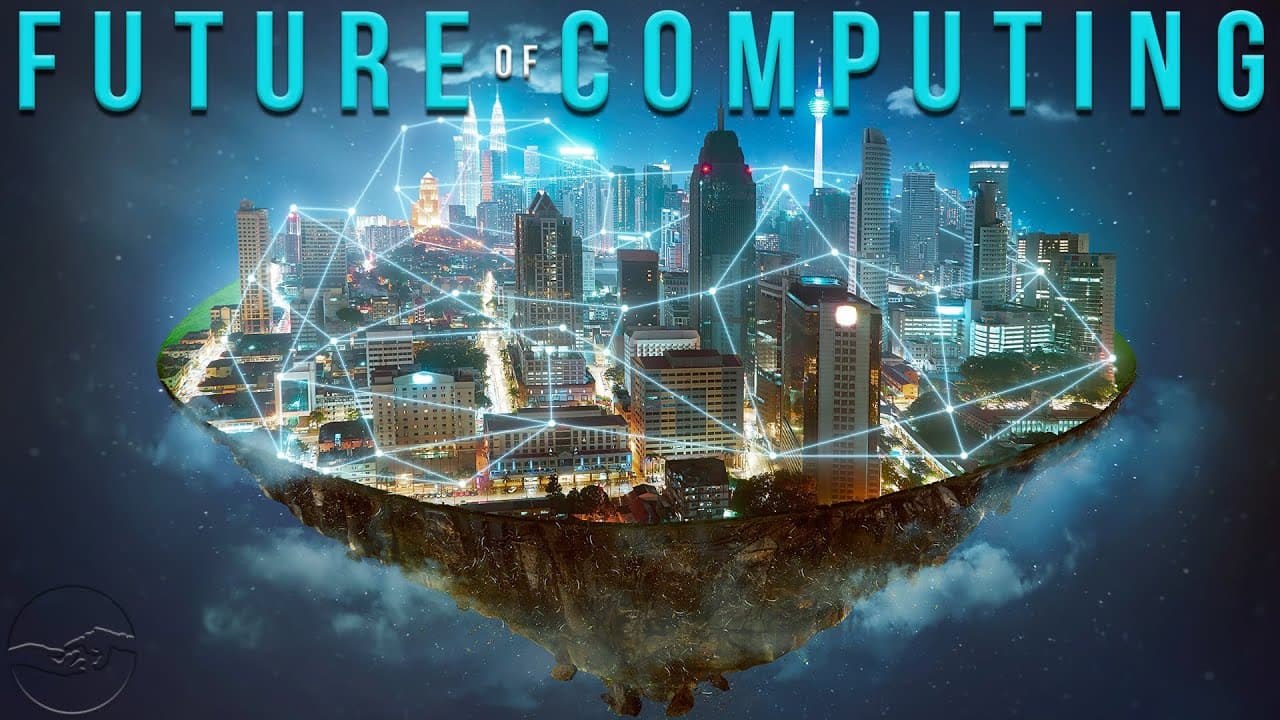
The Future of Computing
TL;DR
Evolution of computing from tabulating to cognitive era culminating in infinite computing with diverse technologies.
Transcript
Hi, thanks for tuning into Singularity Prosperity. This video is the twelfth and final in a multi-part series discussing computing. In this video, we'll be discussing the future of computing, more specifically - the evolution of the field of computing and extrapolating forward based on topics we discussed so far in this series! There have been thre... Read More
Key Insights
- 💢 Evolution of computing from tabulating to cognitive era with focus on learning from data.
- 😶🌫️ Infinite computing utilizes heterogeneous architecture and cloud resources.
- 💿 Diverse technologies like optical computing, quantum computing, and neuromorphic architectures enhance computing capabilities.
- 📌 Ubiquitous computing enables seamless computing across various devices and locations.
- 🔒 Centralized infinite computing trades off accessibility for potential privacy and security concerns.
- ✊ Future computing trends include AI integration, new architectures, and increased computing power.
- ⛽ Rapid advancements in computing technologies fuel the Fourth Industrial Revolution.
Install to Summarize YouTube Videos and Get Transcripts
Explore YouTube Video Summarizer or Get YouTube Transcript Extractor
Questions & Answers
Q: What are the three primary eras in the evolution of computing?
The three primary eras are the tabulating era, programming era, and cognitive era, each focusing on different aspects of computing evolution.
Q: How does the cognitive era differ from the programming era?
In the cognitive era, machines learn from data to execute tasks, while in the programming era, machines follow pre-programmed instructions to perform actions.
Q: What is infinite computing, and how does it relate to the cloud?
Infinite computing refers to utilizing cloud computing with various technologies like CPUs, GPUs, FPGAs, and ASICs in a heterogeneous architecture for maximum performance and efficiency.
Q: How does infinite computing impact individual users and devices?
Infinite computing personalizes computing for users and optimizes tasks based on their needs. It also influences the design and functionality of edge devices by pairing them with cloud resources.
Summary & Key Takeaways
-
Computing has evolved through three eras: tabulating, programming, and cognitive.
-
Transition to the cognitive era allows machines to learn from data rather than follow pre-programmed instructions.
-
Infinite computing, powered by cloud computing and heterogeneous architecture, is the future of computing.
Read in Other Languages (beta)
Share This Summary 📚
Summarize YouTube Videos and Get Video Transcripts with 1-Click
Try YouTube Summary with ChatGPT & Claude or YouTube Transcript Generator
Explore More Summaries from Futurology — An Optimistic Future 📚

Summarize YouTube Videos and Get Video Transcripts with 1-Click
Try YouTube Summary with ChatGPT & Claude or YouTube Transcript Generator