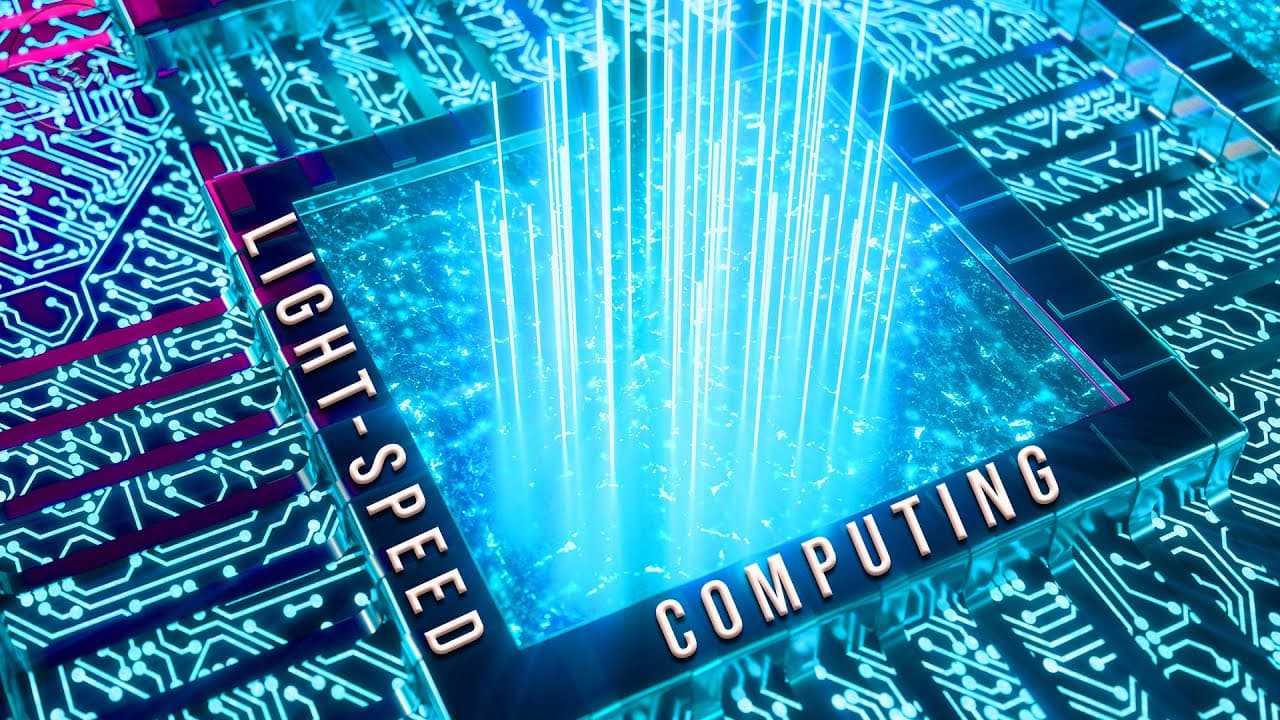
What Is Optical Computing | Photonic Computing Explained (Light Speed Computing)
TL;DR
Optical computing utilizes light for data manipulation, increasing computing speed and security while reducing power consumption.
Transcript
Hi, thanks for tuning into Singularity Prosperity. This video is the eighth in a multi-part series discussing computing and the first discussing non-classical computing. In this video, we'll be discussing what optical computing is and the impact it will have on the field of computing. The speed of computation is limited by two factors: how fast inf... Read More
Key Insights
- 🙂 Optical computing utilizes light for data manipulation, offering increased computing speed and reduced power consumption.
- 🚚 Photonics in optical computing promises to reduce latency to femtoseconds and deliver significant performance boosts.
- 💻 Optical co-processors like the Optalysys system turbocharge existing computer setups, transforming them into high-performance systems.
- 😫 Optical RAM, with memory latencies in picoseconds, is set to revolutionize memory speeds.
- 👨🔬 Research into optoelectronic devices combines electron and photon-based computation for enhanced computing capabilities.
- 😶🌫️ Silicon photonics, with transfer rates up to 1.2 terabytes per second, will improve cloud computing speeds and consumer-level data transfer.
- 🙂 Optical computing will lead to computing at the speed of light, producing massive performance and efficiency gains.
Install to Summarize YouTube Videos and Get Transcripts
Explore YouTube Video Summarizer or Get YouTube Transcript Extractor
Questions & Answers
Q: How does optical computing differ from classical computing?
Optical computing utilizes light for data manipulation instead of electrons, allowing for faster computations and increased security.
Q: What are the benefits of optical computing in terms of power consumption?
Optical computing requires much less power to excite photons compared to electrons, leading to reduced power consumption.
Q: How does optical computing tackle issues related to data management and security?
Optical computing processes data while it is in motion, reducing data exposure points and enhancing system security.
Q: What are some key initiatives in optical computing research and development?
Initiatives like the Optalysys optical co-processor and optical RAM promise to revolutionize computing performance and memory speeds.
Summary & Key Takeaways
-
Optical computing uses light for data transfer and manipulation, increasing computing speed and bandwidth significantly.
-
By processing data optically, without the delay induced by switches, optical computing allows for instant computations.
-
Optical computing presents benefits such as increased parallelism, reduced power consumption, and heightened security compared to classical computing.
Read in Other Languages (beta)
Share This Summary 📚
Summarize YouTube Videos and Get Video Transcripts with 1-Click
Try YouTube Summary with ChatGPT & Claude or YouTube Transcript Generator
Explore More Summaries from Futurology — An Optimistic Future 📚




Summarize YouTube Videos and Get Video Transcripts with 1-Click
Try YouTube Summary with ChatGPT & Claude or YouTube Transcript Generator