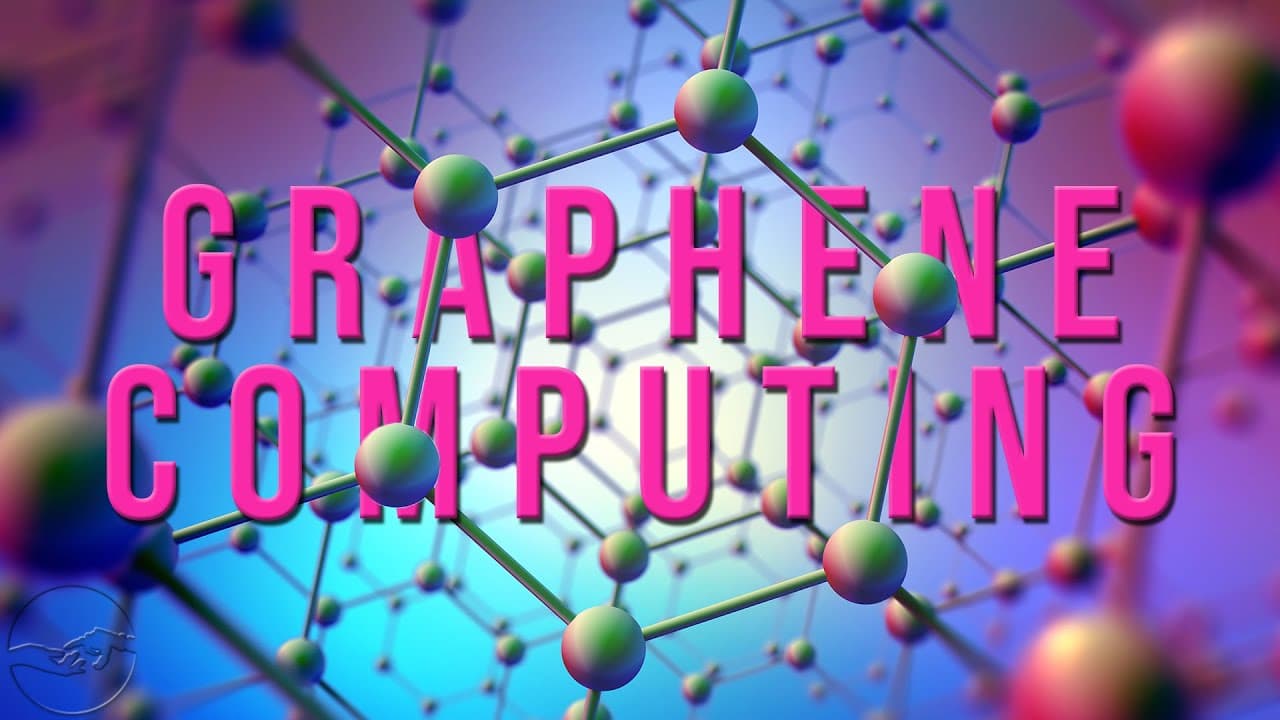
Graphene Computing Explained (Making Computers Faster)
TL;DR
Computing performance has grown exponentially with the introduction of new measurement units, but faces challenges due to physical limitations and is expected to shift towards new materials and 3D integrated circuits for future advancements.
Transcript
Hi, thanks for tuning into Singularity Prosperity. This video is the fourth in a multi-part series discussing computing. In this video, we'll be discussing computing performance and efficiency, as well as how the computer industry plans on maximizing them. The performance of a computer isn't measured by its speed but by the operations it can do. Th... Read More
Key Insights
- 🥺 Computing performance is measured in FLOPs, with notable advancements leading to PetaFLOPs and the expectation of achieving ExaFLOPs by 2020.
- ☠️ The end of Dennard Scaling halted clock rate increases, prompting a focus on transistor miniaturization for performance enhancement.
- 👶 Future computing advancements may rely on new materials like Graphene and Carbon Nanotubes as well as 3D integrated circuits to overcome current limitations.
- 👶 DARPA is investing in 3D integrated circuits and new materials like Graphene to drive paradigm shifts in computing.
- 🉐 Graphene offers superior properties for energy efficiency and performance gains, potentially revolutionizing consumer electronics and the Internet of Things.
- 💨 Research into new materials and computing architectures is paving the way for future developments in the field of computing.
- 👶 The shift towards hardware and software optimization through parallelism and new algorithms is driving innovation in the computing industry.
Install to Summarize YouTube Videos and Get Transcripts
Explore YouTube Video Summarizer or Get YouTube Transcript Extractor
Questions & Answers
Q: What is the significance of FLOPs in measuring computing performance?
FLOPs, or floating-point operations per second, reflect the speed and efficiency of computing devices in executing instructions, showcasing the evolution of computing performance over time.
Q: Why did clock rates plateau in the early 2000s?
Clock rates stopped increasing due to Dennard Scaling reaching its limit, leading to excessive power consumption and heat generation as transistors became smaller, necessitating a shift towards alternative strategies for performance enhancement.
Q: How do new materials like Graphene and Carbon Nanotubes promise to revolutionize computing?
Graphene and Carbon Nanotubes offer higher thermal and electrical conductivity than silicon, potentially enabling faster clock rates and significant energy efficiency gains, paving the way for advanced computing capabilities.
Q: What role do 3D integrated circuits play in improving computing performance?
3D integrated circuits stack transistors vertically, enhancing memory bandwidth and overcoming the memory wall bottleneck, resulting in substantial boosts in performance and energy efficiency across various computing tasks.
Summary & Key Takeaways
-
The video discusses the exponential growth in computing performance measured in FLOPs, reaching PetaFLOPs in 2016 and expected to achieve ExaFLOPs by 2020.
-
With the end of Dennard Scaling, clock rates plateaued due to power and heat issues, leading to a focus on transistor miniaturization for enhanced performance and efficiency.
-
Future advancements in computing may rely on new materials like Graphene and Carbon Nanotubes, as well as 3D integrated circuits to overcome current limitations.
Read in Other Languages (beta)
Share This Summary 📚
Summarize YouTube Videos and Get Video Transcripts with 1-Click
Try YouTube Summary with ChatGPT & Claude or YouTube Transcript Generator
Explore More Summaries from Futurology — An Optimistic Future 📚



Summarize YouTube Videos and Get Video Transcripts with 1-Click
Try YouTube Summary with ChatGPT & Claude or YouTube Transcript Generator