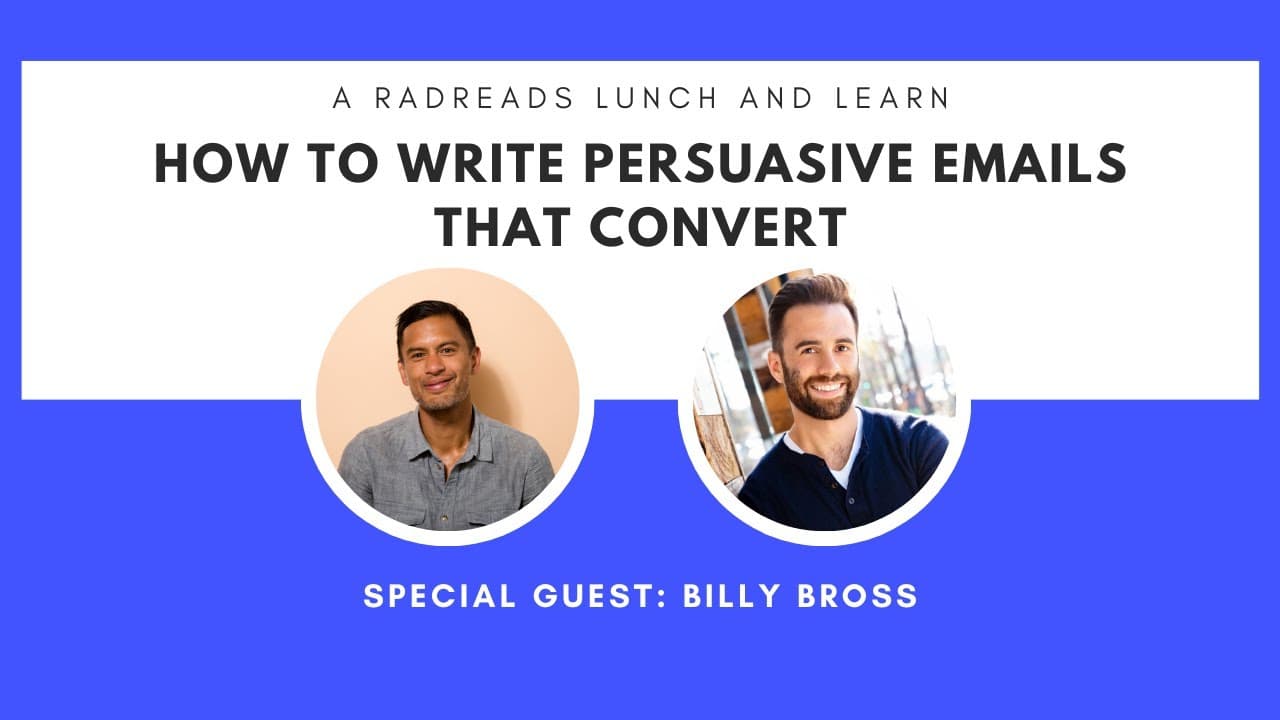
How to Write Persuasive Emails That Convert
TL;DR
To write persuasive emails that convert, focus on understanding your audience's emotions and beliefs, and use storytelling to engage them. Maintain frequent communication to build trust and familiarity, making yourself a 'welcome guest' in their inbox. Ensure your copy is action-oriented, using compelling language and clear calls to action to drive responses.
Transcript
alright hey everyone alright and Kay looks like you have a co-hosting powers now I'm alright alright well I'll let you go ahead awesome I'm just gonna do just a quick scan of our of our participants see some I see Karen I see Praveen Sean Zack we got a we got a good good little crew and the people are trickling in so let me just close up this windo... Read More
Key Insights
- The transition from technical writing to persuasive copywriting can be challenging but is essential for effective marketing.
- Understanding your audience's beliefs and emotions is crucial to crafting compelling marketing messages.
- Email marketing remains a powerful tool due to its direct nature and the ability to create personalized connections.
- Storytelling is a potent method for conveying messages and engaging audiences on an emotional level.
- Creating curiosity and using specific, vivid language can enhance the effectiveness of marketing emails.
- Frequent communication helps build familiarity and trust with your audience, making you a 'welcome guest' in their inbox.
- Using metaphors and relatable analogies can simplify complex ideas and make them more accessible to your audience.
- Repurposing content across different platforms can maximize the impact and reach of your marketing efforts.
Install to Summarize YouTube Videos and Get Transcripts
Explore YouTube Video Summarizer or Get YouTube Transcript Extractor
Questions & Answers
Q: What is the biggest mistake logical thinkers make in copywriting?
Logical thinkers often mistakenly believe their audience is different and relies solely on logic. However, all audiences buy based on emotion and justify with logic. Recognizing this can help in crafting more emotionally engaging and persuasive copy.
Q: How can someone new to storytelling in marketing begin implementing it?
Start by collecting personal stories, anecdotes, and even news stories that resonate with your message. Create a story arc or folder to organize these narratives. Use them to convey lessons or emotions, making your marketing more relatable and engaging.
Q: What is the 'welcome guest' strategy in email marketing?
The 'welcome guest' strategy involves being a familiar and trusted presence in your audience's inbox. By consistently providing value and engaging content, you become a welcome presence rather than an annoying intrusion, building trust and loyalty over time.
Q: Why is email marketing considered less risky than other platforms?
Email marketing is less risky because it is not owned by any social media company, meaning you have full control over your email list. Unlike social media accounts, which can be banned or shadowbanned, your email list is a stable asset that you can always rely on.
Q: How can you create a curiosity gap in email subject lines?
A curiosity gap can be created by using numbers, specific words like 'this' or 'these,' and hinting at benefits or information to be revealed. This approach encourages recipients to open the email to satisfy their curiosity.
Q: What role do power words play in copywriting?
Power words add action and emotion to your copy, creating vivid imagery and encouraging engagement. By using specific and strong verbs, you can make your messages more compelling and memorable, leading to higher conversion rates.
Q: How can storytelling enhance email marketing?
Storytelling enhances email marketing by engaging the audience's emotions and making messages more relatable. By embedding lessons within narratives, you can convey complex ideas more effectively and create a lasting impact on your readers.
Q: What is the importance of understanding customer beliefs in marketing?
Understanding customer beliefs is crucial as it helps identify potential objections or misconceptions that could hinder a sale. By addressing these beliefs through targeted messaging, you can effectively persuade and convert your audience.
Summary & Key Takeaways
-
Billy Bross shares insights on transitioning from technical writing to persuasive email copywriting, emphasizing the importance of understanding audience emotions and beliefs.
-
He highlights the enduring power of email marketing, advocating for frequent and personalized communication to build trust and familiarity with your audience.
-
Bross discusses the effectiveness of storytelling in marketing, using vivid language and metaphors to create relatable and engaging messages that drive action.
Read in Other Languages (beta)
Share This Summary 📚
Summarize YouTube Videos and Get Video Transcripts with 1-Click
Try YouTube Summary with ChatGPT & Claude or YouTube Transcript Generator
Explore More Summaries from Khe Hy - RadReads 📚






Summarize YouTube Videos and Get Video Transcripts with 1-Click
Try YouTube Summary with ChatGPT & Claude or YouTube Transcript Generator