How Wells & Aquifers Actually Work
TL;DR
Explores groundwater engineering, well construction, and aquifer interaction.
Transcript
It is undoubtedly unintuitive that water flows in the soil and rock below our feet. A 1904 Texas Supreme Court case famously noted that the movement of groundwater was so “secret, occult and concealed” that it couldn’t be regulated by law. Even now, the rules that govern groundwater in many places are still well behind our collective knowledge ... Read More
Key Insights
- Groundwater is often misunderstood, with misconceptions about its presence and movement in underground reservoirs.
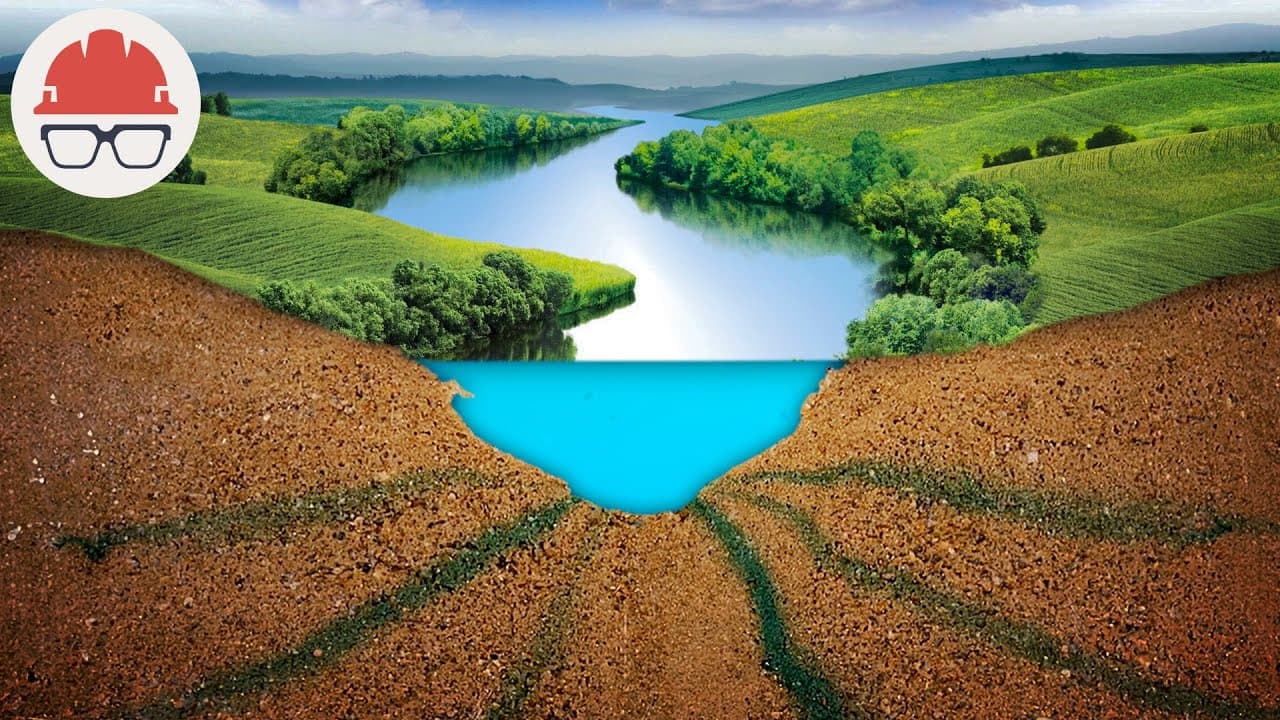
- Aquifers are geological formations where water is stored, often compared to a sponge saturated with water.
- Groundwater flows from high to low pressure areas, influenced heavily by geological layers and hydraulic conductivity.
- Surface water and groundwater are interconnected, impacting each other through the hydrologic cycle.
- Wells are engineered to extract groundwater, using casing and screens to prevent contamination and ensure water flow.
- Pumping water from wells creates a cone of depression, affecting nearby wells and surface water bodies.
- Aquifer Storage and Recovery (ASR) uses injection wells to store surplus water underground for future use.
- Fracking and other underground activities can impact groundwater, raising regulatory and environmental concerns.
Install to Summarize YouTube Videos and Get Transcripts
Explore YouTube Video Summarizer or Get YouTube Transcript Extractor
Questions & Answers
Q: How does groundwater differ from surface water?
Groundwater differs from surface water in that it is stored underground in aquifers, moving slowly through soil and rock. Surface water, on the other hand, is found in lakes, rivers, and streams. Although they behave differently, both are interconnected parts of the hydrologic cycle, affecting each other in terms of volume and quality.
Q: What are the common misconceptions about groundwater?
Common misconceptions about groundwater include the belief that it accumulates in large underground caverns or rivers. In reality, groundwater is stored in aquifers, which are geological formations made of sand, gravel, or rock. These formations are saturated with water, similar to a sponge, and do not resemble large, open spaces.
Q: How are wells constructed to ensure water extraction?
Wells are constructed by boring a vertical hole into the ground and inserting a casing to prevent soil and rock from collapsing into the well. A screen is placed at the water withdrawal depth, and gravel or coarse sand is used as a filter. Pumps are then used to extract water, with different types depending on the well's depth.
Q: What is the significance of the cone of depression in groundwater extraction?
The cone of depression is a phenomenon that occurs when water is pumped from an aquifer, lowering the water level near the well. This affects the capacity of nearby wells and can impact connected surface water bodies. Engineers use models to estimate changes in groundwater levels, considering factors like pumping rate and local geology.
Q: What is Aquifer Storage and Recovery (ASR), and how does it work?
Aquifer Storage and Recovery (ASR) is a technology that stores surplus water in aquifers for future use. Water is injected into an aquifer through a well, raising the groundwater level. This stored water can be withdrawn when needed. ASR requires specific geological conditions to be effective, such as suitable permeability and chemical compatibility.
Q: How does fracking relate to groundwater concerns?
Fracking, or hydraulic fracturing, involves breaking underground formations to extract oil and gas. This process can impact groundwater by altering geological structures and potentially introducing contaminants. The regulation of fracking is complex due to its hidden nature below the earth's surface, leading to environmental and public health concerns.
Q: What are the challenges associated with using injection wells for water storage?
Challenges with injection wells include finding suitable geological formations that allow water to be stored without flowing away too quickly. The formation must also be chemically compatible with the injected water to avoid reactions. Additionally, injection wells can be expensive to operate due to the need for pumping water both in and out of the aquifer.
Q: How does the video illustrate the connection between surface water and groundwater?
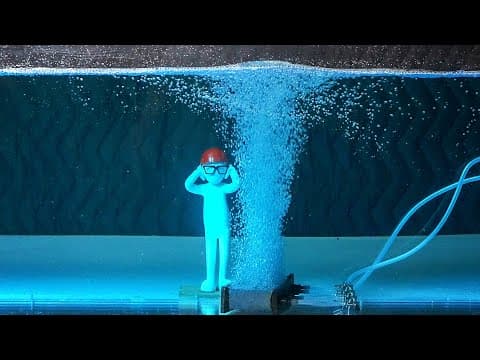
The video uses a model to show how surface water, like rivers, can recharge aquifers, and vice versa. It demonstrates scenarios where groundwater seeps into river channels and where surface water infiltrates the earth to become groundwater. This illustrates the interconnectedness of surface and groundwater resources within the hydrologic cycle.
Summary & Key Takeaways
-
The video explains how groundwater flows through soil and rock, dispelling common misconceptions about underground water storage. It highlights the role of aquifers and wells in water extraction and storage.
-
Groundwater and surface water are part of a connected cycle, with wells playing a crucial role in extracting water for human use. The video demonstrates how wells are constructed and function.
-
Aquifer Storage and Recovery is a new technology that allows surplus water to be stored underground. The video discusses the benefits and challenges of ASR, including geological compatibility and operational costs.
Read in Other Languages (beta)
Share This Summary 📚
Summarize YouTube Videos and Get Video Transcripts with 1-Click
Try YouTube Summary with ChatGPT & Claude or YouTube Transcript Generator
Explore More Summaries from Practical Engineering 📚


Summarize YouTube Videos and Get Video Transcripts with 1-Click
Try YouTube Summary with ChatGPT & Claude or YouTube Transcript Generator