Lecture 12 Introduction to Medical Statistics, part 1
TL;DR
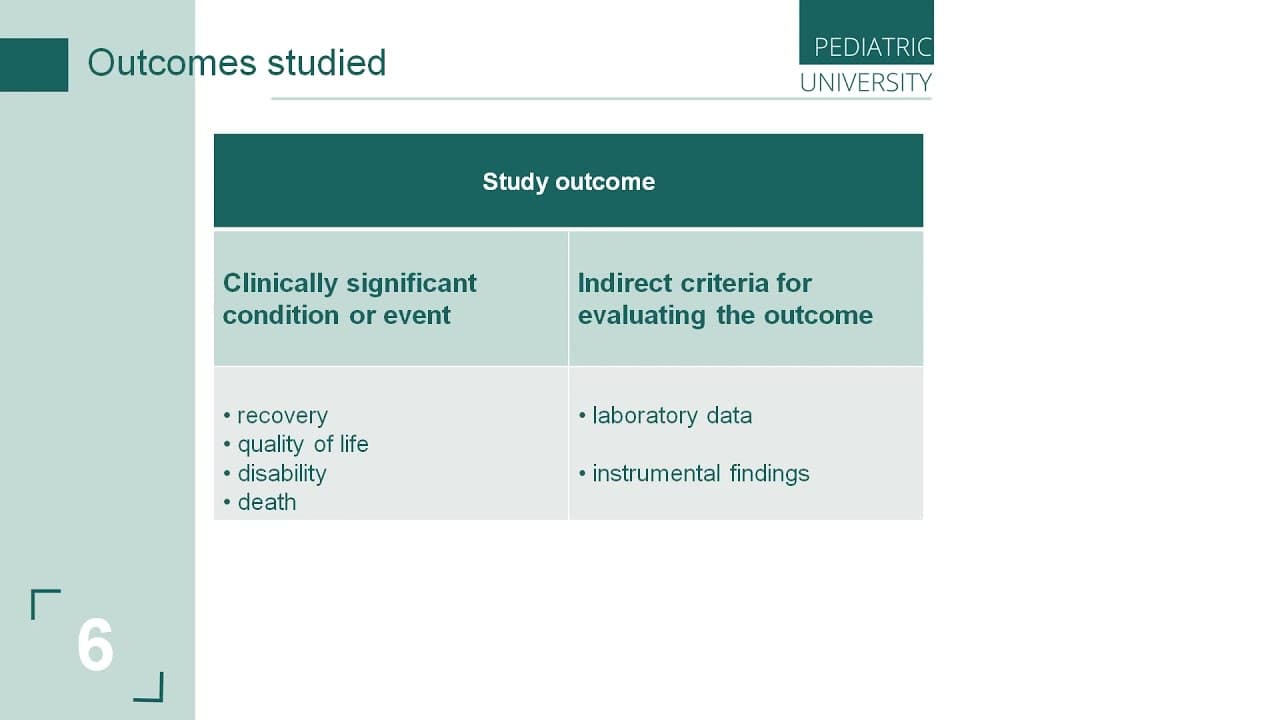
Lecture on basics of medical statistics and study design.
Transcript
good morning everybody's on last lecture we discussed probability theory with you and today we are going to start talking about medical statistics how i said on last lecture and as usual we will begin with the definition what statistics are worries about statistics let's see the definition on the slide statistics is as a collection ... Read More
Key Insights
- Medical statistics involve the collection, analysis, and interpretation of data to understand public health, medical care, and conduct clinical trials.
- Statistical methods are essential in medicine for studying populations, analyzing samples, and making inferences about larger groups.
- A representative sample is crucial for accurate statistical analysis and must reflect the general population's structure.
- Clinical trials can be experimental or observational, with controlled trials requiring a control group for comparison.
- Randomized controlled trials are the gold standard in research, ensuring unbiased distribution of subjects into treatment groups.
- Different study designs, like cohort or case-control studies, are used to investigate risk factors, prognosis, and disease development.
- Descriptive statistics include measures like mean, median, mode, variance, and standard deviation to summarize data.
- Graphical representations, such as histograms and box plots, help visualize data distribution and identify outliers.
Install to Summarize YouTube Videos and Get Transcripts
Explore YouTube Video Summarizer or Get YouTube Transcript Extractor
Questions & Answers
Q: What is the primary focus of medical statistics?
The primary focus of medical statistics is the collection, analysis, and interpretation of data related to public health, medical care, and clinical trials. It involves using statistical methods to study populations, analyze samples, and make inferences about larger groups, ensuring that the conclusions drawn are representative and reliable.
Q: Why is a representative sample important in statistical analysis?
A representative sample is crucial because it accurately reflects the structure of the general population, allowing for valid conclusions to be drawn about the entire group. Without a representative sample, statistical results may be biased or inaccurate, leading to incorrect inferences about the population being studied.
Q: What are the differences between experimental and observational studies?
Experimental studies involve some form of intervention, such as a treatment or procedure, and often include a control group for comparison. Observational studies, on the other hand, do not involve intervention; they observe natural occurrences and relationships, focusing on factors influencing disease and descriptive research.
Q: What makes randomized controlled trials the gold standard in research?
Randomized controlled trials are considered the gold standard because they minimize bias by randomly assigning subjects to treatment and control groups. This randomization ensures that any differences observed between groups are due to the treatment itself, rather than other variables, leading to more reliable and valid results.
Q: How do descriptive statistics help in data analysis?
Descriptive statistics summarize and describe the main features of a dataset through measures like mean, median, mode, variance, and standard deviation. These statistics provide a simple summary of the sample and its distribution, helping researchers understand the data's central tendency, variability, and overall pattern.
Q: Why are graphical representations important in statistics?
Graphical representations, such as histograms, pie charts, and scatter plots, are important because they provide a visual interpretation of the data, making it easier to identify patterns, trends, and outliers. They help in understanding the distribution and relationships within the data, facilitating better analysis and communication of results.
Q: What role does hypothesis testing play in statistical analysis?
Hypothesis testing is a statistical method used to determine whether there is enough evidence to reject a null hypothesis. It involves comparing observed data against a hypothesis to assess the probability of the hypothesis being true. This process helps in making informed decisions based on statistical evidence, validating or refuting assumptions.
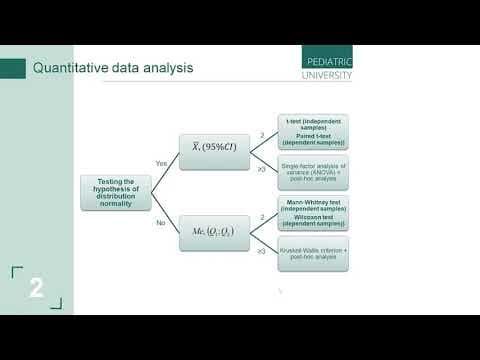
Q: What are the implications of using parametric versus non-parametric criteria?
Parametric criteria are used when data meet certain assumptions, such as normal distribution and equal variances, and are more powerful when applicable. Non-parametric criteria are used when these conditions are not met, offering flexibility but potentially less power. Choosing the appropriate criteria ensures the validity and reliability of statistical conclusions.
Summary & Key Takeaways
-
The lecture introduces medical statistics, emphasizing its role in public health and clinical trials. It covers basic concepts like representative samples and the importance of randomization in controlled trials. The lecture also highlights the use of descriptive statistics to summarize data.
-
Different study designs, such as cohort and case-control studies, are discussed for their utility in understanding disease risk factors and outcomes. The lecture explains the importance of using appropriate statistical methods based on sample size and data distribution.
-
Graphical tools like histograms and scatter plots are essential for visualizing data and identifying patterns or outliers. The lecture concludes with the significance of hypothesis testing and the use of parametric and non-parametric criteria in statistical analysis.
Read in Other Languages (beta)
Share This Summary 📚
Summarize YouTube Videos and Get Video Transcripts with 1-Click
Try YouTube Summary with ChatGPT & Claude or YouTube Transcript Generator
Explore More Summaries from Анна Разинова 📚
Summarize YouTube Videos and Get Video Transcripts with 1-Click
Try YouTube Summary with ChatGPT & Claude or YouTube Transcript Generator