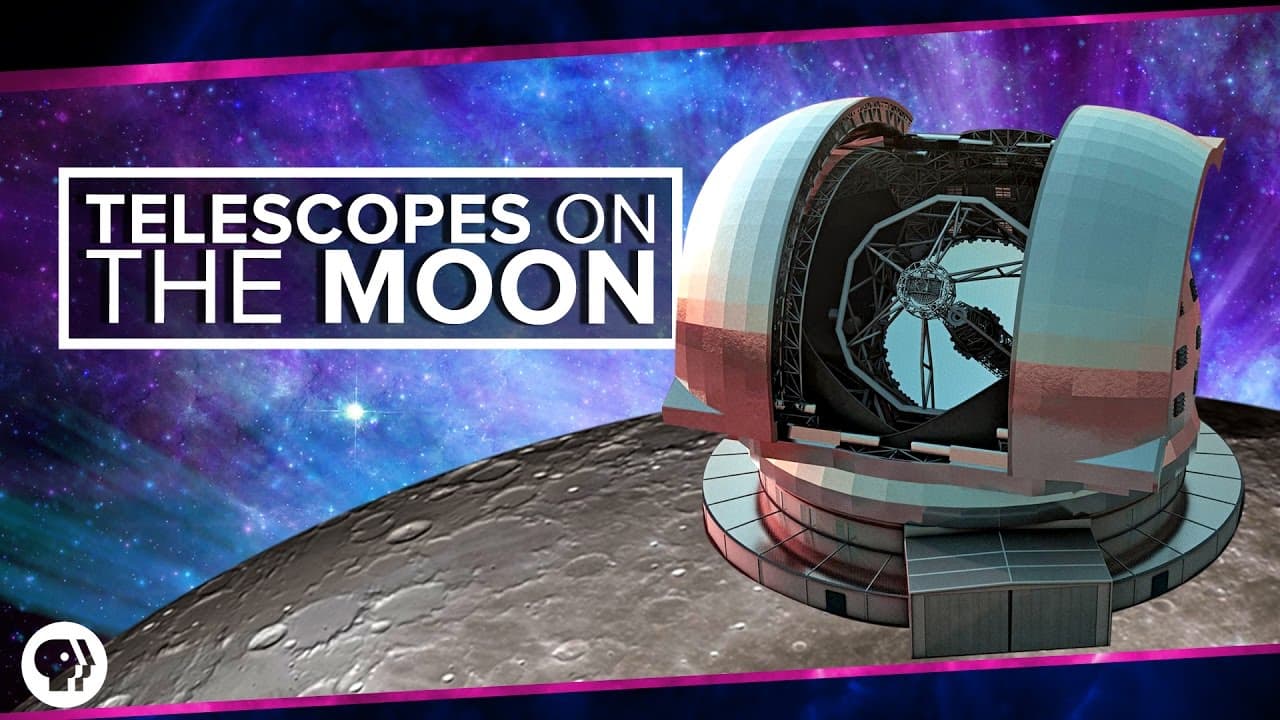
Telescopes on the Moon
TL;DR
Exploring the potential of telescopes on the moon for clearer space observation.
Transcript
This episode is supported by 23andMe. It's been said that the Apollo missions achieved all of the science goals that require live astronauts, that we no longer need manned missions to do science on the moon. Whether or not that's true, what about the science we can do from the moon? I'm talking about building a telescope there. Actually, China alre... Read More
Key Insights
- The moon's atmosphere-free environment offers an unparalleled opportunity for telescopic observation, providing clear views of the universe without atmospheric interference.
- China's Chang'E 3 mission has already established a small ultraviolet telescope on the moon, demonstrating the feasibility of lunar-based telescopic observation.
- The absence of atmospheric turbulence on the moon allows for extreme image sharpness, making it an ideal location for telescopic installations.
- Lunar nights, lasting about a month, provide extended periods of darkness, which are advantageous for astronomical observations.
- Constructing larger telescopes on the moon could overcome the size limitations imposed by rocket transport, allowing for unprecedented aperture sizes.
- The harsh lunar environment, with extreme temperature fluctuations and abrasive moondust, presents significant challenges for equipment durability.
- Innovative proposals include using moon dust to construct telescope mirrors and developing liquid mirror telescopes using ionic liquids.
- Future plans involve both robotic and manned missions to establish more advanced telescopic facilities on the lunar surface, potentially transforming the moon into a major astronomical observatory.
Install to Summarize YouTube Videos and Get Transcripts
Explore YouTube Video Summarizer or Get YouTube Transcript Extractor
Questions & Answers
Q: What are the advantages of placing telescopes on the moon?
Telescopes on the moon benefit from the lack of atmosphere, which eliminates atmospheric turbulence and allows for extreme image sharpness. The entire electromagnetic spectrum is accessible, and the long lunar nights provide extended observation periods. These factors make the moon an ideal location for astronomical observations.
Q: What challenges do lunar telescopes face?
Lunar telescopes face challenges such as extreme temperature fluctuations, which can reach up to 125 Celsius in sunlight and drop to -150 Celsius in shade. Additionally, moondust, or lunar regolith, can damage equipment by sticking to electronics and grinding moving parts, complicating maintenance and operation.
Q: How can larger telescopes be constructed on the moon?
Larger telescopes on the moon could be constructed using lunar materials. One proposal involves using moon dust combined with epoxy and carbon nanotubes to create a concrete-like material for mirrors. Another approach is developing liquid mirror telescopes using ionic liquids, which could form large parabolic mirrors suitable for astronomical observation.
Q: What is the significance of the Chang'E 3 mission for lunar telescopes?
The Chang'E 3 mission, launched by China, established a small ultraviolet telescope on the moon, marking the first such installation since 1976. This mission serves as a proof of concept for lunar-based telescopic observation, demonstrating the feasibility and potential of conducting astronomy from the moon's surface.
Q: Why is the moon's environment advantageous for telescopic observation?
The moon's lack of atmosphere eliminates atmospheric interference, allowing for clearer and sharper images. The absence of scattered sunlight means stars are visible both day and night. Additionally, the long lunar nights provide extended periods of darkness, ideal for uninterrupted astronomical observations.
Q: What innovative proposals are being explored for lunar telescopes?
Innovative proposals for lunar telescopes include constructing mirrors from lunar materials, such as moon dust and epoxy, and developing liquid mirror telescopes using ionic liquids. These approaches aim to overcome the limitations of transporting large mirrors via rockets and leverage the moon's unique environment for advanced astronomical observation.
Q: What future plans exist for lunar telescopic facilities?
Future plans for lunar telescopic facilities include both robotic and manned missions to establish more advanced installations. Organizations like the International Lunar Observatory Association and Moon Express are working on projects to set up optical telescopes on the moon, with ambitions to create a manned base to support larger telescope construction.
Q: How does the moon's environment affect equipment durability?
The moon's environment, with its extreme temperature variations and abrasive moondust, poses significant challenges for equipment durability. Rapid temperature changes can stress materials, while moondust can damage electronics and moving parts. Protective measures and innovative construction techniques are necessary to ensure the longevity and functionality of lunar telescopic equipment.
Summary & Key Takeaways
-
The moon offers a unique environment for telescopic observation due to its lack of atmosphere, allowing for clear views of the universe. China's Chang'E 3 mission has already established a small telescope on the lunar surface, proving the feasibility of such endeavors.
-
Lunar-based telescopes benefit from long nights and the absence of atmospheric turbulence, which enhances image sharpness. Plans for constructing larger telescopes on the moon could overcome current size limitations, allowing for unprecedented observations.
-
Despite the advantages, the moon's harsh environment poses challenges, such as extreme temperatures and moondust. Innovative solutions, like using lunar materials for construction and developing liquid mirror telescopes, are being explored to address these issues.
Read in Other Languages (beta)
Share This Summary 📚
Summarize YouTube Videos and Get Video Transcripts with 1-Click
Try YouTube Summary with ChatGPT & Claude or YouTube Transcript Generator
Explore More Summaries from PBS Space Time 📚
Summarize YouTube Videos and Get Video Transcripts with 1-Click
Try YouTube Summary with ChatGPT & Claude or YouTube Transcript Generator