Get Proven Strategies for Training Your Dog Like a Pro with Nate Schoemer | Part 6
TL;DR
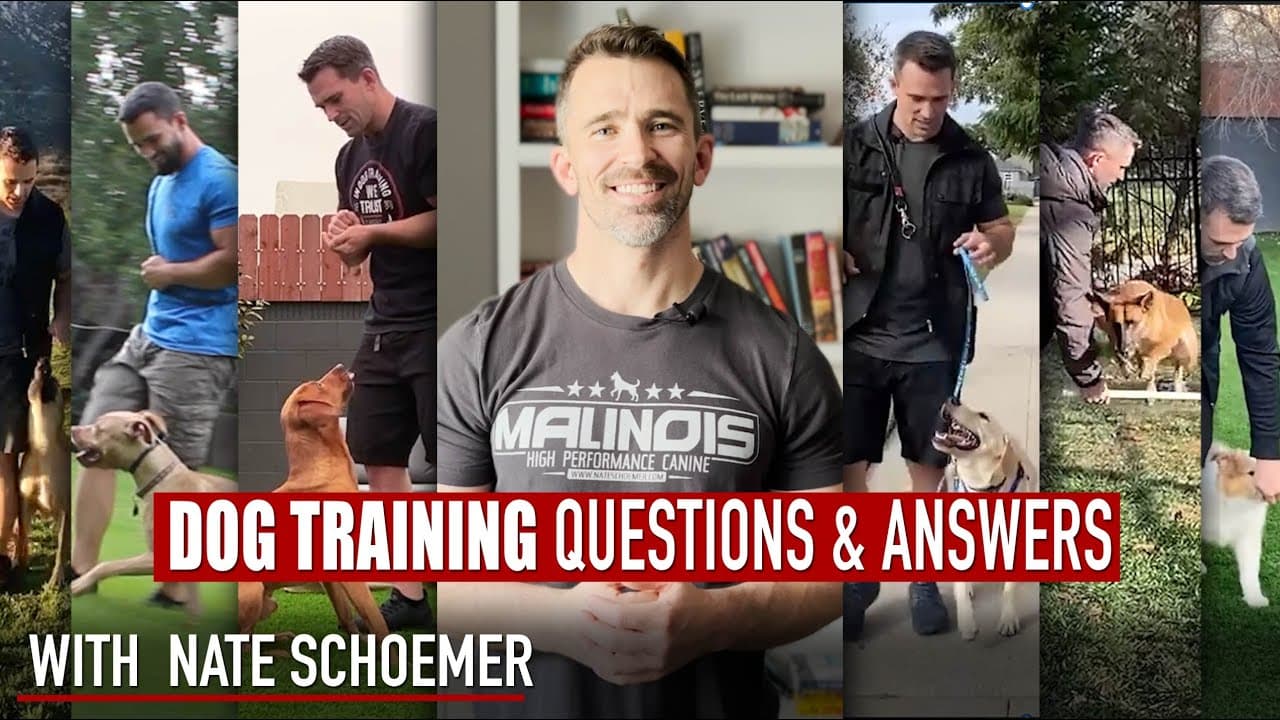
Nate Schoemer answers common dog training questions using marker training techniques.
Transcript
welcome back to another episode in today's video i'll be sharing all the questions and answers from my tic toc channel this past week in the description you can find the time stamp that will jump to any question that you're interested in hearing the answer for also don't forget to hit that like button and please enjoy the only question i have is ho... Read More
Key Insights
- Marker training involves using continuation and terminal markers to communicate with dogs, predicting rewards and releases respectively.
- Training two dogs together requires starting with individual training to minimize distractions and ensure each dog understands commands.
- The use of continuation markers allows for reward prediction without releasing the dog from a commanded position.
- Training a service dog requires selecting the right dog and investing significant time and effort into the training process.
- Counter conditioning and desensitization are key techniques for managing anxiety and fear in dogs, particularly in stressful environments like vehicles.
- Puppy biting is normal during teething, but play biting can be redirected to toys to control the behavior.
- Introducing a behavior with a verbal cue should be separated from physical positioning to avoid overshadowing and ensure the dog associates the command correctly.
- Leash pressure can be taught to puppies as long as they are comfortable, using luring to remove stress from the training process.
Install to Summarize YouTube Videos and Get Transcripts
Explore YouTube Video Summarizer or Get YouTube Transcript Extractor
Questions & Answers
Q: How is the dog going to stay if you're only saying yes for her to stay?
The continuation marker 'yes' is used to indicate that the dog is performing the behavior correctly and will receive a reward, without releasing the dog from the commanded position. This allows the dog to understand that they should maintain the behavior, such as staying, while still expecting a reward.
Q: What happens when you have two siblings, do you train them at the same time or one at a time?
When training two sibling dogs, it's recommended to start by training them individually to minimize distractions. Each dog should be trained separately to understand commands and communication channels before gradually introducing them to more challenging environments and training them together.
Q: Is it okay to toss your dog a treat after giving the continuation marker as opposed to handing it to them?
Tossing a treat after using the continuation marker is acceptable if the dog is not in a stay command. If the dog is in a stay, tossing the treat could cause them to break the stay. It's important to ensure the dog understands that the continuation marker predicts a reward without altering their current behavior.
Q: Can you train your own service dog?
Training your own service dog is possible but requires selecting the right dog and dedicating significant time to the training process. It's crucial to choose a dog that has the potential to be a service dog and to follow a structured training program to ensure the dog meets the necessary standards.
Q: How do you keep an anxious dog calm in the vehicle?
Counter conditioning and desensitization are effective methods for calming an anxious dog in a vehicle. Gradually introduce the dog to the vehicle, associating it with positive experiences, and take short, pleasant trips to change the dog's perception of the car from stressful to enjoyable.
Q: Is it normal for a seven-month-old dog to still be teething/biting?
Yes, it's normal for a seven-month-old dog to still be teething or biting, especially if the behavior is self-reinforcing. Providing chew toys can help satisfy the need to chew, and play biting can be redirected to toys to control the behavior and teach bite inhibition.
Q: Why is it wrong to introduce a behavior, whether using luring or physical positioning, with its verbal cue?
Introducing a behavior with a verbal cue and physical positioning simultaneously can lead to overshadowing, where the dog focuses on the more relevant cue and ignores the other. Separating the command from the physical cue ensures the dog associates the verbal command correctly with the desired behavior.
Q: Can leash pressure be taught to an 11-week-old puppy?
Leash pressure can be taught to an 11-week-old puppy as long as they are comfortable in their environment and understand luring. The training should be stress-free, using luring as a positive reinforcement to show the puppy that following the leash leads to good outcomes.
Summary & Key Takeaways
-
Nate Schoemer discusses the importance of marker training, using continuation and terminal markers to communicate with dogs and predict rewards and releases. He emphasizes understanding what the markers mean to dogs and how they affect training outcomes.
-
Training two dogs together requires starting with individual sessions to minimize distractions and ensure each dog understands the commands. Schoemer highlights the need for gradual exposure to challenging environments and tasks to ensure successful training.
-
Counter conditioning and desensitization are effective techniques for managing anxiety and fear in dogs, particularly in stressful environments like vehicles. By changing what a stimulus predicts, dogs can learn to associate it with positive experiences.
Read in Other Languages (beta)
Share This Summary 📚
Summarize YouTube Videos and Get Video Transcripts with 1-Click
Try YouTube Summary with ChatGPT & Claude or YouTube Transcript Generator
Explore More Summaries from Nate Schoemer 📚



Summarize YouTube Videos and Get Video Transcripts with 1-Click
Try YouTube Summary with ChatGPT & Claude or YouTube Transcript Generator