Automatic Bell Siphon Explained
TL;DR
Explains the working of a self-priming automatic bell siphon.
Transcript
A few months back, a couple of engineering professors built a collaborative water rube goldberg machine at the American Geophysical Union fall meeting. This water science pop-up was demonstrated on the streets of San Francisco, and I was lucky to be one of the collaborators who was invited to design a piece of the display. It’s a quick project, but... Read More
Key Insights
- The video features a demonstration of a bell siphon, showcasing its automatic, self-priming capabilities without needing external intervention.
- A bell siphon consists of three main components: a reservoir, a bell, and a riser, which work together to create a vacuum that facilitates siphoning.
- The siphon process begins when the water in the reservoir covers the riser, creating a vacuum inside the bell, which draws water out.
- Bell siphons are used in various applications, including hydroponics and aquaponics, to create wet and dry cycles for plants.
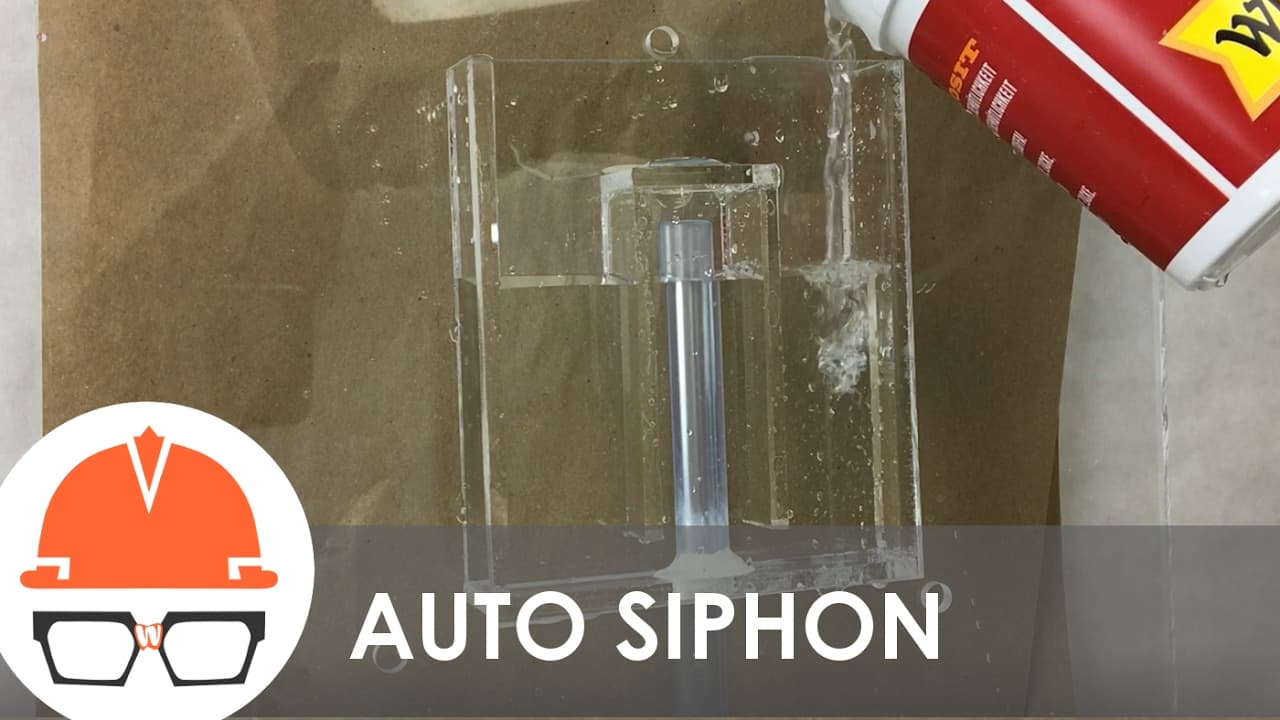
- The video includes a practical demonstration of the bell siphon, built from acrylic and clear pipe, highlighting its function and efficiency.
- Automatic siphons like the bell siphon eliminate the need for manual priming, providing an efficient solution for fluid transfer.
- The video references historical and modern uses of siphons, including their role in septic systems and public restrooms for efficient fluid management.
- The project was a collaborative effort with engineering professors, emphasizing the educational and practical aspects of engineering demonstrations.
Install to Summarize YouTube Videos and Get Transcripts
Explore YouTube Video Summarizer or Get YouTube Transcript Extractor
Questions & Answers
Q: What is a bell siphon and how does it work?
A bell siphon is a type of siphon that automatically primes itself, eliminating the need for manual intervention. It consists of a reservoir, a bell, and a riser. As the water level rises in the reservoir, it covers the riser, creating a vacuum inside the bell that draws water out. This process continues until the water level drops, allowing air to enter and breaking the siphon.
Q: What are the practical applications of a bell siphon?
Bell siphons are used in various applications, particularly in hydroponics and aquaponics, to create cycles of wet and dry environments for plants. They are also found in septic systems to dose effluent more effectively into leach fields and in public restrooms for automatic urinal flushing. Their ability to self-prime makes them valuable for fluid management without manual intervention.
Q: How does the bell siphon eliminate the need for manual priming?
The bell siphon eliminates the need for manual priming through its design, which allows it to automatically create a vacuum. As the water level rises and covers the riser, it seals off atmospheric pressure, creating a vacuum inside the bell. This vacuum draws water from the reservoir up and out, continuing the siphon process without external input.
Q: What materials were used to build the bell siphon in the video?
The bell siphon demonstrated in the video was constructed using an acrylic sheet and a piece of clear pipe. These materials allow for visual observation of the siphoning process, making it an effective educational tool to demonstrate the principles and mechanics of automatic siphons in an engineering context.
Q: How does the siphon process start and stop in a bell siphon?
The siphon process in a bell siphon starts when the water level in the reservoir rises to cover the riser, creating a vacuum inside the bell that draws water out. It stops when the water level drops below the bell, allowing air to enter and breaking the vacuum, thus ending the siphoning action until the process naturally restarts with rising water levels.
Q: What historical and modern uses of siphons are mentioned in the video?
The video mentions the Pythagoras cup, an ancient practical joke device, as a historical example of siphon use. Modern applications include their use in septic systems for dosing effluent, hydroponics and aquaponics for plant irrigation cycles, and public restrooms for automatic urinal flushing. These examples illustrate the versatility and efficiency of siphons in fluid management.
Q: Who collaborated on the bell siphon project in the video?
The bell siphon project featured in the video was a collaborative effort between the video's creator, Grady, and engineering professors Rolf Hut and Pete Marchetto. Their collaboration aimed to demonstrate the practical and educational aspects of engineering through the construction and explanation of an automatic bell siphon.
Q: What educational value does the bell siphon demonstration provide?
The bell siphon demonstration provides educational value by visually illustrating the principles of siphoning, hydrostatics, and vacuum creation. It highlights the practical applications of engineering concepts in real-world scenarios, such as fluid management in various systems. The demonstration serves as an engaging tool for understanding complex engineering mechanisms and their applications in everyday life.
Summary & Key Takeaways
-
The video showcases an automatic bell siphon, constructed from acrylic and clear pipe, which operates without external intervention. It explains the mechanism and principles behind the siphon, emphasizing its self-priming capabilities and various practical applications in fields like hydroponics and sanitation.
-
The bell siphon works by creating a vacuum as water rises in the reservoir, covering the riser and drawing water out. This process is demonstrated practically, highlighting its efficiency and applicability in different engineering and environmental contexts.
-
The video also discusses the collaboration with engineering professors and references other uses of siphons, such as in septic systems and public restrooms. It provides insights into the innovative and practical uses of siphons in engineering and fluid management.
Read in Other Languages (beta)
Share This Summary 📚
Summarize YouTube Videos and Get Video Transcripts with 1-Click
Try YouTube Summary with ChatGPT & Claude or YouTube Transcript Generator
Explore More Summaries from Practical Engineering 📚


Summarize YouTube Videos and Get Video Transcripts with 1-Click
Try YouTube Summary with ChatGPT & Claude or YouTube Transcript Generator