Google Glass helps kids with autism read facial expressions
TL;DR
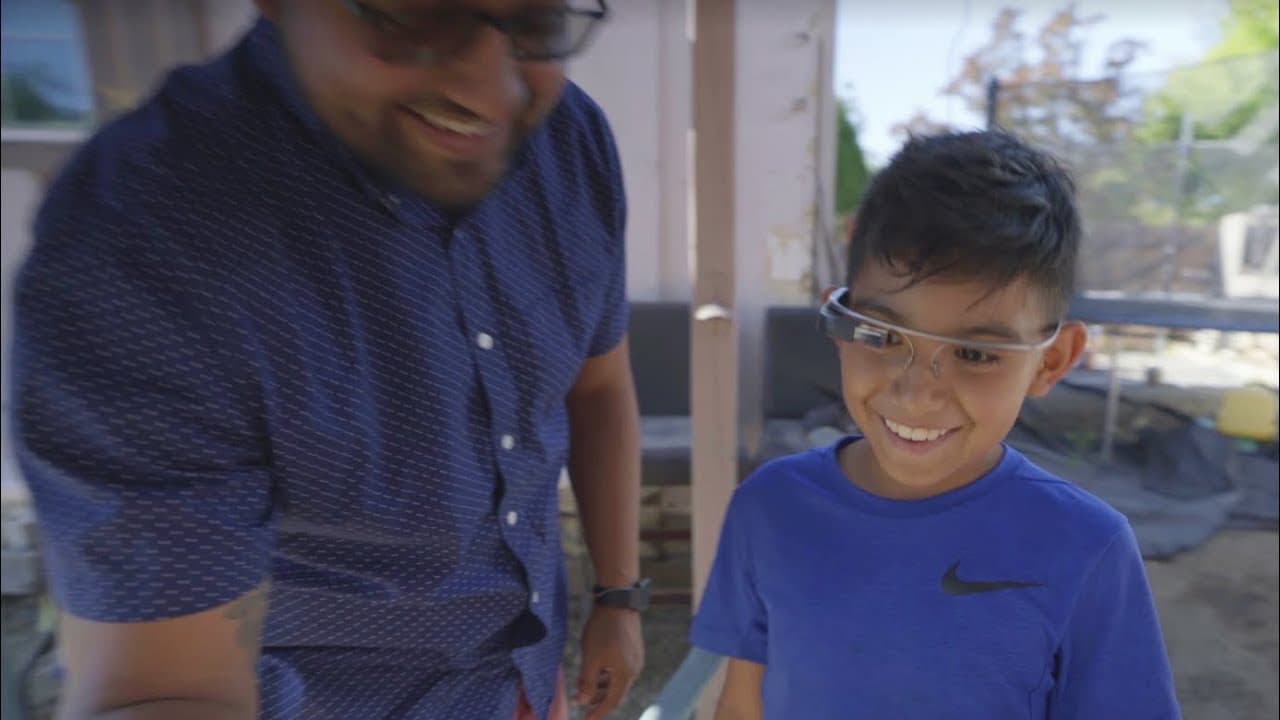
Stanford researchers develop wearable technology, such as Google Glass, to enhance social interactions and communication skills for children with autism.
Transcript
We're in Corning, California. It's a small town. That's what we like about it. We can see more things in larger cities but always come home to our smaller quieter town. Ethan's main issues began with communication. He was not speaking at an early age. And our speech therapist informed us that we should probably get him evaluated, and he was, and he... Read More
Key Insights
- 👶 Early intervention and access to resources are essential for children with autism.
- 👶 Mobile solutions using wearables like Google Glass can positively impact social skills and communication abilities in children with autism.
- 👶 Exploring the social world is crucial for the developmental trajectory of children with autism.
- 😑 Augmented reality cues provided by wearables like Google Glass help children with autism understand emotions and facial expressions.
- 😒 The use of wearable technology can improve engagement and interaction with the environment for children with autism.
- 🚗 Autism detection and treatment can be improved by overcoming healthcare complexities and utilizing mobile solutions.
- 😨 Mobile solutions offer the potential for scalable and accessible autism care.
Install to Summarize YouTube Videos and Get Transcripts
Explore YouTube Video Summarizer or Get YouTube Transcript Extractor
Questions & Answers
Q: How did the Autism Glass Project help Ethan improve his social skills?
The Autism Glass Project used wearable technology like Google Glass to provide Ethan with augmented reality cues, helping him understand facial expressions and emotions. This allowed him to focus on looking at people's eyes and better comprehend social cues.
Q: What is the main challenge faced by children on the autism spectrum in school settings?
One of the biggest challenges for children with autism in school settings is forming their own social groups and navigating social interactions. The Autism Glass Project aims to address this challenge by providing augmented reality cues through wearables.
Q: How do mobile solutions like Google Glass benefit children with higher levels of developmental impairment?
For children with higher levels of developmental impairment, wearable technology like Google Glass allows them to see and understand what is actually happening on people's faces. This intervention helps them gain confidence in understanding social cues and improves their overall social skills.
Q: How does exploring the social world impact the learning and development of children with autism?
Exploring the social world, even non-verbally, is crucial for the learning and development of children with autism. By teaching them how to explore their world using social behaviors, curiosity, investigations, and communication, children with autism can experience accelerated growth and learning.
Summary & Key Takeaways
-
The content is about how a small town family in Corning, California, sought out resources to help their son, Ethan, who was not speaking at an early age and was diagnosed with autism.
-
The family discovered the Autism Glass Project at Stanford, which uses mobile solutions like Google Glass to provide augmented reality cues that help children on the spectrum with social interactions and understanding emotions.
-
By using wearable technology, Ethan made progress in his social skills, ability to communicate, and overall engagement with his environment.
Read in Other Languages (beta)
Share This Summary 📚
Summarize YouTube Videos and Get Video Transcripts with 1-Click
Try YouTube Summary with ChatGPT & Claude or YouTube Transcript Generator
Explore More Summaries from Stanford 📚




Summarize YouTube Videos and Get Video Transcripts with 1-Click
Try YouTube Summary with ChatGPT & Claude or YouTube Transcript Generator