Why Is Elon Musk Suing Advertisers?
TL;DR
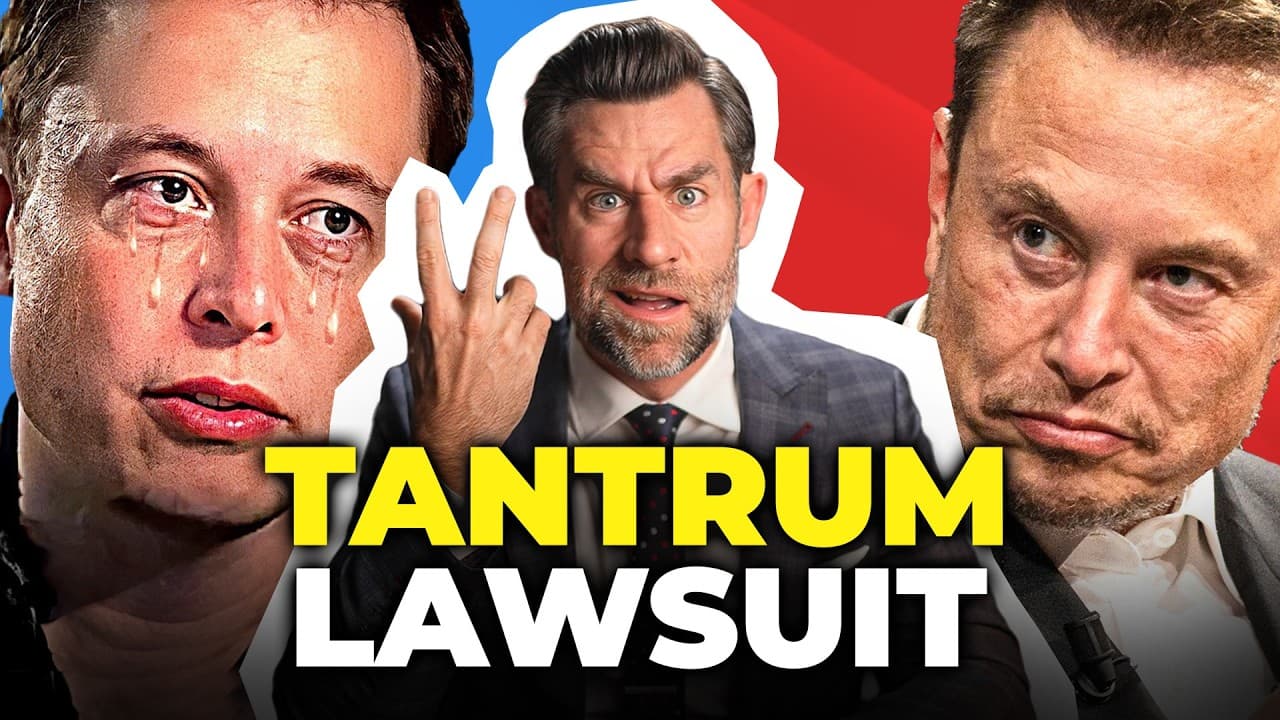
Elon Musk is suing advertisers for allegedly conspiring to boycott Twitter, claiming it violates antitrust laws. The lawsuit argues that this coordinated action has harmed Twitter's revenue and market position. However, legal experts are skeptical about the merits of the case, citing First Amendment protections and questioning the antitrust claims.
Transcript
- Did you know that it's illegal not to pay Elon Musk money? Yes, when a billionaire buys a social media platform, the law says you must advertise on that platform. Even if you're not an advertiser, you have to find a way to advertise. This is due to a little known provision of the Communications Decency Act. I'm sorry, I don't make the rules, but ... Read More
Key Insights
- Elon Musk has filed a lawsuit against advertisers, claiming they illegally boycotted Twitter.
- The lawsuit alleges that advertisers violated antitrust laws by coordinating to avoid advertising on Twitter.
- Legal experts are skeptical about the lawsuit's validity, citing First Amendment protections for advertisers.
- The lawsuit was filed in Wichita Falls, Texas, a move seen as judge shopping for a favorable ruling.
- Judge Reed O'Connor, initially assigned to the case, recused himself due to owning Tesla stock.
- The case highlights tensions between free speech rights and business interests in advertising.
- Musk's actions have led to significant advertiser boycotts, impacting Twitter's revenue.
- The outcome of this case could set a precedent for how businesses handle boycotts and free speech issues.
Install to Summarize YouTube Videos and Get Transcripts
Explore YouTube Video Summarizer or Get YouTube Transcript Extractor
Questions & Answers
Q: Why is Elon Musk suing advertisers?
Elon Musk is suing advertisers because he claims they conspired to boycott Twitter, which he argues violates antitrust laws. The lawsuit alleges that this coordinated boycott has harmed Twitter's advertising revenue and market position. Musk believes that the advertisers' actions were illegal and aimed at damaging Twitter's business.
Q: What are the legal experts saying about Musk's lawsuit?
Legal experts are largely skeptical about the merits of Musk's lawsuit against advertisers. They point out that the advertisers' actions may be protected under the First Amendment, which allows for expressive conduct, such as boycotts. Additionally, experts question whether the lawsuit truly demonstrates antitrust violations, as the advertisers' decisions could be based on legitimate business concerns.
Q: What is the significance of the lawsuit's location in Wichita Falls, Texas?
The lawsuit's filing in Wichita Falls, Texas, is seen as a strategic move known as judge shopping, where plaintiffs seek a favorable jurisdiction. The initial judge, Reed O'Connor, is known for rulings that align with conservative viewpoints, which Musk may have hoped would benefit his case. However, O'Connor recused himself due to a conflict of interest involving Tesla stock ownership.
Q: What are the potential implications of this lawsuit for advertisers?
The lawsuit could have significant implications for advertisers, particularly regarding their ability to choose where to place their ads based on content moderation concerns. If Musk's lawsuit succeeds, it may set a precedent that limits advertisers' freedom to boycott platforms like Twitter. However, if it fails, it could reaffirm the protection of advertisers' rights to make independent business decisions.
Q: How has the advertiser boycott affected Twitter's revenue?
The advertiser boycott has had a substantial impact on Twitter's revenue, with the platform reportedly losing 52% of its US advertising revenue. This significant drop is attributed to major advertisers pulling back from Twitter due to concerns over content moderation and brand safety under Musk's leadership. The lawsuit claims this boycott is anti-competitive and has harmed Twitter's financial standing.
Q: What role does the First Amendment play in this case?
The First Amendment plays a crucial role in this case, as it protects the right to free speech, which includes the right to participate in boycotts as a form of expressive conduct. Legal experts argue that the advertisers' decision to boycott Twitter could be protected under the First Amendment, particularly if their actions are based on concerns about the platform's content and moderation policies.
Q: What are the challenges Musk faces in proving his antitrust claims?
Musk faces several challenges in proving his antitrust claims, including demonstrating that the advertisers' actions constitute a coordinated effort to restrain trade. Antitrust laws require evidence of intent and effect in terms of limiting competition, which may be difficult to establish given that advertisers are making independent decisions based on their own brand safety concerns. Additionally, the First Amendment may protect their right to boycott.
Q: What could be the broader impact of this lawsuit on social media platforms?
The broader impact of this lawsuit on social media platforms could involve setting legal precedents regarding the balance between free speech and business interests. If Musk's lawsuit succeeds, it might discourage advertisers from boycotting platforms over content concerns, potentially affecting how social media companies manage content moderation. Conversely, if the lawsuit fails, it could reinforce advertisers' rights to choose where to place their ads based on platform policies.
Summary & Key Takeaways
-
Elon Musk has filed a lawsuit against a coalition of advertisers, alleging they conspired to boycott Twitter, violating antitrust laws. The lawsuit claims that this boycott has significantly harmed Twitter's advertising revenue. Legal experts question the merits of the case, pointing to First Amendment protections and the lack of evidence for antitrust violations.
-
The lawsuit was strategically filed in Wichita Falls, Texas, a venue known for potentially favorable rulings, but Judge Reed O'Connor, who was initially assigned, recused himself due to a conflict of interest. The case raises important questions about the balance between free speech rights and business interests in advertising.
-
The advertisers' boycott of Twitter is partly due to concerns over the platform's content moderation under Musk's leadership. The case outcome could have significant implications for how businesses navigate boycotts and free speech issues, especially in the context of social media advertising.
Read in Other Languages (beta)
Share This Summary 📚
Summarize YouTube Videos and Get Video Transcripts with 1-Click
Try YouTube Summary with ChatGPT & Claude or YouTube Transcript Generator
Explore More Summaries from LegalEagle 📚
Summarize YouTube Videos and Get Video Transcripts with 1-Click
Try YouTube Summary with ChatGPT & Claude or YouTube Transcript Generator