Confused about recycling? It’s not your fault - Shannon Odell
TL;DR
Only 9% of plastic is recycled due to confusing codes, mixed resins, and lack of design for recovery, with solutions focusing on reducing plastic consumption and implementing a circular economy.
Transcript
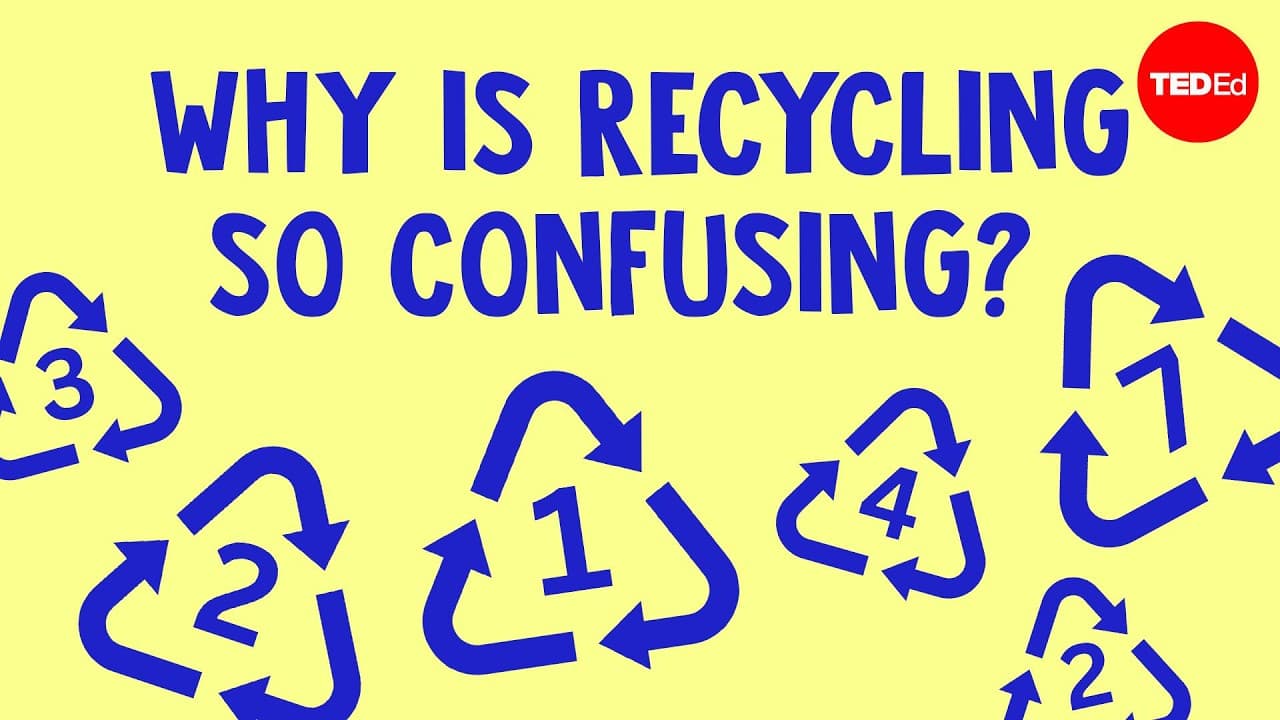
If you've ever looked at the bottom of a disposable bottle or cup, you've probably noticed this symbol. Seeing this, many people assume the item they’re holding should be tossed in a recycling bin. Yet many of these plastics are incapable of being recycled at most centers. In fact, of the 360 million tons of plastic created worldwide each year, onl... Read More
Key Insights
- ♻️ Thermosetting polymers and unique properties of thermoplastics hinder plastic recycling.
- 👨💻 Resin codes on plastics mislead consumers and complicate the recycling process.
- ♻️ Lack of design for recycling and rising costs have led to the shutdown of recycling programs.
- ❓ Solutions involve reducing plastic consumption, phasing out unnecessary plastic packaging, and transitioning to a circular economy for plastics.
Install to Summarize YouTube Videos and Get Transcripts
Explore YouTube Video Summarizer or Get YouTube Transcript Extractor
Questions & Answers
Q: Why are many plastics not recyclable?
Many plastics are made from thermosetting polymers that cannot be broken down and rebuilt by recycling plants, while thermoplastics require different conditions for recycling.
Q: What is the purpose of resin codes on plastics?
Resin codes, introduced in 1988, indicate the material the plastic is made of, known as its resin, but not all resin numbers are recyclable at most centers.
Q: How has the plastics industry pushed the responsibility of recycling onto consumers?
By lobbying state governments to adopt laws requiring confusing resin codes on plastics, the industry shifted the burden of fixing the plastic waste problem to consumers.
Q: What solutions are proposed to fix the plastic waste system?
Solutions include reducing plastic consumption, phasing out unnecessary plastic packaging, and transitioning to a circular economy for plastics with clear recyclable labels.
Summary & Key Takeaways
-
Many plastics are not recyclable due to thermosetting polymers and unique properties of thermoplastics.
-
Confusing resin codes mislead consumers into thinking all plastics are recyclable.
-
Lack of proper design for recycling and rising costs have led to shut down of recycling programs.
Read in Other Languages (beta)
Share This Summary 📚
Summarize YouTube Videos and Get Video Transcripts with 1-Click
Try YouTube Summary with ChatGPT & Claude or YouTube Transcript Generator
Explore More Summaries from TED-Ed 📚






Summarize YouTube Videos and Get Video Transcripts with 1-Click
Try YouTube Summary with ChatGPT & Claude or YouTube Transcript Generator