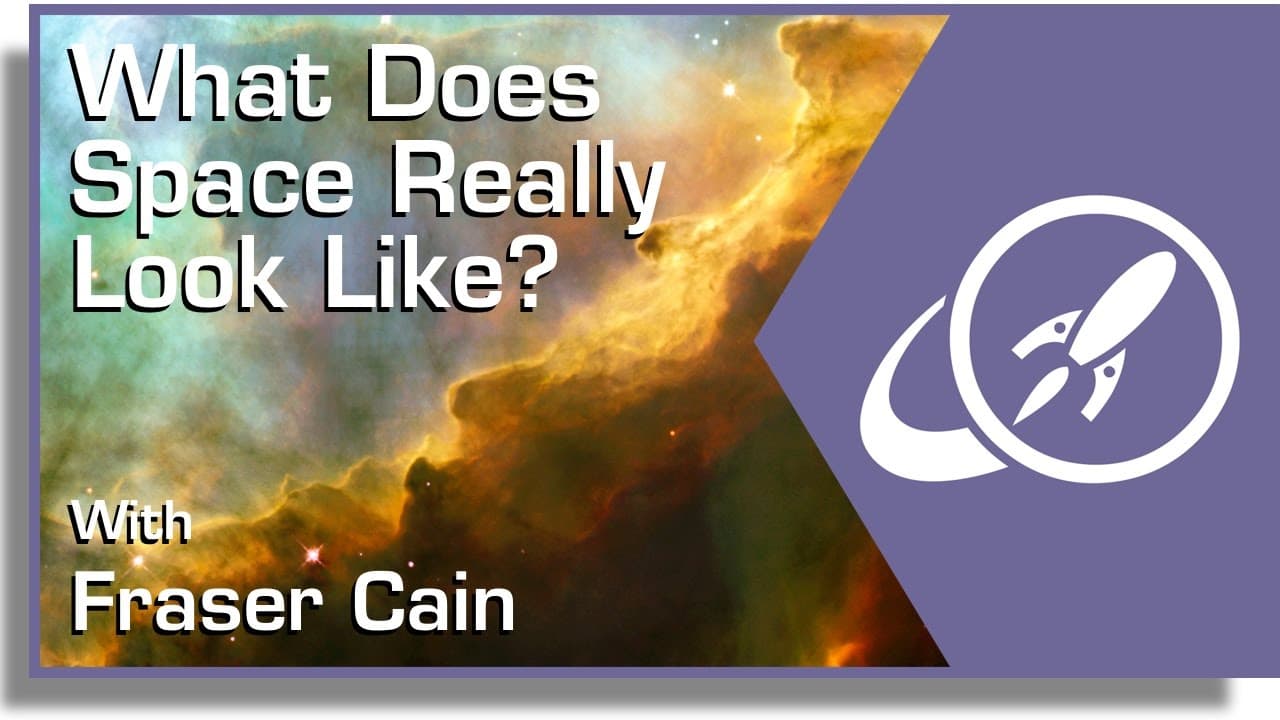
What Does Space Really Look Like?
TL;DR
Space photography isn't as vibrant in reality as seen in pictures due to human eye limitations and post-processing techniques.
Transcript
do you love the beautiful pictures from the Hubble Space Telescope do you ever wonder what it would look like to fly through space and see places like the Orion Nebula up close just imagine hiding the enterprise in the Mutara nebula getting the jump on Khan have you ever wondered what does this stuff actually look like well it looks like we're back... Read More
Key Insights
- 😃 Cameras capture more light over time compared to human eyes, resulting in vibrant space images.
- 🔅 Nebulae don't appear brighter up close due to the conservation of surface brightness.
- 👾 Space images' colors are assigned based on elements present in the object.
- 😃 Human eyes struggle to capture faint light from distant space objects.
- 👾 NASA cameras can provide an accurate visual representation of space objects on Mars.
- 👾 Online space images are enhanced for visual appeal using filters and editing.
- 👾 Astronomers prioritize scientific data over visual aesthetics in space images.
Install to Summarize YouTube Videos and Get Transcripts
Explore YouTube Video Summarizer or Get YouTube Transcript Extractor
Questions & Answers
Q: Why do space images online appear more vibrant than reality?
Space images are enhanced through camera technology and filters, creating more vivid colors and details than what human eyes can perceive in the night sky.
Q: Why can't we see nebulae and galaxies as beautifully with our eyes?
Our eyes can't gather enough light from faint objects like nebulae due to their limited ability to refresh and capture light continuously.
Q: How do astronomers create vibrant colors in space images?
Astronomers use filters that isolate specific wavelengths of light, assigning colors based on elements present in the observed object to enhance scientific information.
Q: Can we ever see space objects as beautifully as in photographs?
Due to limitations in human eyesight, we can't view nebulae and galaxies in the same vibrancy as pictures, but technology like NASA's cameras can provide a close match.
Summary & Key Takeaways
-
Space images seen online are more vibrant than reality due to camera technology and filters.
-
Human eyes lack the ability to capture faint light from nebulae and galaxies.
-
Colors in space images are often assigned based on scientific data, not actual visual appearance.
Read in Other Languages (beta)
Share This Summary 📚
Summarize YouTube Videos and Get Video Transcripts with 1-Click
Try YouTube Summary with ChatGPT & Claude or YouTube Transcript Generator
Explore More Summaries from Fraser Cain 📚




Summarize YouTube Videos and Get Video Transcripts with 1-Click
Try YouTube Summary with ChatGPT & Claude or YouTube Transcript Generator