Cold Noses & Thermal Images - Computerphile
TL;DR
Using thermal imaging, researchers explore the feasibility of inferring task workload through physiological measures without intrusive wearable devices.
Transcript
we have been looking at physiological monitoring to try to infer how hard people are working on a given task what we've been trying to do is find the least intrusive means for collecting physiological data we were looking at the aviation domain but it can obviously be extended to a lot of other a lot of other areas so initially we had a lab study w... Read More
Key Insights
- 🪡 Physiological monitoring through thermal imaging can provide insights into task workload without the need for intrusive wearable devices.
- 😘 Temperature changes in the face, particularly in the nose area, have been observed during high and low-demand tasks.
- 😒 The use of thermal imaging allows for a larger coverage area of the face compared to previous studies.
- 🧑✈️ Highly trained individuals, such as helicopter pilots, show similar physiological responses to task demands as ordinary individuals.
- 😤 Some individuals may have naturally colder noses, which could affect temperature changes during high-demand tasks.
- ❓ The algorithm used for feature tracking in thermal images can be optimized for better accuracy and efficiency.
- 👻 The conversion of thermal data to visual videos allows for easier analysis and interpretation of the temperature changes.
Install to Summarize YouTube Videos and Get Transcripts
Explore YouTube Video Summarizer or Get YouTube Transcript Extractor
Questions & Answers
Q: How did researchers measure task workload in their experiments?
Researchers used physiological monitoring, specifically thermal imaging, to measure task workload without the need for intrusive wearable devices. They focused on capturing temperature changes in the face.
Q: How did the thermal camera work in the study?
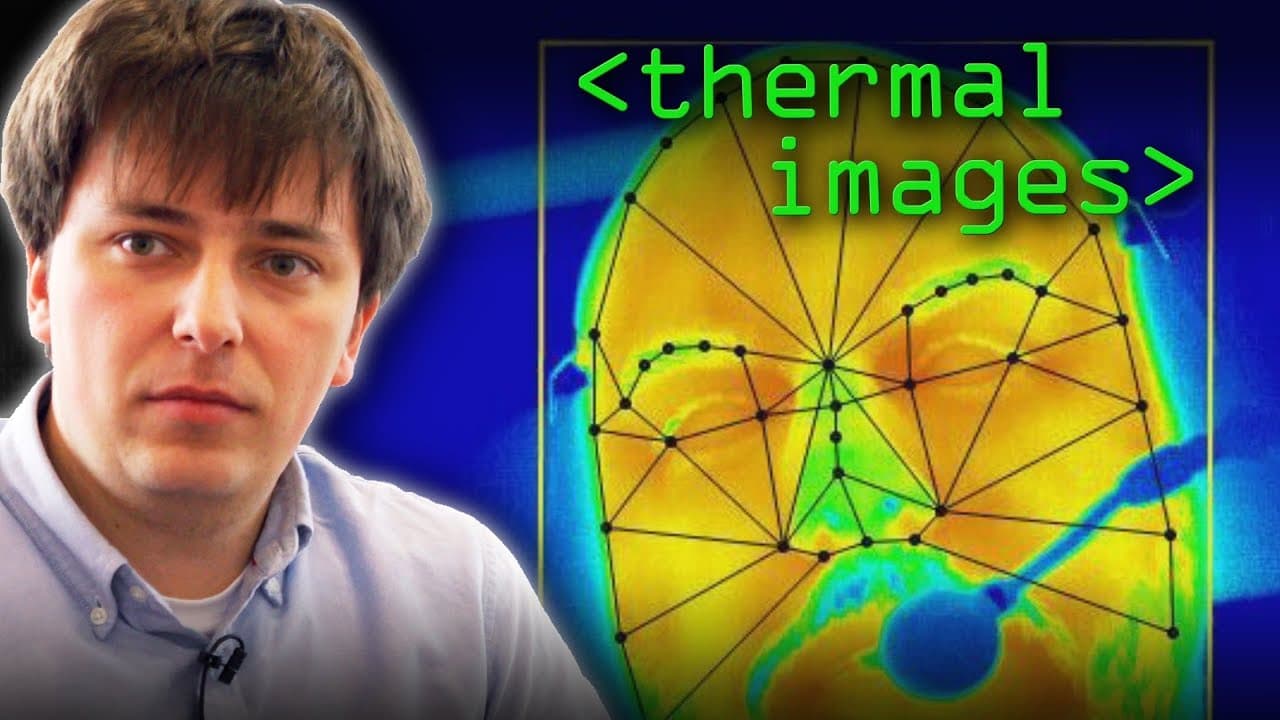
The thermal camera used in the study picked up thermal radiation within a specific range and converted it to temperature. Facial features were identified using thermal images, allowing the researchers to extract temperature data from various areas of the face.
Q: What were the findings regarding temperature changes during high and low-demand tasks?
The study revealed that in most individuals, temperature tended to drop during high-demand tasks and increase during low-demand tasks. The nose and side areas of the nose showed the most noticeable temperature changes.
Q: Can the physiological measurements be done in real-time?
The algorithm used in the study allowed for almost real-time processing, although the frame rate of the camera was limited. However, processing large amounts of data from thermal videos could be time-consuming.
Summary & Key Takeaways
-
Researchers conducted a lab study and a helicopter simulator study to assess the feasibility of using physiological monitoring to measure task workload.
-
They used a small thermal camera to capture thermal radiation and convert it to temperature, focusing on extracting temperature data from various areas of the face.
-
The study revealed that in most individuals, temperature tended to drop during high-demand tasks and increase during low-demand tasks, particularly in the nose area.
Read in Other Languages (beta)
Share This Summary 📚
Summarize YouTube Videos and Get Video Transcripts with 1-Click
Try YouTube Summary with ChatGPT & Claude or YouTube Transcript Generator
Explore More Summaries from Computerphile 📚






Summarize YouTube Videos and Get Video Transcripts with 1-Click
Try YouTube Summary with ChatGPT & Claude or YouTube Transcript Generator