Our CRISPR future: discussing the film Human Nature
TL;DR
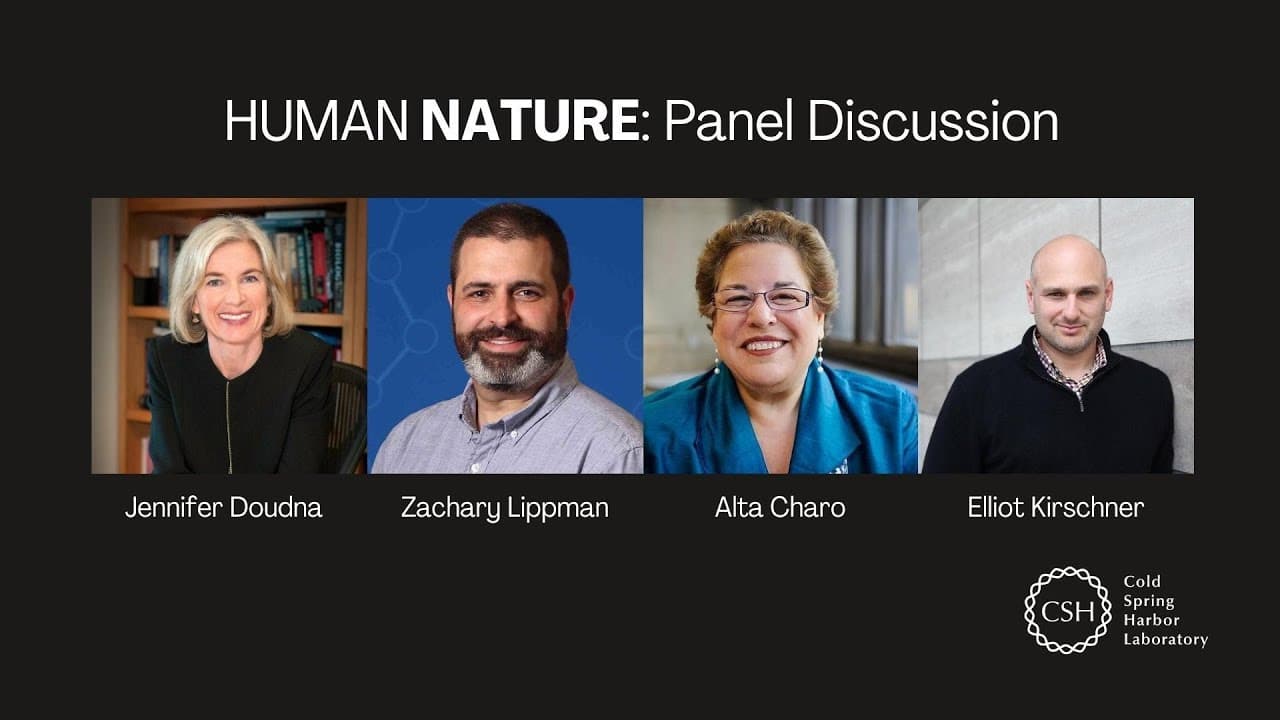
Panel discusses CRISPR's potential in science and ethical implications.
Transcript
Thank you everybody for attending this panel discussion about the documentary Human Nature, hosted by Cold Spring Harbor Laboratory I'm Elliot Kirschner, an executive producer and producer on the film. This film was produced by the Wonder Collaborative, a new initiative to innovate science films for the general public. My own background is in news ... Read More
Key Insights
- CRISPR is a powerful gene-editing tool derived from a bacterial immune system, offering potential in diagnostics and therapeutics, particularly for detecting and potentially treating viral infections like COVID-19.
- The film 'Human Nature' explores CRISPR's ability to edit genes and its implications for human evolution, highlighting the technology's rapid development and diverse applications.
- CRISPR is being extensively used in plant biology to study gene function and modify agricultural traits, demonstrating its potential for improving crop productivity and addressing climate change challenges.
- The regulatory landscape for CRISPR applications varies between human and agricultural uses, with agricultural applications facing fewer regulatory barriers, allowing for faster development and implementation.
- Ethical considerations are crucial in CRISPR's advancement, with scientists playing a key role in global discussions to ensure responsible use and address concerns about human genetic modifications.
- Public perception of CRISPR and genetically modified organisms (GMOs) is shaped by historical mistrust of scientific expertise and the influence of business interests, highlighting the need for transparent communication and public engagement.
- The convergence of biological and computing technologies presents new opportunities for innovation, though the future trajectory of these advancements remains uncertain.
- Effective science communication requires engaging storytelling and respect for the audience's ability to understand complex topics, as demonstrated by the film 'Human Nature' and its aim to foster public interest in science.
Install to Summarize YouTube Videos and Get Transcripts
Explore YouTube Video Summarizer or Get YouTube Transcript Extractor
Questions & Answers
Q: How does CRISPR relate to COVID-19?
CRISPR technology is being explored for its potential in diagnostics and therapeutics related to COVID-19. It can be used to detect the virus's genetic material, offering rapid diagnostic capabilities. However, using CRISPR as a treatment is challenging due to delivery issues in targeting infected cells effectively.
Q: What are the ethical considerations of using CRISPR in humans?
Ethical considerations in using CRISPR for human genetic modifications involve potential risks, societal implications, and the need for global consensus on responsible use. Scientists play a key role in these discussions, addressing concerns about altering human evolution and ensuring that applications prioritize therapeutic needs over cosmetic enhancements.
Q: How is CRISPR being used in agriculture?
CRISPR is extensively used in plant biology for studying gene functions and modifying traits to enhance agricultural productivity. It allows for precise genome editing to improve crop resilience, yield, and nutritional value. The technology's faster regulatory pathway in agriculture compared to human applications facilitates its rapid adoption.
Q: What challenges does CRISPR face in terms of regulation?
CRISPR's regulatory landscape varies between human and agricultural applications. Agricultural uses face fewer barriers, allowing faster development. In contrast, human applications, especially heritable genetic modifications, require stringent regulatory oversight due to ethical concerns and potential long-term impacts on human genetics.
Q: How can scientists effectively communicate complex topics like CRISPR to the public?
Effective science communication involves engaging storytelling, respecting the audience's ability to understand complexity, and addressing public concerns transparently. Scientists should relate their research to real-world applications and emphasize the broader implications of their work, fostering public interest and trust in scientific advancements.
Q: What role does business play in the development of CRISPR technology?
Business interests, including startups and large corporations, play a significant role in advancing CRISPR technology from lab discoveries to commercial applications. This relationship can drive innovation but also raises concerns about conflicts of interest, requiring careful management to maintain public trust and ensure ethical practices.
Q: What are the potential risks of using CRISPR in agriculture?
In agriculture, CRISPR can introduce genetic changes that may have unintended consequences due to the complex interactions between genes and environmental factors. However, traditional breeding practices and rigorous testing help mitigate these risks, ensuring that only beneficial modifications are adopted for crop improvement.
Q: How does CRISPR's rapid development impact the timeline for its applications?
CRISPR's development has been remarkably rapid, with significant advancements in both human and agricultural applications. While human genetic modifications face longer regulatory timelines, agricultural uses are progressing quickly. The convergence of CRISPR with other technologies, such as computing, may further accelerate its impact across various fields.
Summary & Key Takeaways
-
The panel discussion on the film 'Human Nature' highlights CRISPR's transformative potential in gene editing, its applications in diagnostics, and its ethical implications. The conversation emphasizes the importance of global scientific engagement and responsible use of the technology.
-
CRISPR's applications in agriculture are advancing rapidly, offering potential solutions for climate change adaptation and crop improvement. However, the technology's regulatory and ethical challenges, particularly in human applications, necessitate careful consideration and global dialogue.
-
Effective communication of complex scientific topics like CRISPR is crucial for public understanding and trust. The film 'Human Nature' aims to engage audiences by presenting the science and ethical considerations of gene editing in an accessible and thought-provoking manner.
Read in Other Languages (beta)
Share This Summary 📚
Summarize YouTube Videos and Get Video Transcripts with 1-Click
Try YouTube Summary with ChatGPT & Claude or YouTube Transcript Generator
Explore More Summaries from Cold Spring Harbor Laboratory 📚
Summarize YouTube Videos and Get Video Transcripts with 1-Click
Try YouTube Summary with ChatGPT & Claude or YouTube Transcript Generator