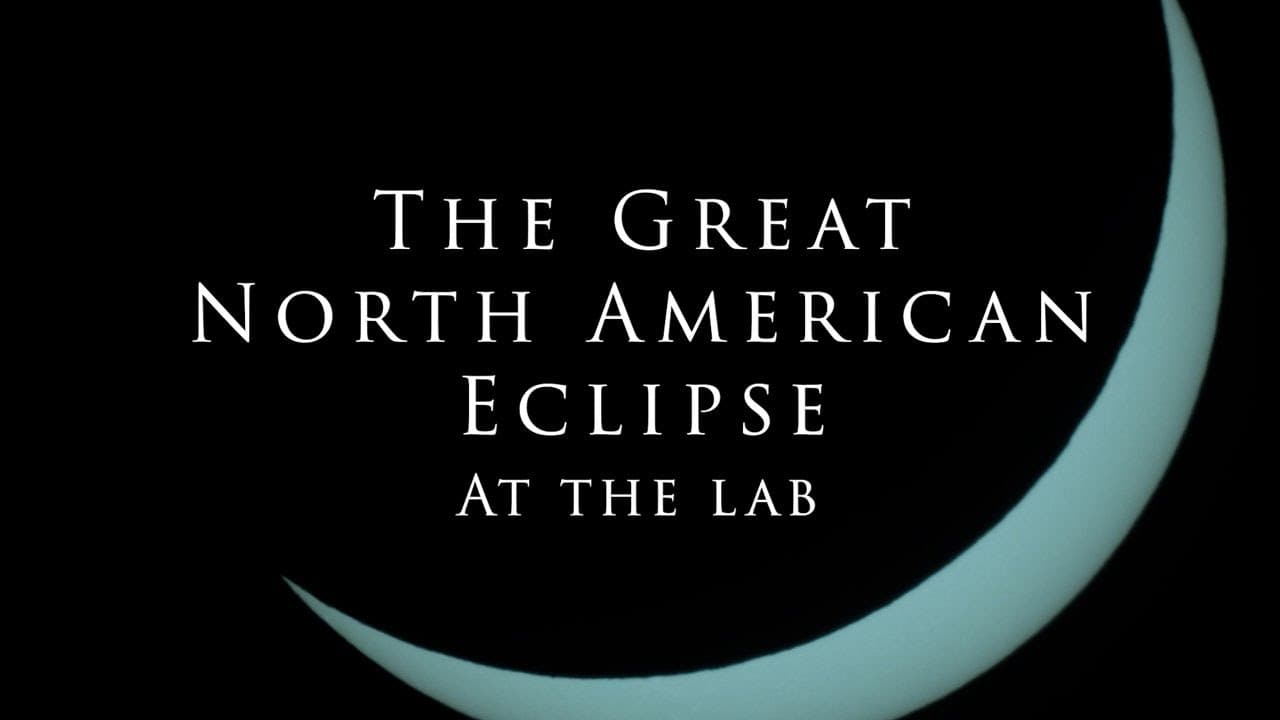
The Great North American Eclipse
TL;DR
A total solar eclipse captivates North America with celestial wonders.
Transcript
[music] It's a total solar eclipse today, where the moon passes in front of the sun almost completely. If you're in a certain part of the country, you'll see it completely cover the sun, called totality. If you're lucky enough to see that, then you can see the corona, which is the sort of outer atmosphere of the sun, which is normally invisible to ... Read More
Key Insights
- The total solar eclipse occurs when the moon completely covers the sun, revealing the sun's corona, which is usually invisible due to the sun's brightness.
- Observing a solar eclipse requires specific equipment like a telescope, which must be aligned with the north celestial pole to track the sun's motion accurately.
- Using a telescope without a filter during a solar eclipse can damage equipment and eyes, similar to focusing sunlight with a magnifying glass.
- Refractor telescopes, like the one used in the video, utilize lenses similar to camera lenses, while NASA often uses reflector telescopes that employ mirrors.
- Reflector telescopes, such as those used in JWST and Hubble, require larger mirrors because they reflect rather than bend light.
- Total solar eclipses occur multiple times a year globally, but in North America, they are rare, making this event particularly special.
- The event was a communal experience, with faculty, students, and staff gathering to witness the celestial phenomenon.
- The eclipse culminated in the moment of totality, marked by excitement and applause from the crowd.
Install to Summarize YouTube Videos and Get Transcripts
Explore YouTube Video Summarizer or Get YouTube Transcript Extractor
Questions & Answers
Q: What is the significance of the total solar eclipse?
The total solar eclipse is significant because it allows observers to see the sun's corona, the outer atmosphere typically obscured by the sun's brightness. This celestial event is rare in certain regions, such as North America, making it a unique opportunity for scientific observation and public engagement.
Q: How is a telescope used during a solar eclipse?
During a solar eclipse, a telescope must be precisely aligned with the north celestial pole to track the sun's motion as the Earth rotates. This alignment ensures accurate observation of the eclipse. Additionally, a filter is essential to prevent damage to the telescope and the observer's eyes from the intense sunlight.
Q: What are the differences between refractor and reflector telescopes?
Refractor telescopes use lenses to bend and focus light, similar to a camera lens, while reflector telescopes use mirrors to reflect light. Reflector telescopes, like those used by NASA for large-scale observations, require larger mirrors but are often preferred for their ability to capture more light without the need for glass elements.
Q: Why are solar eclipses rare in North America?
Solar eclipses are rare in North America because the path of totality, where the moon completely covers the sun, does not frequently pass over this region. While eclipses occur globally multiple times a year, geographical location determines the visibility of totality, making some areas experience them less frequently.
Q: What precautions are necessary when observing a solar eclipse?
When observing a solar eclipse, it is crucial to use a telescope with a proper solar filter to protect both the equipment and the observer's eyes from the intense sunlight. Without a filter, the concentrated sunlight can cause severe damage, similar to using a magnifying glass to focus sunlight on an object.
Q: What role do telescopes play in observing celestial events?
Telescopes are essential for observing celestial events as they magnify distant objects, allowing for detailed observation and documentation. Different types of telescopes, such as refractors and reflectors, offer various advantages depending on the event's requirements, such as light-gathering capability and image clarity.
Q: How do people typically react to witnessing a total solar eclipse?
Witnessing a total solar eclipse often elicits excitement and awe from observers. The moment of totality, when the moon fully covers the sun, is particularly impactful, leading to spontaneous reactions such as applause and expressions of wonder as people collectively experience the rare celestial event.
Q: What makes the sun's corona visible during a solar eclipse?
The sun's corona becomes visible during a total solar eclipse because the moon blocks the sun's bright disk, allowing the faint outer atmosphere to be seen. The corona is usually obscured by the sun's intense light, but during totality, it appears as a glowing halo around the darkened sun.
Summary & Key Takeaways
-
A total solar eclipse, where the moon completely covers the sun, allows observers to see the sun's corona, an otherwise invisible outer atmosphere. The event requires precise equipment alignment and appropriate filters to safely observe and document the phenomenon.
-
Different types of telescopes are used for observing celestial events. Refractor telescopes use lenses, while reflector telescopes use mirrors and are preferred for large-scale observations by organizations like NASA. Each type has distinct advantages and limitations.
-
Total solar eclipses are rare in North America, making this event a unique opportunity for communal observation and celebration of celestial wonders. The moment of totality was met with widespread excitement and applause from the gathered crowd.
Read in Other Languages (beta)
Share This Summary 📚
Summarize YouTube Videos and Get Video Transcripts with 1-Click
Try YouTube Summary with ChatGPT & Claude or YouTube Transcript Generator
Explore More Summaries from Cold Spring Harbor Laboratory 📚





Summarize YouTube Videos and Get Video Transcripts with 1-Click
Try YouTube Summary with ChatGPT & Claude or YouTube Transcript Generator