Calculating Pi with Real Pies - Numberphile
TL;DR
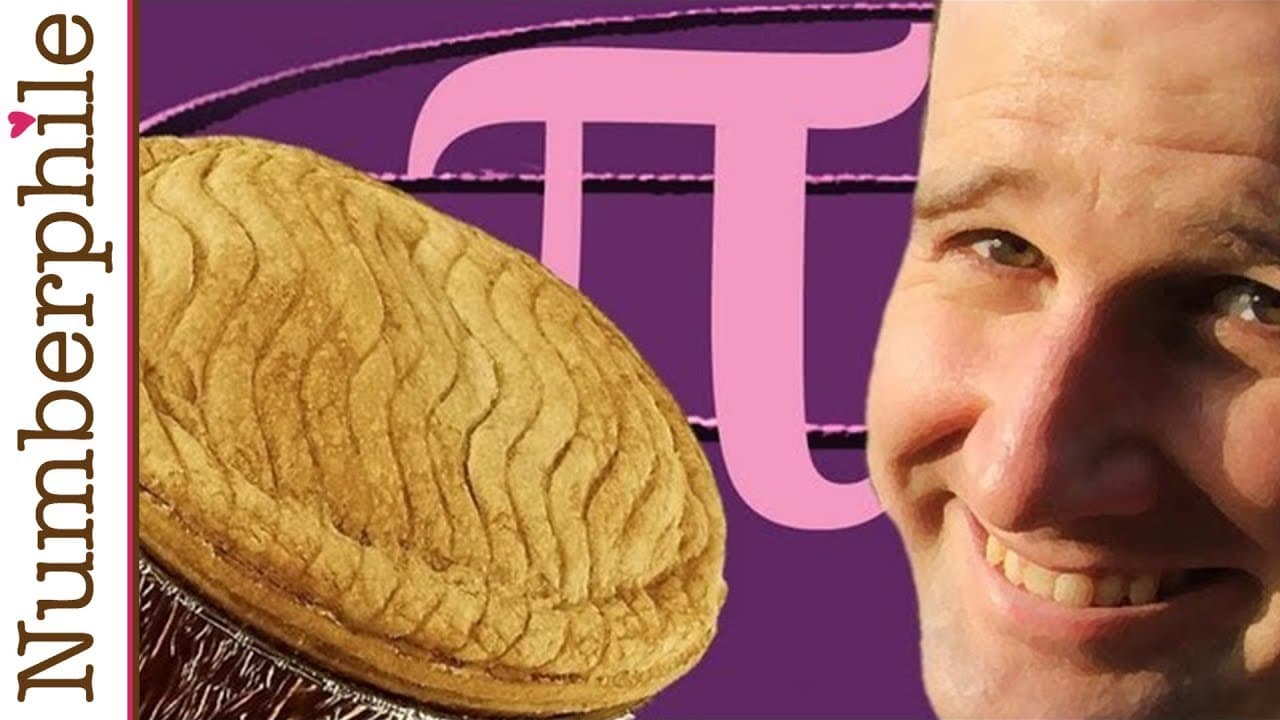
Using pies as a tool, the video demonstrates a unique way to calculate pi with surprising accuracy.
Transcript
[MUSIC PLAYING] My goal is to not actually do any measurements other than using pie. So the entire thing is going to pie based. We get the circumference in the exact number of pies-- give or take-- we get the diameter in number of pies. Divide one by the other, we get pi. [MUSIC PLAYING] Pi was historically rarely calculated this way, because it's ... Read More
Key Insights
- 🥧 Utilizing pies as a tool for measuring the circumference and diameter provides a novel approach to calculating pi.
- 🥧 Despite the historical inaccuracy of pie-based pi calculations, the presenter emphasizes the importance of precision for an accurate result.
- 🥧 The success of obtaining a close approximation of pi through pie-based measurements showcases the effectiveness of this unconventional method.
- 🥧 Positioning the pies accurately and making necessary adjustments are crucial for achieving precision in the pi calculation using pies.
- 🥧 The uniform size and consistent positioning of pies contribute to the accuracy of the pi calculation, showcasing the presenter's attention to detail.
- 😃 The joy and satisfaction expressed by the presenter upon obtaining the pi approximation emphasize the fun and creativity involved in the unique measurement method.
- 🥧 The presenter's demonstration of measuring the diameter using consistent-sized pies highlights the practicality and simplicity of this unconventional approach.
Install to Summarize YouTube Videos and Get Transcripts
Explore YouTube Video Summarizer or Get YouTube Transcript Extractor
Questions & Answers
Q: Why is using pies as a measurement tool for calculating pi considered inaccurate historically?
Historically, using pies for measuring the circumference and diameter of a circle to calculate pi was deemed inaccurate due to the imprecision of physically measuring with circular objects like pies.
Q: How did the presenter overcome the challenge of accuracy when using pies for pi calculation?
The presenter ensured accuracy by positioning the pies precisely and making adjustments to measure the diameter from the circle's edge, allowing for a more precise calculation of pi.
Q: What was the final approximation of pi obtained through the unique pie-based measurement method?
The presenter successfully calculated pi using the circumference and diameter measurements in pies, arriving at an approximation of 3.14, demonstrating the effectiveness of this unconventional method.
Q: How did the presenter use consistent-sized pies to ensure accuracy in the pi calculation?
By selecting pies of similar sizes and positioning them consistently, the presenter maintained uniform measurements, contributing to the accuracy of the pi calculation using pies.
Summary & Key Takeaways
-
The video showcases a creative method of calculating pi using pies as the unit of measurement, with the circumference and diameter represented by the number of pies.
-
Despite historical inaccuracy in pie-based pi calculation due to imprecise measurements, the video strives for precision for an accurate result.
-
The presenter successfully calculates pi by dividing the circumference measurement by the diameter measurement obtained using pies, achieving a close approximation of 3.14.
Read in Other Languages (beta)
Share This Summary 📚
Summarize YouTube Videos and Get Video Transcripts with 1-Click
Try YouTube Summary with ChatGPT & Claude or YouTube Transcript Generator
Explore More Summaries from Numberphile 📚






Summarize YouTube Videos and Get Video Transcripts with 1-Click
Try YouTube Summary with ChatGPT & Claude or YouTube Transcript Generator