Q&A 153: How High Can Bacteria Survive? And More...
TL;DR
Fraser answers viewer questions about space, alien life, stars, and black holes.
Transcript
it's question show time your questions my answers as always wherever you are across my channel every question pops into your brain just write it down i'll gather them up and i'll answer them here now a nerve warning uh this is the final episode of the season so every summer from july to the end of july or beginning of july to the beginning of septe... Read More
Key Insights
- 🛟 Bacteria can exist in the upper atmosphere, highlighting the potential spread of life via cometary interactions.
- 👾 Self-study and continuous learning are valuable alternatives to formal education, especially in astronomy and space science.
- 🫢 Terraforming Venus by crashing icy comets may not be effective due to the greenhouse gas effect of water vapor.
- 🖤 Proximity to a black hole could alter the perception of time and accelerate a civilization's observation of the universe's evolution.
- 👾 Space telescopes provide valuable insights into celestial phenomena, with the potential for future missions to explore outer planets like Neptune.
- 👾 Gravitational wave observatories, such as LIGO, continue to enhance our ability to detect cosmic events, with new technologies improving sensitivity and volume of space observed.
- 🥃 The visibility of satellites in the night sky presents both opportunities for stargazing and challenges for astronomical observations.
Install to Summarize YouTube Videos and Get Transcripts
Explore YouTube Video Summarizer or Get YouTube Transcript Extractor
Questions & Answers
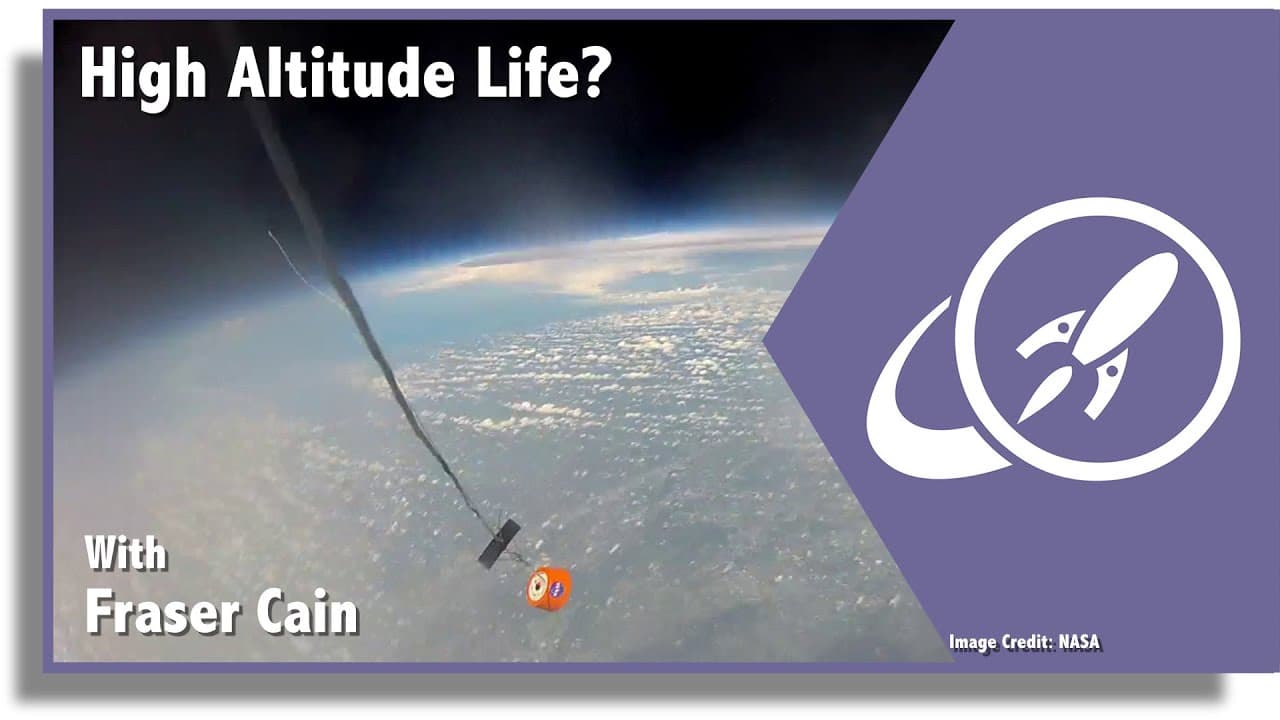
Q: How far up can bacteria be found in the atmosphere, and is this linked to the spread of life in the universe?
Bacteria can exist in the upper atmosphere, with the potential to be carried into space via comet interactions, suggesting a mechanism for spreading life between star systems.
Q: Is it too late to pursue education in astronomy and space science, and can self-study be a viable alternative?
Continuous learning and self-study are valuable in any field of interest, offering opportunities to expand knowledge and skills without formal academic credentials.
Q: Could crashing icy comets into Venus lead to terraforming and a possible ice age, similar to Earth's historical events?
Crashing comets into Venus would not lead to the desired cooling effect due to the greenhouse gas effect of water vapor, highlighting the challenges of planetary engineering.
Q: Would intelligent aliens perceive time differently near a black hole, altering their awareness and potential to observe the universe's evolution?
Proximity to a black hole could result in time dilation, accelerating the civilization's experience of the universe's timeline and potentially influencing their actions and understanding of cosmic events.
Summary & Key Takeaways
-
Fraser answers questions about bacteria in the atmosphere, the potential for life to spread via comets, and the implications of intelligent life in the Andromeda galaxy.
-
He discusses the possibility of terraforming Venus, the perception of time by aliens, and the visibility of satellites in the night sky.
-
Exploring topics such as space telescopes, space travel, and future missions to outer planets like Neptune.
Read in Other Languages (beta)
Share This Summary 📚
Summarize YouTube Videos and Get Video Transcripts with 1-Click
Try YouTube Summary with ChatGPT & Claude or YouTube Transcript Generator
Explore More Summaries from Fraser Cain 📚
Summarize YouTube Videos and Get Video Transcripts with 1-Click
Try YouTube Summary with ChatGPT & Claude or YouTube Transcript Generator