Real Danger from Solar Flares, Lagrange Interferometers, Interstellar Communications | Q&A 240
TL;DR
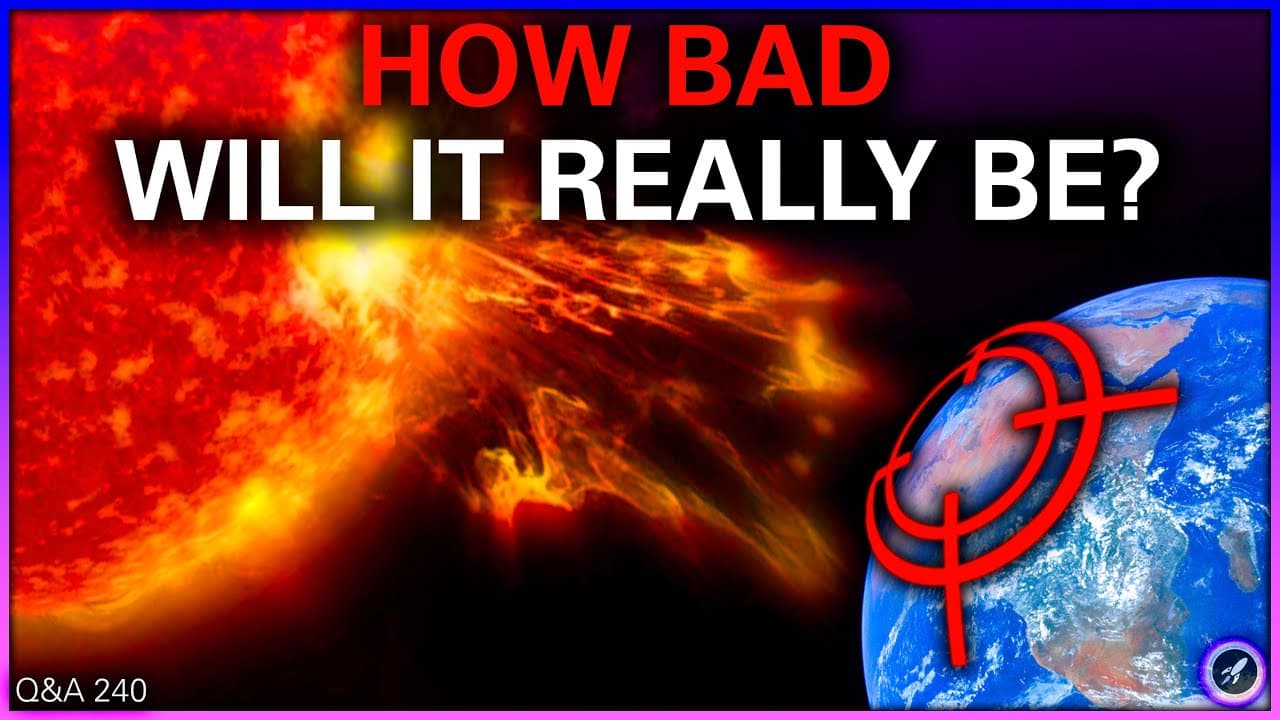
Answering diverse questions about rogue planets, solar flares, and amateur astronomy contributions.
Transcript
could a road Planet mess up the solar system what kinds of damage could we expect from an intense solar flare and is there any way for amateur astronomers to contribute to science all this and more in this week's question show Welcome to the question show your questions my answers as always wherever you are across my channel if a question Pops in y... Read More
Key Insights
- 🧭 Rogue planets passing through the solar system can have significant effects on planetary orbits based on size and trajectory.
- ✊ Intense solar flares pose risks to satellites and electronic devices on Earth, potentially causing power outages and infrastructure damage.
- 🔬 Amateur astronomers can make significant contributions to science by discovering celestial objects and confirming astronomical phenomena.
- 🐎 Gravitational assists can enhance spacecraft speeds but are limited by the escape velocity of the solar system.
- ❓ Cosmic microwave background radiation provides crucial insights into the universe's origins and structure.
- 🛰️ Space debris at different altitudes around Earth present varying risks and longevity in their orbits.
- 🙂 Quantum entanglement cannot be used for faster-than-light communication, and alternative methods for deep space communication are necessary.
Install to Summarize YouTube Videos and Get Transcripts
Explore YouTube Video Summarizer or Get YouTube Transcript Extractor
Questions & Answers
Q: Could a rogue planet disrupt the solar system's planetary orbits?
The influence of a rogue planet passing through the solar system depends on its size, trajectory, and distance from other planets. The potential for planetary disruptions is real but likely rare.
Q: What damages can be expected from intense solar flares?
Intense solar flares can disrupt electronic devices on Earth through power surges, potentially leading to widespread power outages and satellite damage, posing significant challenges for modern technology.
Q: How can amateur astronomers contribute to science?
Amateur astronomers play a crucial role in discovering supernovae, tracking asteroids, confirming exoplanets, and participating in various citizen science projects, making valuable contributions to astronomy research.
Q: Is there a practical limit to using consecutive gravity assists?
The speed of spacecraft using gravity assists is limited by the escape velocity of the solar system, preventing them from exceeding certain speeds despite multiple assists from planets and other celestial bodies.
Summary & Key Takeaways
-
Rogue planets passing through the solar system can disrupt planetary orbits based on their size and trajectory.
-
Intense solar flares can damage satellites and infrastructure on Earth through power surges.
-
Amateur astronomers can contribute to science by discovering supernovae, asteroids, and confirming exoplanets.
Read in Other Languages (beta)
Share This Summary 📚
Summarize YouTube Videos and Get Video Transcripts with 1-Click
Try YouTube Summary with ChatGPT & Claude or YouTube Transcript Generator
Explore More Summaries from Fraser Cain / Universe Today Podcast 📚


Summarize YouTube Videos and Get Video Transcripts with 1-Click
Try YouTube Summary with ChatGPT & Claude or YouTube Transcript Generator