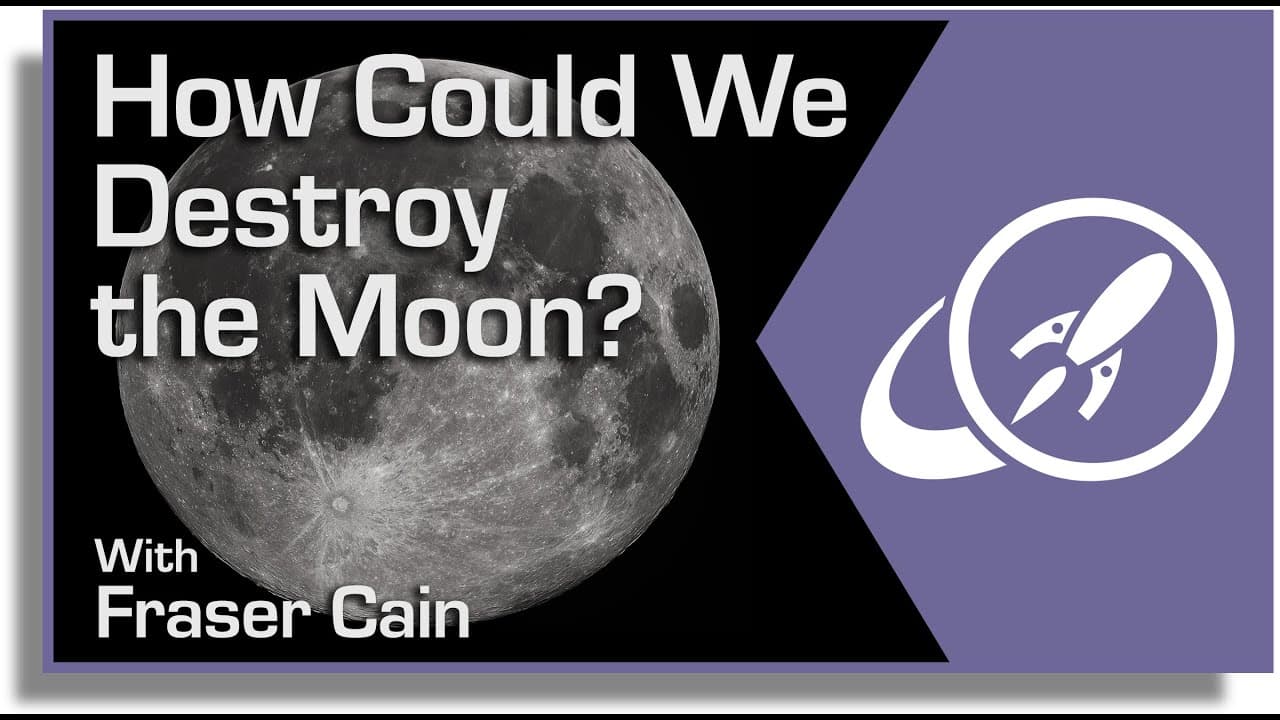
How Could We Destroy the Moon?
TL;DR
To destroy the Moon, one would need massive energy equivalent to the Sun's and a strategic approach.
Transcript
in the immortal words of mr. burns ever since the beginning of time man has wished to destroy the Sun it is a numbered Sun but supervillains being the practical folks they are a little more worthy goal will be to destroy the moon or at least to face it horribly nothing wrecks a beautiful night sky like that hideous pockmarked spotlight what would i... Read More
Key Insights
- 💄 Destroying the Moon requires significantly less energy than Earth, making it a 'doable' scenario.
- 😂 Utilizing the Sun's energy output could be a feasible method for tearing the Moon apart quickly.
- ⛔ Theoretical methods such as exploiting the Roche limit offer alternative approaches to destroying the Moon.
- 💨 The Moon's trajectory away from Earth adds complexity to any potential plans for its destruction.
- 🪡 Considerations for the energy levels needed and possible consequences of destroying the Moon are crucial.
- ⛔ Future events like Phobos reaching Mars's Roche limit offer insights into celestial body destruction.
- ❓ Theoretical discussions around destroying celestial bodies provide intriguing insights into astrophysics.
Install to Summarize YouTube Videos and Get Transcripts
Explore YouTube Video Summarizer or Get YouTube Transcript Extractor
Questions & Answers
Q: What is the concept of binding energy in the context of destroying celestial bodies?
Binding energy refers to the energy required to dismantle an object held together by gravity. Destroying the Moon involves overcoming its relatively lower binding energy compared to Earth.
Q: How does directing the Sun's energy towards the Moon facilitate its destruction?
By focusing the Sun's immense energy on the Moon, it can potentially tear apart within minutes due to the energy output comparable to billions of hydrogen bombs.
Q: What role does the Roche limit play in the theoretical destruction of the Moon?
The Roche limit dictates the minimum distance at which the Moon can orbit Earth without being shredded due to tidal forces, providing another method for its potential destruction.
Q: Why does the Moon's drift from Earth pose a challenge in the hypothetical scenario of destroying it?
The Moon's increasing distance from Earth makes it physically harder to affect, requiring even more energy and effort to potentially dismantle it.
Summary & Key Takeaways
-
Destroying the Moon requires 1,800 times less energy than destroying Earth.
-
Examples of energy levels needed and methods to dismantle the Moon are discussed.
-
The Moon's drift from Earth complicates the theoretical idea of destroying it.
Read in Other Languages (beta)
Share This Summary 📚
Summarize YouTube Videos and Get Video Transcripts with 1-Click
Try YouTube Summary with ChatGPT & Claude or YouTube Transcript Generator
Explore More Summaries from Fraser Cain 📚
Summarize YouTube Videos and Get Video Transcripts with 1-Click
Try YouTube Summary with ChatGPT & Claude or YouTube Transcript Generator