Are Science and Religion Always in Conflict?
TL;DR
Science and religion are often seen as opposing forces, but this view is oversimplified. While there are historical and ongoing tensions, many individuals and groups find ways to harmonize their religious beliefs with scientific understanding. The relationship is complex and multifaceted, involving not just epistemological differences but also cultural, historical, and ethical considerations.
Transcript
Hi, I’m John Green, and welcome to Crash Course Religions. So, meet the Three Sisters – corn, beans, and squash. According to Haudenosaunee tradition, they sprouted from the daughter of a spiritual figure, Sky Woman, providing the gift of agriculture. The Haudenosaunee have long believed the Three Sisters grew best when planted together —both a ... Read More
Key Insights
- The Three Sisters agricultural practice demonstrates how traditional ecological knowledge can align with scientific understanding.
- Religious beliefs can sometimes conflict with scientific views, as seen in debates over Earth's age and evolution.
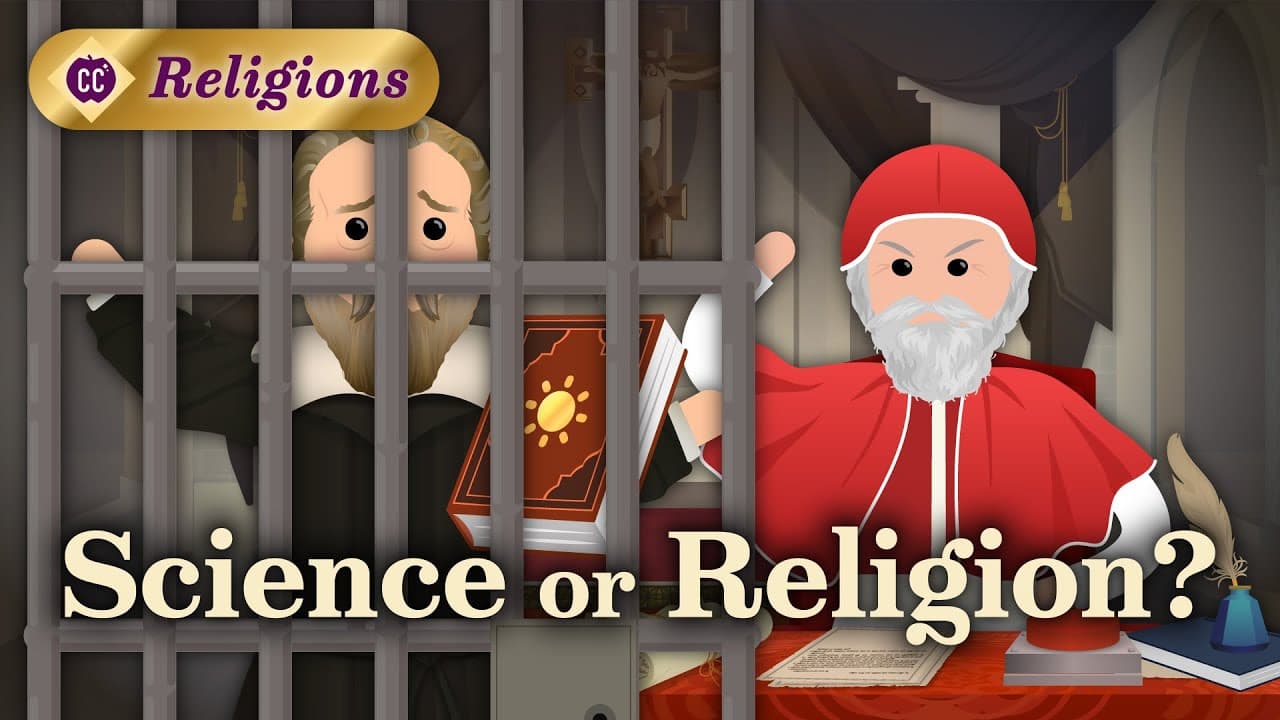
- The story of Galileo is often cited as a major conflict between science and religion, but it also involved political power dynamics.
- The conflict thesis, popularized in the 19th century, claimed science and religion are inherently incompatible, but this view is too simplistic.
- Many religious scientists exist, showing that science and religion can coexist and even complement each other.
- Traditional ecological knowledge, like that of Indigenous groups, is increasingly recognized by scientists in addressing environmental issues.
- The Mauna Kea telescope controversy highlights the complex interplay of science, religion, ecology, and cultural history.
- Nontheistic religions typically do not conflict with scientific inquiry, and many theistic religions find ways to integrate scientific perspectives.
Install to Summarize YouTube Videos and Get Transcripts
Explore YouTube Video Summarizer or Get YouTube Transcript Extractor
Questions & Answers
Q: How do the Three Sisters illustrate the compatibility of science and religion?
The Three Sisters agricultural practice, rooted in Haudenosaunee spirituality, shows compatibility between science and religion. This method involves planting corn, beans, and squash together, a practice both spiritual and practical. Modern botanists have confirmed its benefits, demonstrating how traditional ecological knowledge aligns with scientific understanding, thus bridging the gap between spiritual beliefs and scientific evidence.
Q: What are some historical conflicts between science and religion?
Historical conflicts include the Galileo affair, where Galileo's heliocentric model challenged the Catholic Church's geocentric view, and the creation-evolution debate, where Darwin's evolution theory opposed literal interpretations of religious creation stories. These conflicts often involved not just religious beliefs but also political and cultural power dynamics, highlighting the complex nature of science-religion tensions.
Q: What is the conflict thesis regarding science and religion?
The conflict thesis, popularized in the 19th century by John William Draper and Andrew Dickson White, posits that science and religion are fundamentally incompatible. It argues that scientific and religious methods of gaining knowledge are irreconcilable, and that science inevitably challenges religious authority. However, this thesis oversimplifies the diverse ways people integrate science and religion.
Q: How do religious scientists reconcile their faith with scientific inquiry?
Religious scientists, such as George Washington Carver and Barbara McClintock, often view their scientific work as complementary to their faith. They see scientific inquiry as a means of understanding the natural world, which they believe is consistent with their religious beliefs. This perspective allows them to harmonize their spiritual and scientific pursuits, demonstrating that faith and science can coexist.
Q: What role does traditional ecological knowledge play in modern science?
Traditional ecological knowledge, held by Indigenous communities, plays a crucial role in modern science, particularly in addressing environmental challenges. Scientists collaborate with Indigenous groups to apply this knowledge, which is based on centuries of observation and interaction with the environment, to issues like climate change and sustainable agriculture, thus integrating cultural wisdom with scientific research.
Q: Why is the Mauna Kea telescope project controversial?
The Mauna Kea telescope project is controversial due to its location on a sacred site for Indigenous Hawaiians, who view the mountain as spiritually significant. The project raises concerns about ecological impacts and cultural preservation. This controversy reflects broader tensions between scientific advancement and the rights and beliefs of Indigenous communities, illustrating the complex interplay of science, religion, and cultural heritage.
Q: How do nontheistic religions interact with scientific inquiry?
Nontheistic religions, which do not center around a belief in deities, generally do not conflict with scientific inquiry. These belief systems, often focused on philosophical and ethical teachings, can coexist with scientific perspectives. They typically emphasize understanding the natural world through observation and reason, aligning well with scientific methodologies and encouraging a harmonious relationship with science.
Q: What are some ways science and religion can be integrated?
Science and religion can be integrated by recognizing their distinct but complementary roles in understanding the world. Many religious traditions accommodate scientific findings by interpreting sacred texts metaphorically rather than literally. Collaborative efforts, like those between scientists and Indigenous communities, also exemplify integration, where religious and cultural wisdom informs scientific research, enriching both fields.
Summary & Key Takeaways
-
Science and religion are often perceived as adversaries, but this conflict is more nuanced than commonly portrayed. Historical events like the Galileo affair and the creation-evolution debate highlight points of tension, yet many individuals reconcile their religious beliefs with scientific understanding. The conflict thesis oversimplifies this relationship, ignoring the diverse ways people integrate these fields.
-
The Three Sisters agricultural practice exemplifies how Indigenous knowledge aligns with scientific principles, showing that traditional beliefs can coexist with modern science. Similarly, religious scientists demonstrate that faith and scientific inquiry are not mutually exclusive. The ongoing Mauna Kea telescope debate underscores the complex interactions of science, religion, and cultural heritage.
-
While the conflict thesis suggests an inherent incompatibility between science and religion, many religious traditions and individuals find harmony between the two. The relationship involves not only epistemological and methodological differences but also ethical, cultural, and historical dimensions. Recognizing this complexity offers a more accurate understanding of how science and religion interact.
Read in Other Languages (beta)
Share This Summary 📚
Summarize YouTube Videos and Get Video Transcripts with 1-Click
Try YouTube Summary with ChatGPT & Claude or YouTube Transcript Generator
Explore More Summaries from CrashCourse 📚


Summarize YouTube Videos and Get Video Transcripts with 1-Click
Try YouTube Summary with ChatGPT & Claude or YouTube Transcript Generator