Is the SAVE Plan Right for You and Your Federal Student Loans?
TL;DR
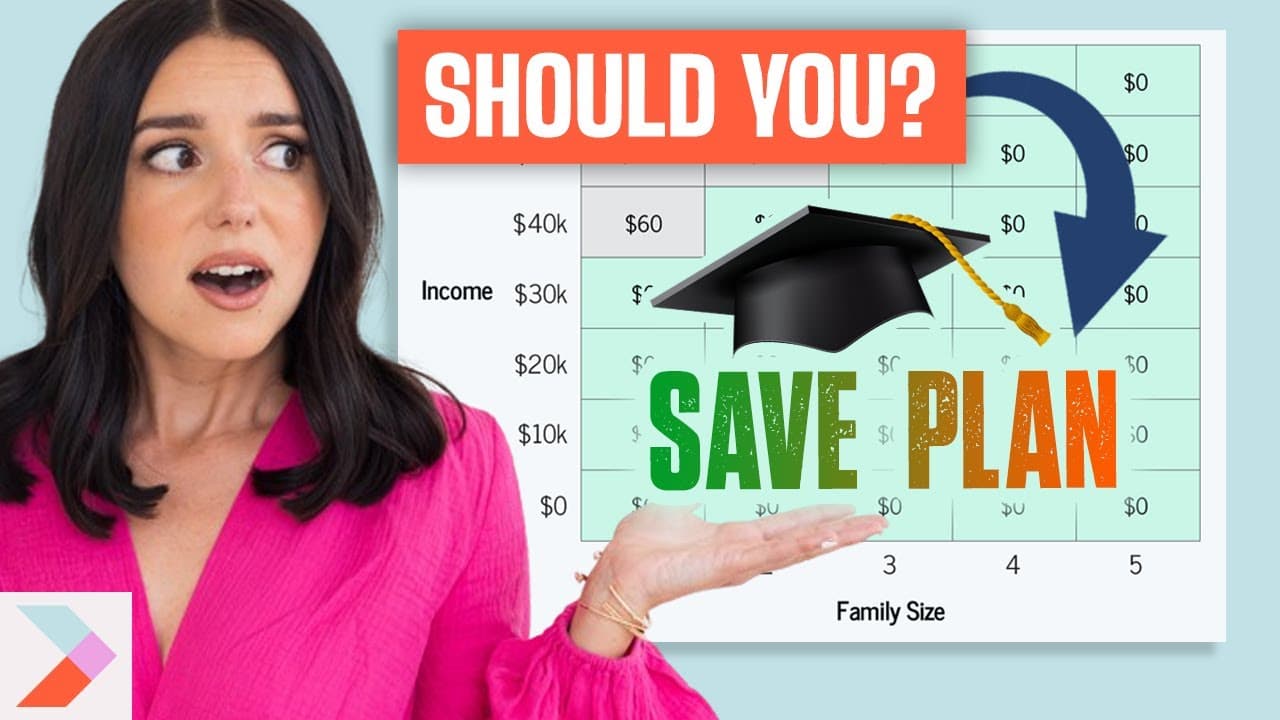
The SAVE Plan may be right for federal student loan borrowers with low income and high debt because payments depend on income and family size and may fall to zero. It also prevents unpaid interest from being added after a scheduled payment, but eligibility depends on loan type and borrowers must recertify annually. Read on to compare its payment rules, eligible loans, and tradeoffs.
Transcript
the safe plan is an income-driven repayment Plan offered by the Department of Education if you have federal student loans in many cases it lowers your monthly payment to zero but is it a right plan for you stick around hey guys it's Justine the host of the debt free Millennials Channel where we help Millennials Crush debt achieve Financial confiden... Read More
Key Insights
- 🧑🎓 The SAVE plan offers income-driven repayment for federal student loans, potentially reducing payments based on income and family size.
- 🧑🎓 Eligibility for the SAVE plan is restricted to certain types of federal student loans, with some loans being ineligible for participation.
- 🌱 Borrowers on the SAVE plan must recertify annually to report income changes that may impact monthly payments.
- 😘 The SAVE plan may be beneficial for borrowers with low income and high student loan debt, particularly recent graduates starting in entry-level positions.
- 🌱 Borrowers with balances under $112,000 on the SAVE plan may be eligible for loan forgiveness after consistent payments for 10 years.
- 🤣 The SAVE plan is set to roll out in July 2024, with changes to repayment calculations and forgiveness options.
- 🌱 Comparison of different repayment plans is crucial before enrolling in the SAVE plan, considering individual financial situations and goals.
Install to Summarize YouTube Videos and Get Transcripts
Explore YouTube Video Summarizer or Get YouTube Transcript Extractor
Questions & Answers
Q: Is the SAVE Plan right for you and your federal student loans?
The SAVE Plan may be a good fit if you have eligible federal student loans, earn relatively little, and carry a high balance. The transcript recommends comparing it with other repayment plans because rising income can increase your payment and some loan types are excluded.
Q: What is the SAVE Plan?
The SAVE Plan is an income-driven repayment plan offered by the Department of Education for federal student loans. It is described as an overhaul of the REPAYE Plan, with REPAYE borrowers automatically enrolled in SAVE.
Q: How are SAVE Plan payments determined?
Payments are based on income, family size, and discretionary income. The transcript says undergraduate loans use 5% of discretionary income, graduate loans use 10%, and a mixture uses a weighted average between those rates.
Q: Can the SAVE Plan reduce a monthly payment to zero?
Yes. The transcript says a single earner making around $32,400 would not be required to make payments and also cites a StudentAid.gov example showing a zero payment at $32,800 per year or less.
Q: Which student loans are eligible for the SAVE Plan?
The transcript identifies Direct Subsidized Loans, Direct Unsubsidized Loans, and loans made to graduate or professional students as eligible. It also says certain Direct Consolidation Loans may qualify if they did not repay Parent PLUS Loans.
Q: Which loans are ineligible for the SAVE Plan?
Parent PLUS Loans and consolidation loans that repaid Parent PLUS Loans are described as ineligible. The transcript also lists FFEL loans among the loans that cannot use the plan.
Q: How does the SAVE Plan handle unpaid interest?
After a scheduled payment is made, accrued unpaid interest is not added to the loan balance. This feature can prevent the balance from growing because of remaining interest after the required payment.
Q: What should borrowers consider before enrolling in the SAVE Plan?
Borrowers must recertify every year and report their income, so career-related income increases could raise future monthly payments. The transcript advises comparing repayment plans side by side and considering whether SAVE supports faster repayment, including through extra payments.
Summary & Key Takeaways
-
The SAVE plan is an income-driven repayment option offered by the Department of Education for federal student loans.
-
Eligibility for the SAVE plan is based on income and family size, with some borrowers potentially having their monthly payments reduced to zero.
-
Borrowers on the SAVE plan must recertify annually, reporting income changes that may impact monthly payments.
Read in Other Languages (beta)
Share This Summary 📚
Summarize YouTube Videos and Get Video Transcripts with 1-Click
Try YouTube Summary with ChatGPT & Claude or YouTube Transcript Generator
Explore More Summaries from Debt Free Millennials 📚


Summarize YouTube Videos and Get Video Transcripts with 1-Click
Try YouTube Summary with ChatGPT & Claude or YouTube Transcript Generator