What Are the Strange Features of Planet Venus?
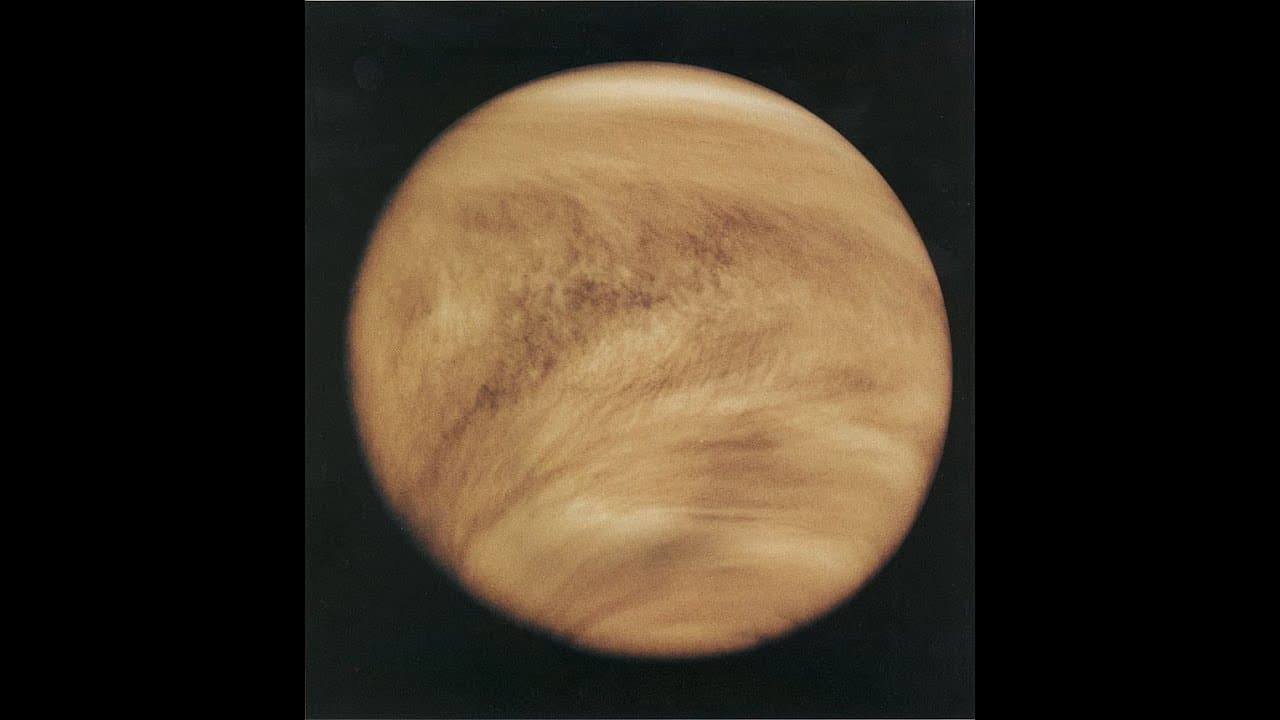
TL;DR
Venus has unique characteristics, including metal snow, extreme temperatures due to a runaway greenhouse effect, and astonishing wind speeds exceeding 400 mph. Its young surface signals recent volcanic activity, while its backward rotation and potential microbial life add to its mystery. Additionally, Venus's future could involve interactions with Earth and other planets as solar system dynamics evolve.
Transcript
One of the stranger objects in our solar system is also one that gets very little attention in comparison to planets like Mars. In reality, however, Venus stands as a planet completely unique in the solar system, and harbors some of the solar system’s oddest natural features. So here are ten strange aspects of Planet Venus. Number 10. It Snows Meta... Read More
Key Insights
- 🤘 Venus experiences unique phenomena, such as metal snow and a runaway greenhouse effect, making it different from other planets in the solar system.
- 💨 The planet's wind speeds, resurfacing, and reflective properties contribute to its strange nature.
- 💥 Venus's backward rotation, potential collisions, and potential for microbial life add to its enigmatic characteristics.
- 💥 The possibility of future planet migration and collisions can be managed over long periods of time.
Install to Summarize YouTube Videos and Get Transcripts
Explore YouTube Video Summarizer or Get YouTube Transcript Extractor
Questions & Answers
Q: What causes the highly reflective areas on Venus's surface?
The high elevation areas on Venus reflect radar images due to the presence of minerals that evaporate in lowlands and precipitate out as lead and bismuth sulfides at cooler, higher altitudes.
Q: Why does Venus rotate backwards and have a longer day than year?
The backward rotation and slow rotation speed of Venus are still not fully understood, but it may be due to a different formation process and effects of tidal forces and planetary perturbations.
Q: What causes lightning on Venus despite its lack of the necessary conditions?
Scientists are uncertain about the exact mechanism, but persistent measurements have detected lightning on Venus, suggesting the presence of unknown factors contributing to its occurrence.
Q: Is there a possibility of Venus colliding with Earth in the future?
While it is among the least likely scenarios, simulations show potential gravitational interactions between Venus, Earth, and Mars that could lead to collisions or significant orbital changes.
Summary & Key Takeaways
-
Venus experiences metal snow in its high elevation areas, which consists of evaporated minerals that precipitate out at cooler altitudes.
-
A runaway greenhouse effect transformed Venus from an Earth-like planet to its current extreme state, with high temperatures and atmospheric pressure.
-
Venus has astonishingly high wind speeds, reaching over 400 miles per hour in its lower atmosphere.
-
The planet's surface is young, having been recently resurfaced, possibly due to periodic cracking and lava flows caused by heat trapped in its mantle.
Read in Other Languages (beta)
Share This Summary 📚
Summarize YouTube Videos and Get Video Transcripts with 1-Click
Try YouTube Summary with ChatGPT & Claude or YouTube Transcript Generator
Explore More Summaries from John Michael Godier 📚

Summarize YouTube Videos and Get Video Transcripts with 1-Click
Try YouTube Summary with ChatGPT & Claude or YouTube Transcript Generator