How to Structure a Real Estate Business for Tax Benefits
TL;DR
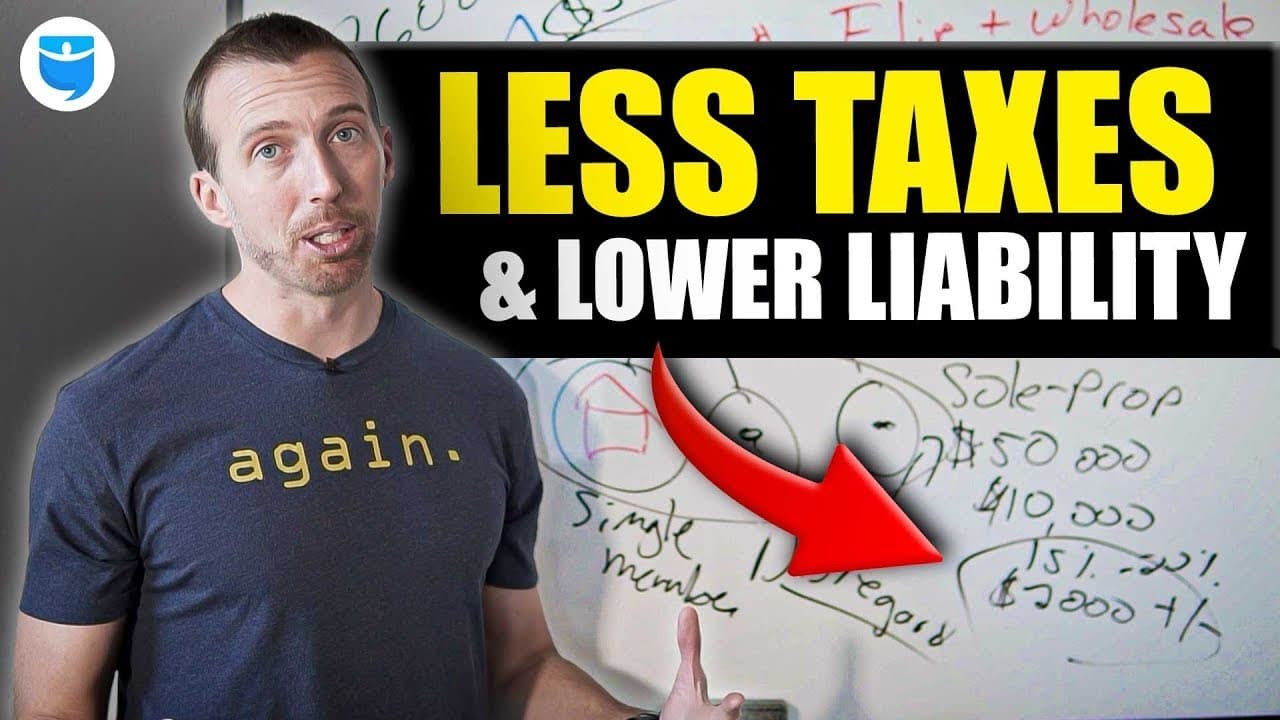
To effectively set up a real estate business, consider creating an S corporation for active income and LLCs for liability protection. This structure can help minimize self-employment taxes and provide a balanced approach to managing risk and tax obligations. Always consult with a qualified CPA and attorney experienced in real estate to tailor the setup to your specific needs.
Transcript
hey everybody I'm tarl yarber with fixated real estate and over the years I've been asked many many times how do I set up my real estate business to either reduce my liabilities or pay less taxes basically my entity structure my corporate structure should I be buying properties in an LLC or an S corp should I be doing it in my own name how should I... Read More
Key Insights
- An S corporation can help reduce self-employment taxes for real estate investors.
- LLCs provide liability protection by isolating individual properties from personal assets.
- Active income from flipping or wholesaling is taxed differently than passive rental income.
- Disregarded LLCs are taxed similarly to sole proprietorships but offer liability protection.
- Choosing the right CPA and attorney with real estate experience is crucial.
- Setting up an S corp requires paying oneself a reasonable salary to avoid IRS penalties.
- Complex entity structures can lead to high accounting and legal costs if not justified by income.
- Balancing liability protection with tax efficiency is key to structuring a real estate business.
Install to Summarize YouTube Videos and Get Transcripts
Explore YouTube Video Summarizer or Get YouTube Transcript Extractor
Questions & Answers
Q: How to reduce self-employment tax in real estate?
To reduce self-employment tax in real estate, consider setting up an S corporation. This allows you to pay yourself a reasonable salary, subject to employment taxes, while the remaining income can be distributed as dividends, which are not subject to self-employment tax. Consulting with a CPA is essential to ensure compliance with IRS regulations.
Q: What is the benefit of using an LLC for real estate?
Using an LLC for real estate provides liability protection by isolating individual properties from personal assets. This means that if one property faces legal action, personal assets and other properties are protected. LLCs also offer flexibility in management and tax treatment, making them a popular choice for real estate investors.
Q: Why separate active and passive income in real estate?
Separating active and passive income in real estate is important because they are taxed differently. Active income, such as from flipping houses, is subject to higher income tax rates, while passive income from rentals may benefit from lower capital gains tax rates. Proper structuring can optimize tax benefits and simplify accounting.
Q: How to choose the right CPA and attorney for real estate?
Choosing the right CPA and attorney for real estate involves ensuring they have experience with real estate transactions and understand the specific needs of investors. They should ask about your income types and have a track record with real estate clients. Referrals from other investors can be valuable in finding qualified professionals.
Q: When should you consider setting up an S corporation?
Consider setting up an S corporation when your real estate business generates substantial active income, and the tax savings from eliminating self-employment tax outweigh the costs of maintaining the corporate structure. Consult with a CPA to evaluate your specific financial situation and ensure compliance with IRS requirements.
Q: What are the costs associated with maintaining an S corporation?
Maintaining an S corporation involves costs such as filing corporate tax returns, paying for bookkeeping services, and potentially higher legal fees for setting up and managing the structure. These costs can range from $1,500 to $3,000 annually for a simple S corp, but may be higher for more complex setups. Ensure the tax savings justify these expenses.
Q: How many LLCs should a real estate investor have?
The number of LLCs a real estate investor should have depends on their risk tolerance and business strategy. Some prefer an LLC for each property to maximize liability protection, while others group properties by geography or type. It's important to balance liability protection with the complexity and cost of managing multiple entities.
Q: What is the role of a holding LLC in real estate?
A holding LLC in real estate serves as an umbrella entity that owns other LLCs holding individual properties. This structure centralizes management and can provide additional liability protection. The holding LLC can also facilitate easier transfer of ownership interests and streamline accounting and tax reporting for the entire portfolio.
Summary & Key Takeaways
-
Setting up a real estate business involves choosing the right entity structure to balance liability protection and tax efficiency. An S corporation is beneficial for active income, reducing self-employment taxes, while LLCs provide liability protection. Consulting with experienced CPAs and attorneys is crucial for tailored advice.
-
Active income, such as from flipping houses, is taxed differently from passive income, like rental properties. Using an S corp for active income can help reduce tax liabilities, while LLCs protect individual assets. It's important to understand the tax implications of each structure and consult professionals.
-
A well-structured real estate business can minimize tax obligations and protect personal assets. This involves using S corporations for active income and LLCs for liability protection. The complexity of the structure should be justified by the income generated, and professional advice is essential to navigate legal and tax requirements.
Read in Other Languages (beta)
Share This Summary 📚
Summarize YouTube Videos and Get Video Transcripts with 1-Click
Try YouTube Summary with ChatGPT & Claude or YouTube Transcript Generator
Explore More Summaries from BiggerPockets 📚




Summarize YouTube Videos and Get Video Transcripts with 1-Click
Try YouTube Summary with ChatGPT & Claude or YouTube Transcript Generator