Does Life Depend on a Multiverse?

TL;DR
The universe's fundamental constants appear finely tuned to support life. If these constants were slightly different, life might not exist. This fine-tuning suggests three possibilities: sheer luck, intentional design, or the existence of many universes with varying constants, where ours happens to support life. The multiverse theory, supported by some scientific ideas, could explain this phenomenon.
Transcript
Here's one totally uncontroversial statement. Life exists in our universe. Okay. Let's try another one. Therefore our universe is capable of producing and supporting life. Okay. Let try one final uncontroversial statement. Therefore there are countless universes. Hmmm. Our universe seems to operate according to a set of fundamental rules that we tr... Read More
Key Insights
- Life exists in our universe, indicating it can produce and support life.
- The universe's fundamental constants are finely tuned, suggesting life might not exist if they were different.
- Three possibilities explain this fine-tuning: luck, intentional design, or a multiverse.
- The anthropic principle suggests we find ourselves in a universe capable of supporting observers.
- The strong anthropic principle implies observer selection bias in a finely-tuned universe.
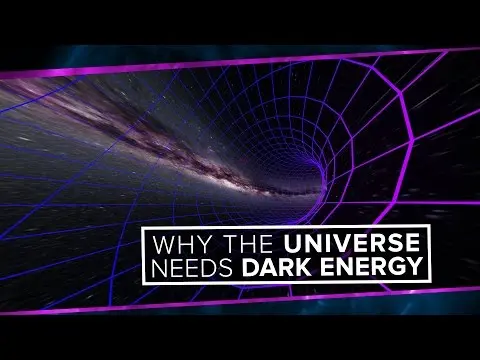
- The cosmological constant, related to dark energy, is a finely-tuned parameter crucial for life's existence.
- String theory and eternal inflation support the idea of a multiverse with varying constants.
- The fine-tuning of the universe is a controversial topic, with debates on whether it predicts a multiverse.
Install to Summarize YouTube Videos and Get Transcripts
Explore YouTube Video Summarizer or Get YouTube Transcript Extractor
Questions & Answers
Q: How does the fine-tuning of the universe support the multiverse theory?
The fine-tuning of the universe's fundamental constants suggests that if they were different, life might not exist. This implies three possibilities: luck, intentional design, or a multiverse with varying constants. The multiverse theory, supported by string theory and eternal inflation, proposes many universes with different constants, explaining the fine-tuning observed in our universe.
Q: What is the anthropic principle and how does it relate to the multiverse?
The anthropic principle suggests that we find ourselves in a universe capable of supporting observers. The strong anthropic principle implies observer selection bias in a finely-tuned universe. For this explanation to work, many non-finely tuned universes must exist, supporting the multiverse concept where different universes have varying fundamental constants.
Q: Why is the cosmological constant considered finely-tuned?
The cosmological constant, related to dark energy, is finely-tuned because its precise value allows the universe to expand at a rate that supports structure formation. If it were slightly different, the universe might expand too quickly, preventing galaxies and stars from forming. This fine-tuning is crucial for life's existence and supports the multiverse theory, where different universes have varying constants.
Q: What role do fundamental constants play in the universe's ability to support life?
Fundamental constants, such as the speed of light and the masses of elementary particles, determine the universe's physical laws. Their precise values allow for the formation of stars, galaxies, and complex chemistry, all essential for life. If these constants were slightly different, the universe might not support life, suggesting fine-tuning and supporting the multiverse theory.
Q: How does string theory relate to the multiverse concept?
String theory, a candidate for a theory of everything, suggests that the universe's fundamental constants are set by the configuration of extra dimensions. Countless configurations are possible, leading to different constants in different universes. This supports the multiverse concept, where varying constants across universes explain the fine-tuning observed in our universe.
Q: What is eternal inflation and how does it support the multiverse theory?
Eternal inflation is a theory where bubble universes form in a larger exponentially expanding spacetime. In each bubble, the constants of nature, including the vacuum energy, take on different values. This process creates a multiverse with varying constants, supporting the idea that our universe's fine-tuning is a result of being in one of many universes where life is possible.
Q: How does the fine-tuning of the universe challenge the idea of sheer luck?
The fine-tuning of the universe's fundamental constants challenges the idea of sheer luck because the precise values needed for life are so specific. If these constants were slightly different, the universe might not support life. This improbability suggests that sheer luck is unlikely, supporting the idea of a multiverse where many universes exist with varying constants.
Q: What are coupling constants and why are they important?
Coupling constants define the relative strengths of the fundamental forces, such as electromagnetism and gravity. They determine how particles interact and are crucial for the formation of stable atoms, stars, and galaxies. The precise values of these constants allow for complex chemistry and life. If they were different, the universe might be a mist of subatomic particles, unable to support life.
Summary & Key Takeaways
-
The universe's fundamental constants are finely tuned, allowing life to exist. If these constants were slightly different, the universe might not support life, suggesting three possibilities: luck, intentional design, or a multiverse. The anthropic principle and theories like string theory and eternal inflation support the multiverse idea.
-
The anthropic principle explains why we find ourselves in a life-supporting universe, suggesting observer selection bias. The strong anthropic principle requires the existence of many non-finely tuned universes, paralleling the idea of many uninhabitable planets.
-
The cosmological constant is a crucial finely-tuned parameter, related to dark energy. Its precise value prevents the universe from expanding too quickly, allowing structure formation. Theories like string theory propose varying constants across different universes, supporting the multiverse concept.
Read in Other Languages (beta)
Share This Summary 📚
Summarize YouTube Videos and Get Video Transcripts with 1-Click
Try YouTube Summary with ChatGPT & Claude or YouTube Transcript Generator
Explore More Summaries from PBS Space Time 📚



Summarize YouTube Videos and Get Video Transcripts with 1-Click
Try YouTube Summary with ChatGPT & Claude or YouTube Transcript Generator