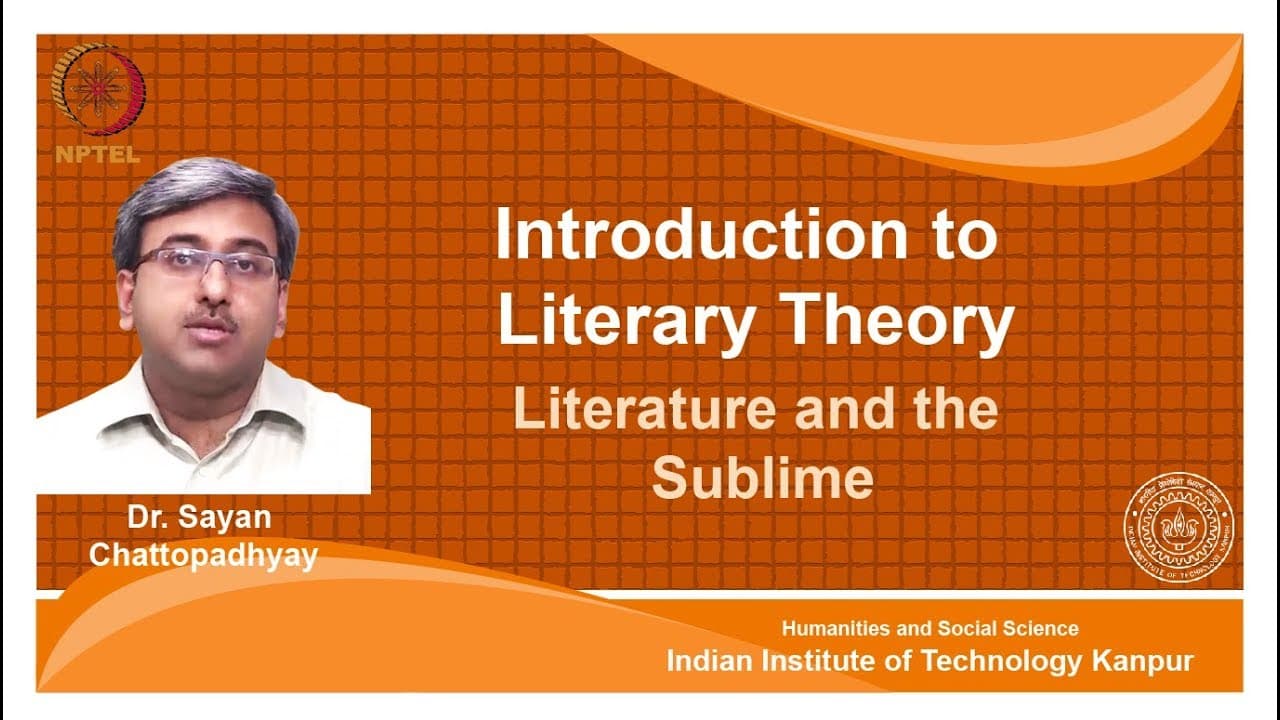
noc18-hs31-Lecture 06-Literature and the Sublime
TL;DR
Longinus discusses the concept of the sublime in literature and its connection to elevated thoughts and strong emotions, emphasizing the importance of natural talent and societal influences.
Transcript
Hello and welcome back to this lecture series on Literary Theory. In today’s lecture, we are going to move ahead from the word my mimesis which had anchored our earlier discussions on both Plato and Aristotle. And we are going to move towards a new keyword and that word is the sublime. Like my mimesis, this word the sublime has also played a very s... Read More
Key Insights
- 💪 The sublime in literature is characterized by its ability to evoke strong emotions and transport the audience beyond persuasion.
- 💭 Natural talent and the ability to conceive elevated thoughts are crucial for creating the sublime in literature.
- 📐 The sublime is a triangular relationship between the text, author, and reader, with the reader's interpretation and emotional response pivotal.
- ❓ Longinus suggests that societal influences, such as avarice, can hinder the production of the sublime.
Install to Summarize YouTube Videos and Get Transcripts
Explore YouTube Video Summarizer or Get YouTube Transcript Extractor
Questions & Answers
Q: How does Longinus define the sublime in literature?
Longinus describes the sublime as a quality of language used by great poets and writers that evokes a sense of loftiness and elevates the audience beyond persuasion to a state of transport or ecstasy.
Q: What are the five elements Longinus identifies as necessary for the production of the sublime?
The five elements include the ability to conceive elevated thoughts, the evocation of strong emotions, figures of thought and speech, elevated diction, and the noble arrangement of words.
Q: How does Longinus connect the sublime to the reader, the text, and the author?
Longinus believes that the sublime is a triangular relationship between the text, author, and reader. The author creates the sublime through elevated thoughts and skilled writing, while the reader activates the sublime through their own interpretation and emotional response.
Q: How does Longinus connect the sublime to sociopolitical commentary?
In the last chapter of his text, Longinus discusses the absence of the sublime in contemporary society, attributing it to the lack of "transcendent natures" caused by a societal tendency towards avarice. He debates the role of democracy in nurturing the sublime, concluding that societal influences are more important than political systems.
Key Insights:
- The sublime in literature is characterized by its ability to evoke strong emotions and transport the audience beyond persuasion.
- Natural talent and the ability to conceive elevated thoughts are crucial for creating the sublime in literature.
- The sublime is a triangular relationship between the text, author, and reader, with the reader's interpretation and emotional response pivotal.
- Longinus suggests that societal influences, such as avarice, can hinder the production of the sublime.
- The connection between the sublime and political systems, specifically democracy, is debated in the text.
Summary & Key Takeaways
-
Longinus introduces the concept of the sublime and its significance in literary theory, focusing on the Greek text "Peri Hypsous."
-
The text explores three main sections: the definition of "hypsos" (sublime), the five elements necessary for the sublime, and the connection to sociopolitical commentary.
-
Longinus emphasizes the importance of elevated thoughts and strong emotions in creating the sublime, as well as the role of natural talent and societal influences.
Read in Other Languages (beta)
Share This Summary 📚
Summarize YouTube Videos and Get Video Transcripts with 1-Click
Try YouTube Summary with ChatGPT & Claude or YouTube Transcript Generator
Explore More Summaries from IIT KANPUR-NPTEL 📚



Summarize YouTube Videos and Get Video Transcripts with 1-Click
Try YouTube Summary with ChatGPT & Claude or YouTube Transcript Generator