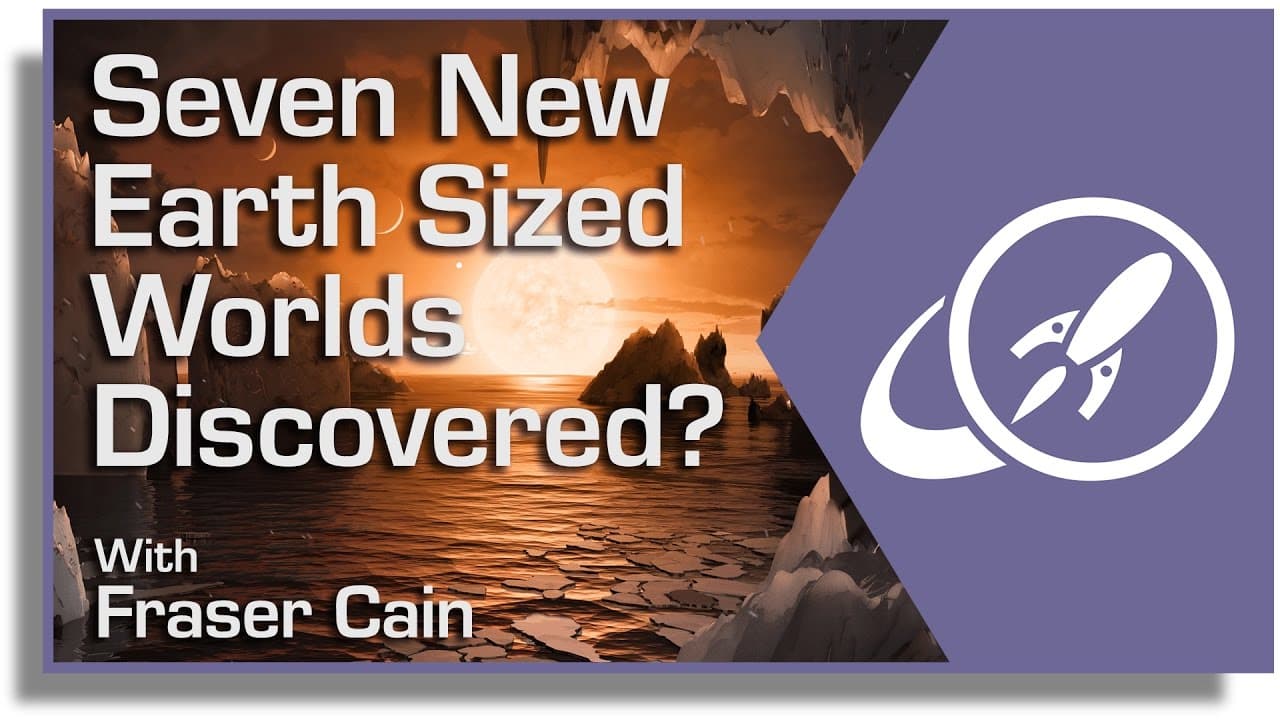
Seven New Earth Sized Worlds Discovered? The Planets of Trappist-1.
TL;DR
Seven Earth-sized worlds found orbiting a red dwarf star, with potentially habitable planets, revolutionizing the search for life.
Transcript
I’ve been doing this space news thing for almost 18 years now, so I’m on a lot of mailing lists for the media. Every few weeks, there’s a big press conference announced. Then the rumor mill begins, blows the news way out of proportion and everyone’s expectations are driven sky high. So when NASA queued up a press conference this week, to make some ... Read More
Key Insights
- 🤞 TRAPPIST-1 harbors seven Earth-sized planets, with three potentially habitable, igniting hope for discovering extraterrestrial life.
- 🤩 The red dwarf star's characteristics and proximity to planets pose challenges for habitability due to stellar activity and tidal locking.
- 🤗 The discovery opens new avenues for understanding exoplanetary systems and the potential for diverse conditions fostering life.
- 👨🔬 Future studies with advanced telescopes like the James Webb Space Telescope promise deeper insights into TRAPPIST-1, its planets, and the search for habitable worlds.
Install to Summarize YouTube Videos and Get Transcripts
Explore YouTube Video Summarizer or Get YouTube Transcript Extractor
Questions & Answers
Q: What makes the discovery of the TRAPPIST-1 system so significant?
The finding of seven Earth-sized planets, with three in the habitable zone, offers a remarkable opportunity for potential life beyond our solar system, fueling the search for extraterrestrial life.
Q: Why are red dwarf stars like TRAPPIST-1 concerning for habitability?
Red dwarfs are known for intense stellar activity, including megaflares, which could pose threats to planetary atmospheres and life, raising questions about the habitability of planets in such systems.
Q: How do the characteristics of the TRAPPIST-1 planets differ within the habitable zone?
The planets range from Earth-sized to slightly larger, with varying orbital periods and levels of starlight, creating diverse conditions that could impact the potential for liquid water and habitability.
Q: What challenges exist in studying the TRAPPIST-1 system further?
The distance of 39 light-years presents significant hurdles for exploration, limiting close-up observations and interactions, emphasizing the need for advanced telescopes to unveil more about these intriguing exoplanets.
Summary & Key Takeaways
-
A team of astronomers discovered the TRAPPIST-1 extrasolar planetary system with seven Earth-sized worlds, three of which are in the habitable zone.
-
The star, a red dwarf, is relatively young and small, with planets orbiting closely, some potentially having liquid water.
-
Despite excitement for potential life, challenges exist due to the star's temperamental nature and planets likely being tidally locked.
Read in Other Languages (beta)
Share This Summary 📚
Summarize YouTube Videos and Get Video Transcripts with 1-Click
Try YouTube Summary with ChatGPT & Claude or YouTube Transcript Generator
Explore More Summaries from Fraser Cain 📚


Summarize YouTube Videos and Get Video Transcripts with 1-Click
Try YouTube Summary with ChatGPT & Claude or YouTube Transcript Generator