Why Did Judge Alsup Reverse Donald Trump and Elon Musk's Federal Employee Purge?
TL;DR
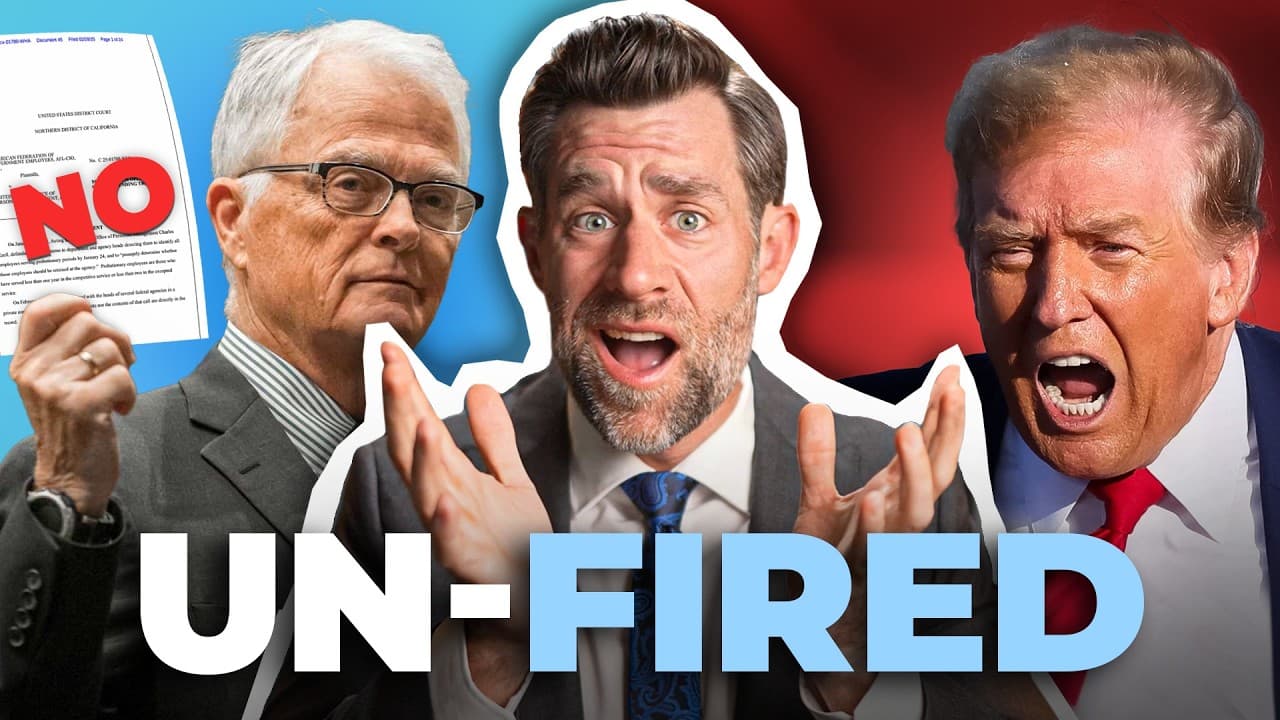
Judge Alsup halted the Trump administration's federal employee purge because the Office of Personnel Management lacked statutory authority to direct other agencies to fire their workers. The ruling addressed a campaign that began with a January 20, 2025 directive and ultimately affected tens of thousands of probationary employees. Read on to understand the disputed process, the unions' legal arguments, and what the order could mean for terminated workers.
Transcript
- Okay, so I guess everyone's not fired, and it turns out the mass firings of government employees is not okay. Yes, it turns out Donald Trump and Elon Musk illegally terminated tens of thousands of government employees through the stroker pen and error-riddled mass emails, at least that's the current legal landscape. Seemingly overnight, hundreds ... Read More
Key Insights
- Probationary status was broadly misunderstood: The employees targeted were not necessarily workers receiving a final chance after misconduct. A probationary period generally meant that someone had occupied a current position for less than a year. That category could include experienced federal personnel who had simply accepted promotions or transferred into new roles, making status alone an unreliable measure of performance.
- OPM centralized a disputed power: The central legal problem was not merely that many people were fired. OPM allegedly instructed agency leaders to conduct terminations even though the plaintiffs said Congress had assigned that authority to each individual agency. Judge Alsup agreed that no statute gave OPM power to direct dismissals across the federal government.
- The timeline shows rapid escalation: Trump issued the initial direction on January 20, 2025, and agencies faced a January 24 deadline to provide employee lists. OPM then met agency leaders on February 13 and told them to fire probationary workers. Unions filed their challenge on February 19, after the termination campaign had quickly expanded across the government.
- Performance explanations were allegedly false: OPM directed agencies to send template messages saying employees were dismissed for poor performance. The transcript states that many affected workers had exemplary performance reviews, creating a direct conflict between the notices and their records. That contradiction supported claims that the process was arbitrary rather than based on individualized assessments of conduct or work.
- Required alternatives were not followed: The governing rules described in the transcript allowed probationary employees to be terminated for unsatisfactory performance or conduct. The government could also pursue reductions in force by following a specific set of procedures. Plaintiffs maintained that OPM instead imposed broad dismissals without establishing valid performance grounds or completing the required reduction procedures.
- Notice and comment mattered here: Under the Administrative Procedure Act, an agency seeking to create or change a rule must publish a draft and receive public comments. The agency need not adopt the public's proposals, but it must conduct the process. Plaintiffs argued that OPM effectively rewrote termination rules without taking even that required procedural step.
- Administrative rationality was at issue: The Administrative Procedure Act requires executive agencies to act rationally and make fact-based decisions. The plaintiffs characterized OPM's directive as arbitrary and capricious, an abuse of discretion, and inconsistent with law. Judge Alsup's criticism of shifting rules and false performance rationales aligned with those objections to the agency's decision-making process.
- Operational mistakes revealed wider risks: The purge reached workers who oversaw the nuclear arsenal and personnel protecting the country against bird flu. The government then tried to rehire those employees, with varying success. Those reversals illustrated how a sweeping termination order could remove staff performing sensitive functions before officials understood the consequences or could reliably repair them.
- The termination methods compounded harm: Some employees learned about their dismissal in large group Zoom meetings. Others received defective mail-merge messages addressed as “Dear Employee First Name, Employee Last Name.” These incidents contradicted the Fork in the Road email's promise that laid-off employees would receive dignified treatment and the protections already in place.
- The plaintiffs extended beyond unions: Federal employee unions initiated the February 19 lawsuit, but other membership organizations later joined them. Those participants included environmental groups, a veterans rights organization, and an organization representing small businesses. Their involvement reflected allegations that mass federal firings harmed not only terminated workers but also constituencies relying on government personnel and services.
- The order provided interim relief: The court issued a temporary restraining order rather than a final resolution of every dispute surrounding the purge. It stopped covered terminations and created a possible route toward reinstatement, particularly for employees connected to the six agencies named in the lawsuit. Continuing litigation and uncertainty about compliance meant the employees' ultimate status was not yet settled.
- The dispute raised constitutional stakes: The transcript describes the developing confrontation between the court and the Trump administration as a constitutional crisis. That characterization rests on the unresolved question of whether the administration will comply with the judicial order. The case therefore concerns both federal employment procedure and the government's response when a court restricts an executive initiative.
Install to Summarize YouTube Videos and Get Transcripts
Explore YouTube Video Summarizer or Get YouTube Transcript Extractor
Questions & Answers
Q: Why was Trump's federal employee purge reversed?
Judge Alsup ruled that the Office of Personnel Management had no statutory authority to direct other federal agencies to terminate their employees. He also identified problems with dismissals made under allegedly false claims of poor performance and with OPM's attempt to change firing rules without proper procedures. Those actions supported claims under the Administrative Procedure Act that OPM had acted arbitrarily, abused its discretion, and failed to use notice-and-comment rulemaking. The court therefore issued a temporary restraining order halting covered terminations while the legal dispute continued.
Q: What did Donald Trump and OPM order agencies to do?
On January 20, 2025, Trump directed OPM to tell agency heads to identify workers serving probationary periods. Agencies had to send their lists to an OPM email address by January 24. OPM officials then met with agency leaders on February 13 and instructed them to fire all probationary employees. The approach converted a personnel classification into the basis for mass dismissals, even though the classification did not establish poor performance.
Q: Who counted as a probationary federal employee?
A probationary employee generally meant someone who had held a current position for less than a year. The category was not limited to new federal workers or people accused of wrongdoing. It could include established employees who had recently received promotions or moved into new federal roles. This mattered because the administration treated probationary status as grounds for broad termination despite the absence of individualized performance findings.
Q: Why were the poor-performance dismissal notices disputed?
OPM told agencies to use template emails stating that terminated employees had performed poorly. The transcript says many recipients instead had exemplary performance reviews. That mismatch indicated that agencies were applying a standard explanation without assessing each worker's actual record. It strengthened the plaintiffs' argument that OPM's direction was arbitrary and inconsistent with rules allowing probationary terminations for genuinely unsatisfactory performance or conduct.
Q: How did OPM allegedly violate the Administrative Procedure Act?
The plaintiffs argued that OPM acted arbitrarily and capriciously, abused its discretion, and acted outside the law. They also said OPM effectively changed the rules governing probationary dismissals without publishing a draft rule or inviting public comment. The Administrative Procedure Act requires that process when an agency creates or changes a rule. Because OPM allegedly bypassed it, Judge Alsup concluded that proper rulemaking procedures had not been followed.
Q: Who challenged the federal employee firings?
Several federal employee unions filed against OPM on February 19, 2025, including the American Federation of Government Employees. Membership organizations later joined the case, including environmental groups, a veterans rights organization, and a group representing small businesses. They claimed that the firings harmed their members and the services on which those members relied. Their core position was that individual agencies, not OPM, held the termination authority granted by Congress.
Q: What practical problems did the mass firings cause?
The government dismissed workers involved in overseeing the nuclear arsenal and protecting against bird flu. Officials then tried to rehire those employees, with varying degrees of success. Other workers were notified through large Zoom calls or malformed mail-merge messages containing placeholder names. These outcomes showed how the rapid, centralized process disrupted important functions and failed to provide the dignity and protections previously promised to employees.
Q: Will the fired federal employees be reinstated?
The temporary restraining order created the possibility that terminated workers could be reinstated, especially employees associated with the six agencies named in the lawsuit. It also halted additional covered terminations and supplied immediate relief while litigation proceeded. However, the ruling did not conclusively settle every employee's status or end the broader legal fight. The transcript says the administration's compliance remained unclear, so the final outcome for affected workers was still uncertain.
Summary & Key Takeaways
-
Launching the probationary employee purge: On January 20, 2025, Donald Trump directed the Office of Personnel Management to order agency heads to identify employees still serving probationary periods. Agencies had until January 24 to send their lists to an OPM email address. The designation generally covered people who had held their current positions for less than a year, including existing federal employees who had recently been promoted or moved into new roles. It did not necessarily indicate misconduct or poor performance.
-
Directing agencies to terminate workers: OPM officials met with agency leaders on February 13 and instructed them to fire all probationary employees. Tens of thousands of workers were dismissed during the following weeks, including people serving in air traffic control, parks, Social Security customer service, and federal oversight. Agencies used template notices asserting poor performance even when some recipients had exemplary reviews. Other employees learned through group Zoom meetings or received failed mail merges addressed to placeholder names.
-
Exposing operational and procedural failures: The hurried process removed personnel responsible for overseeing the nuclear arsenal and protecting against bird flu, after which the government attempted to rehire them with varying success. Employees also did not receive the dignity and protections promised in the earlier Fork in the Road email. These errors supported the account of an indiscriminate purge rather than individualized performance decisions and raised questions about whether OPM had used the probationary designation as blanket permission for mass termination.
-
Building the legal challenge: Several federal employee unions filed against OPM on February 19, later joined by environmental, veterans rights, and small-business membership organizations claiming harm from the firings. The plaintiffs argued that Congress gave termination authority to individual agencies, not OPM. They also alleged violations of the Administrative Procedure Act because OPM acted arbitrarily, abused its discretion, disregarded governing law, and changed termination rules without publishing a proposed rule or accepting public comment.
-
Rejecting OPM's asserted authority: Judge Alsup ruled that no statute granted OPM authority to direct terminations in other agencies. He cited alleged misconduct that included ordering dismissals under false claims of poor performance and changing federal firing rules without proper procedures. The court granted a temporary restraining order affecting the agencies named in the litigation, creating the possibility of reinstatement while further disputes continued. Whether the administration would comply, and how the wider legal battle would develop, remained uncertain.
Read in Other Languages (beta)
Share This Summary 📚
Summarize YouTube Videos and Get Video Transcripts with 1-Click
Try YouTube Summary with ChatGPT & Claude or YouTube Transcript Generator
Explore More Summaries from LegalEagle 📚





Summarize YouTube Videos and Get Video Transcripts with 1-Click
Try YouTube Summary with ChatGPT & Claude or YouTube Transcript Generator