What Is Existentialism and How Does It Define Meaning?
TL;DR
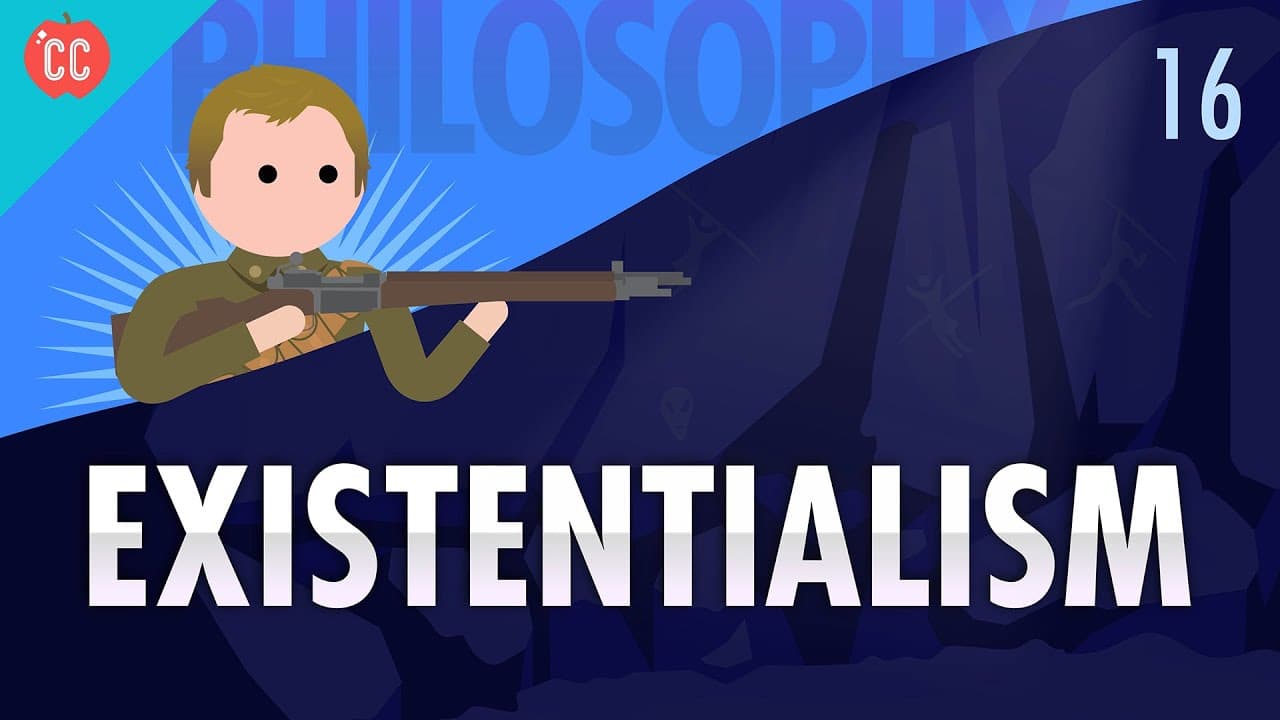
Existentialism posits that life has no inherent meaning and individuals must create their own purpose through choices and actions. Pioneered by Jean-Paul Sartre, the philosophy asserts that 'existence precedes essence,' emphasizing personal freedom and authenticity in finding meaning in a seemingly meaningless world.
Transcript
Crash Course Philosophy is brought to you by Squarespace. Squarespace: share your passion with the world. What gives your life meaning? God? Love? Money? Work? Fanfiction? Football? Shopping? Sherlock? You might have your own personal sense of purpose in your life, or maybe you’re hoping this course will help you find one. Or you might believe that... Read More
Key Insights
- 💝 Essentialism, the belief in predetermined purposes or essences, was the standard view until the late 19th century.
- 🚨 Existentialism emerged as a response to essentialism, emphasizing individuals' freedom to create their own purpose and meaning.
- 🖤 Existentialism acknowledges the lack of inherent meaning in the world but empowers individuals to find meaning through their choices and actions.
- 💡 Existentialism does not necessarily reject religious beliefs, but it challenges the idea of a predetermined purpose or teleology.
- 🥺 The philosophy of existentialism gained popularity after World War II due to the horrors of the Holocaust leading many to question the existence of an ordered world.
- 🙈 Existentialism can be seen as both a bleak and liberating worldview, depending on one's perspective on individual freedom and the ability to assign meaning.
- 🫒 Existentialism emphasizes the importance of living authentically and making choices that align with one's values and beliefs.
Install to Summarize YouTube Videos and Get Transcripts
Explore YouTube Video Summarizer or Get YouTube Transcript Extractor
Questions & Answers
Q: What is the difference between essentialism and existentialism?
Essentialism asserts that everything, including humans, has a predetermined purpose or essence. In contrast, existentialism argues that individuals are born without a fixed purpose and must create their own meaning and essence.
Q: How does existentialism address the concept of freedom?
Existentialism emphasizes the overwhelming freedom individuals have in creating their own moral code and choosing their actions. This freedom can be seen as both liberating and burdensome.
Q: Can existentialism be compatible with religious beliefs?
Yes, existentialism is not synonymous with atheism. Theistic existentialists acknowledge the absence of predetermined purpose but may still believe in the existence of God.
Q: How does existentialism view the concept of meaninglessness and absurdity?
Existentialists see the world as inherently lacking meaning and absurd. They believe that despite this, individuals can find meaning by assigning it to their lives through their choices and actions.
Key Insights:
- Essentialism, the belief in predetermined purposes or essences, was the standard view until the late 19th century.
- Existentialism emerged as a response to essentialism, emphasizing individuals' freedom to create their own purpose and meaning.
- Existentialism acknowledges the lack of inherent meaning in the world but empowers individuals to find meaning through their choices and actions.
- Existentialism does not necessarily reject religious beliefs, but it challenges the idea of a predetermined purpose or teleology.
- The philosophy of existentialism gained popularity after World War II due to the horrors of the Holocaust leading many to question the existence of an ordered world.
- Existentialism can be seen as both a bleak and liberating worldview, depending on one's perspective on individual freedom and the ability to assign meaning.
- Existentialism emphasizes the importance of living authentically and making choices that align with one's values and beliefs.
- Existentialism invites individuals to take responsibility for creating justice, order, and meaning in the world, as these concepts do not exist inherently.
Summary & Key Takeaways
-
Existentialism challenges the belief in essentialism, which posits that everything, including human beings, has a predetermined purpose.
-
Jean-Paul Sartre introduced the idea that existence precedes essence, meaning that individuals are born without a fixed purpose and must determine their own essence through their choices and actions.
-
Existentialists believe that the world lacks inherent meaning and that individuals are responsible for creating their own meaning and purpose.
Read in Other Languages (beta)
Share This Summary 📚
Summarize YouTube Videos and Get Video Transcripts with 1-Click
Try YouTube Summary with ChatGPT & Claude or YouTube Transcript Generator
Explore More Summaries from CrashCourse 📚





Summarize YouTube Videos and Get Video Transcripts with 1-Click
Try YouTube Summary with ChatGPT & Claude or YouTube Transcript Generator