Donor Sports, Dance & Coordinating Degrees of Freedom
TL;DR
Dance training enhances balance by improving good variability use.
Transcript
hi everyone this is rob gray from asu in the perception action podcast again back with another article review so in doing these reviews what i like to do is to kind of put it in a framework kind of introduce it with something that connects with something that i'm interested in i do and hopefully by by proxy something that you listen people listenin... Read More
Key Insights
- The concept of donor sports suggests that participating in secondary sports can enhance performance in a primary sport by sharing affordances and skills.
- Dance training helps individuals utilize good variability, leading to better dynamic balance and motor synergies.
- The study compared dancers with non-dancers using a dynamic balance task to assess their ability to maintain stability after perturbations.
- Dancers exhibited more task-irrelevant good variability, meaning they could better maintain balance without affecting their center of mass.
- Dance training's benefits are linked to increased sensitivity to proprioceptive and kinesthetic information, enhancing body awareness.
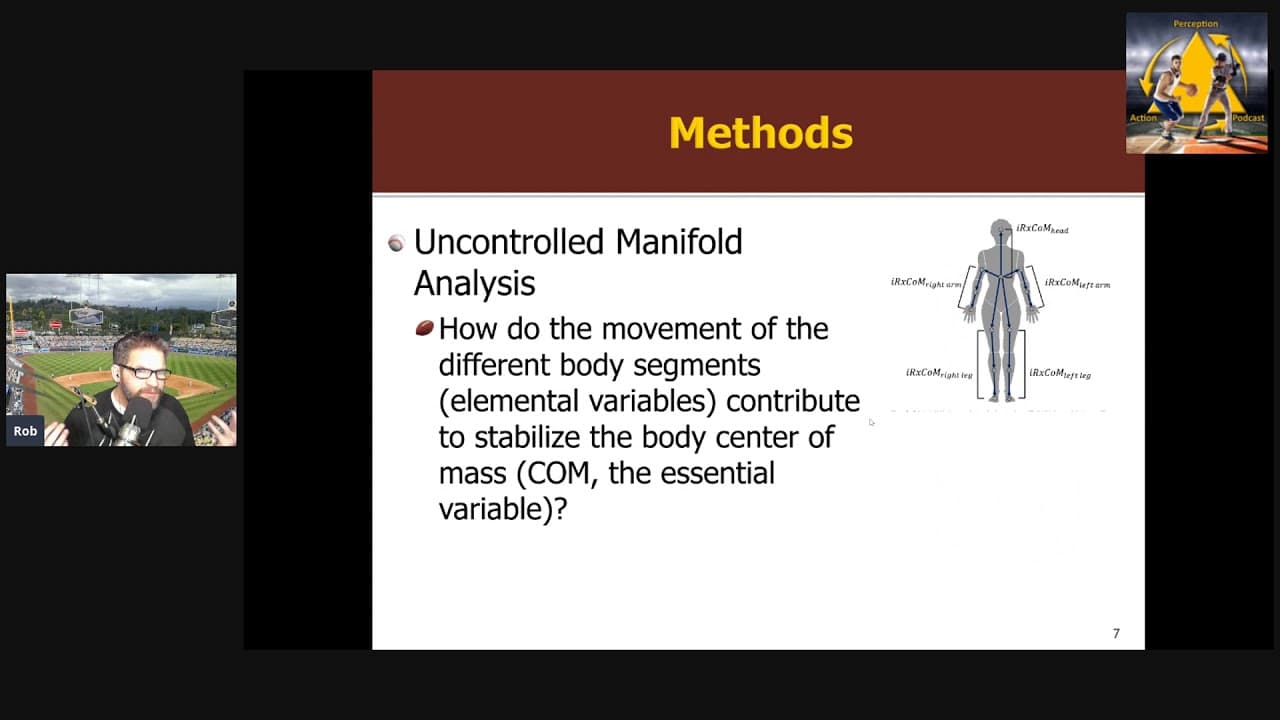
- The study's methodology involved uncontrolled manifold analysis to differentiate between good and bad variability in body movements.
- Dance and similar activities focusing on form may serve as effective donor sports for improving performance in other sports.
- The research aligns with previous findings in sports like baseball, where training improved athletes' ability to exploit good variability.
Install to Summarize YouTube Videos and Get Transcripts
Explore YouTube Video Summarizer or Get YouTube Transcript Extractor
Questions & Answers
Q: What is the concept of donor sports?
Donor sports refer to secondary sports or activities that can enhance an athlete's performance in their primary sport by providing overlapping skills and affordances. The idea is that participating in these secondary activities can offer benefits such as improved motor skills, balance, and coordination, which are transferable to the primary sport.
Q: How does dance training improve dynamic balance?
Dance training improves dynamic balance by enhancing the use of good variability, which refers to the ability to maintain stability without affecting the center of mass. Dancers develop better motor synergies, allowing them to respond more effectively to perturbations and maintain balance through increased task-irrelevant variability.
Q: What methodology was used in the study to analyze variability?
The study employed uncontrolled manifold analysis to differentiate between good and bad variability in body movements. This method assesses how elemental variables, such as body segment movements, contribute to the stabilization of essential variables like the center of mass. The analysis helps identify the balance between task-relevant and task-irrelevant variability.
Q: How does dance training affect proprioceptive and kinesthetic awareness?
Dance training enhances proprioceptive and kinesthetic awareness by increasing sensitivity to body-related information. This heightened awareness allows dancers to better understand and control their body movements, leading to improved balance, coordination, and the ability to implement coaching instructions more effectively in various sports.
Q: What were the main findings regarding variability in dancers versus non-dancers?
The study found that dancers exhibited significantly greater task-irrelevant good variability compared to non-dancers. This means that dancers had better dynamic balance, as they could maintain stability without altering their center of mass. The differences were observed mainly in the head, trunk, and legs, indicating enhanced motor synergies in these areas.
Q: How might dance serve as a donor sport for other athletes?
Dance can serve as a donor sport by improving athletes' dynamic balance and motor skills through enhanced utilization of good variability. The focus on form and body awareness in dance training can translate to better performance in primary sports, as athletes become more adept at managing their movements and responding to dynamic changes.
Q: What are the potential benefits of increased body awareness for athletes?
Increased body awareness allows athletes to better control their movements, leading to improved balance, coordination, and performance. It helps them respond more effectively to dynamic situations, implement coaching instructions accurately, and reduce the risk of injuries by understanding their body's capabilities and limits.
Q: How does the study relate to previous research in sports training?
The study's findings align with previous research in sports training, such as baseball, where training improved athletes' ability to exploit good variability. Both studies highlight the importance of motor synergies and the role of training in enhancing athletes' performance by developing better control over their movements and balance.
Summary & Key Takeaways
-
The video explores the concept of donor sports, where secondary sports can enhance performance in a primary sport by sharing similar skills and affordances. The focus is on dance as a potential donor sport, examining how it improves dynamic balance through better utilization of good variability.
-
The study compared professional dancers with non-dancers using a dynamic balance task to assess their ability to maintain stability after unexpected perturbations. Dancers showed greater task-irrelevant good variability, indicating better dynamic balance and motor synergies.
-
Dance training enhances proprioceptive and kinesthetic information sensitivity, leading to improved body awareness and balance. This suggests that dance and similar form-focused activities can be effective donor sports for athletes in other disciplines, potentially improving their performance.
Read in Other Languages (beta)
Share This Summary 📚
Summarize YouTube Videos and Get Video Transcripts with 1-Click
Try YouTube Summary with ChatGPT & Claude or YouTube Transcript Generator
Explore More Summaries from Rob Gray 📚
Summarize YouTube Videos and Get Video Transcripts with 1-Click
Try YouTube Summary with ChatGPT & Claude or YouTube Transcript Generator