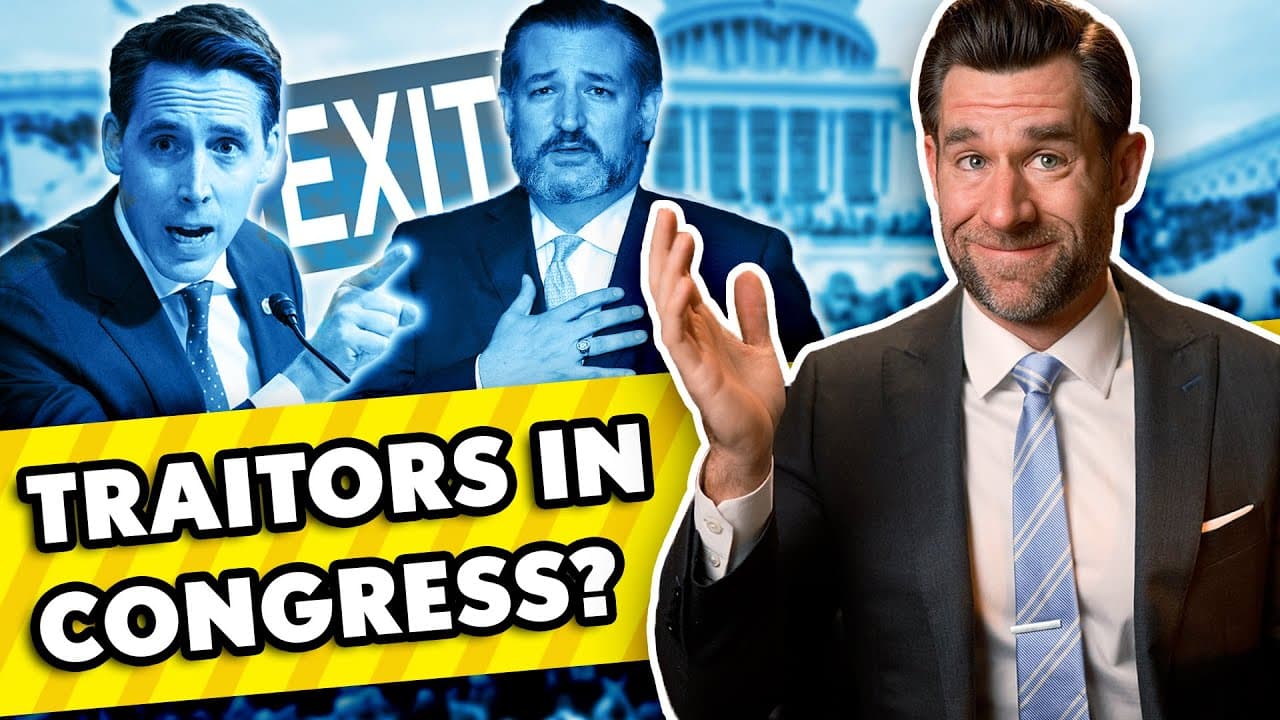
Did Certain Politicians Commit Sedition and Treason?
TL;DR
Certain politicians can potentially be charged with sedition or treason if their actions meet the narrow legal definitions outlined in the U.S. Constitution. For treason, allegations must involve levying war against the United States or aiding its enemies, while sedition involves inciting rebellion or unlawful actions against the government. Proving these charges requires clear evidence of intent and action.
Transcript
- So it's treason then. (lightsaber whirs) (lightsaber hums) Or at least that's what a lot of people are worried about. People are rightfully upset about the Trump campaign and the Trump administration's attempts to effectively overthrow the results of the 2020 election. So the question is, and I never thought I'd be asking this question, did peopl... Read More
Key Insights
- ❓ Treason and sedition have narrow legal definitions in the US Constitution, with specific requirements for conviction.
- 🙂 The historical context of treason and sedition sheds light on the complexities of pursuing these charges.
- 💍 Expulsion from Congress is a possible consequence for members engaged in disloyal or disorderly behavior.
Install to Summarize YouTube Videos and Get Transcripts
Explore YouTube Video Summarizer or Get YouTube Transcript Extractor
Questions & Answers
Q: What is the legal definition of treason in the United States?
Treason is narrowly defined in the Constitution as levying war against the United States or providing aid and comfort to its enemies, with stringent requirements for conviction.
Q: Can politicians be charged with sedition for their actions leading up to the Capitol insurrection?
Sedition requires actively plotting to use force against the government, and while some politicians' actions may have incited violence, proving sedition is challenging.
Q: How does expulsion from Congress work, and what are the grounds for expulsion?
Congress has the authority to expel members for disorderly behavior with a two-thirds majority vote, historically done for actions like public corruption or disloyalty to the United States.
Q: What role does the 14th Amendment play in potentially barring members of Congress involved in insurrection from holding office?
Section 3 of the 14th Amendment prohibits individuals engaged in insurrection from holding office but can be removed by a two-thirds vote of each House of Congress.
Summary & Key Takeaways
-
Explores the historical context of treason and sedition, outlining the narrow definitions and requirements for these charges.
-
Details the legal precedent for treason and sedition cases, highlighting the complexities of proving these offenses.
-
Examines the actions of various politicians, analyzing their potential culpability for sedition and treason.
Read in Other Languages (beta)
Share This Summary 📚
Summarize YouTube Videos and Get Video Transcripts with 1-Click
Try YouTube Summary with ChatGPT & Claude or YouTube Transcript Generator
Explore More Summaries from LegalEagle 📚





Summarize YouTube Videos and Get Video Transcripts with 1-Click
Try YouTube Summary with ChatGPT & Claude or YouTube Transcript Generator