Products
Features
YouTube Video Summarizer
Summarize YouTube videos
Web & PDF Highlighter
Highlight web pages & PDFs
Chat with PDF
Ask any PDF questions with AI
Ask AI Clone
Chat with your highlights & memories
Audio Transcriber
Transcribe audio files to text
Glasp Reader
Read and highlight articles
Kindle Highlight Export
Export your Kindle highlights
Idea Hatch
Hatch ideas from your highlights
Integrations
Obsidian Plugin
Notion Integration
Pocket Integration
Instapaper Integration
Medium Integration
Readwise Integration
Snipd Integration
Hypothesis Integration
Apps & Extensions
Chrome Extension
Safari Extension
Edge Add-ons
Firefox Add-ons
iOS App
Android App
Discover
Discover
Ideas
Discover new ideas and insights
Articles
Curated articles and insights
Books
Book recommendations by great minds
Posts
Essays and notes from readers
Quotes
Inspiring quotes collection
Videos
Curated videos and summaries
Explore Glasp
Glasp Newsletter
Weekly insights and updates
Glasp Talk
Interview series with great minds
Glasp Blog
Latest news and articles
Glasp Use Cases
Learn how others use Glasp
Build & Support
Glasp API
Access Glasp's API for developers
MCP Connector
Connect Glasp to Claude & ChatGPT
Community
Glasp Reddit Community
Students
Student discount and benefits
FAQs
Frequently Asked Questions
AboutPricing
DashboardLog inSign up

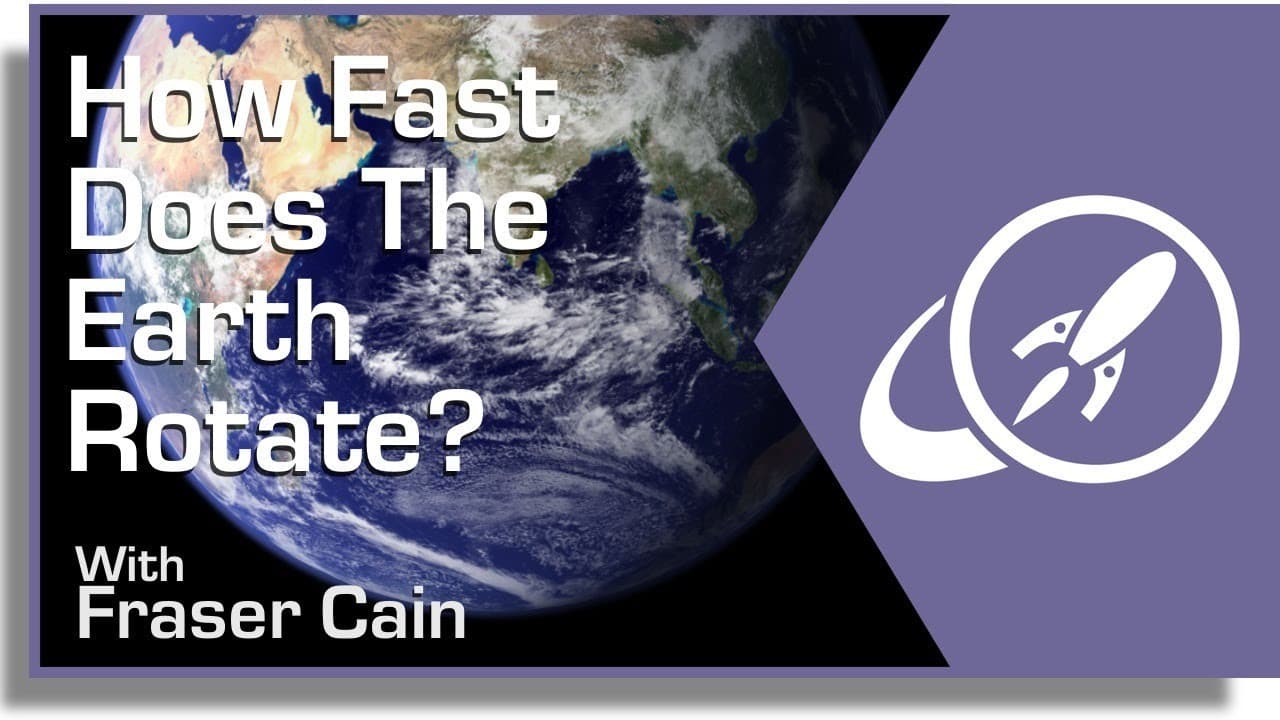
How Fast Does the Earth Rotate?
301.3K views
•
May 20, 2013
by
Fraser Cain
YouTube video player
How Fast Does the Earth Rotate?

TL;DR

The Earth spins at 1675 kilometers per hour, affecting gravity and launching rockets efficiently.

Transcript

The Earth feels firm and solid beneath your feet. Everything's calm and quiet. Right? We know the planet is rapidly spinning on its axis completing one full rotation every day. As we're gravitationally bound to the planet, and hurtling around in space, right along with it. We follow a circular path around the Earth at hundreds of kilometers per sec... Read More

Key Insights

  • 🥳 The Earth spins at 1675 kilometers per hour, causing differences between solar and sidereal days.
  • 🙂 Rotation affects gravity, slightly reducing weight due to the Earth's spinning motion.
  • 🚀 Rocket launches are more efficient at the equator due to the Earth's rotation speed.
  • 🧍 Standing on the North Pole, rotation is significantly slower compared to the equator.
  • 🚀 The Earth's rotation affects space agencies' rocket launch strategies for efficiency.
  • 🚀 Cape Canaveral in Florida is strategically located for rocket launches due to the Earth's rotation.

Install to Summarize YouTube Videos and Get Transcripts

Explore YouTube Video Summarizer or Get YouTube Transcript Extractor

Questions & Answers

Q: What is the difference between a solar day and a sidereal day?

A solar day is 24 hours and accounts for the Sun's position, while a sidereal day is 23.93 hours and considers Earth's rotation relative to the stars.

Q: How does the Earth's rotation affect gravity and our weight?

The Earth's rotation causes a slight lift, reducing our weight by about 0.3%, which would be higher if the Earth wasn't spinning.

Q: Why are rocket launches more efficient closer to the equator?

Launching rockets closer to the equator takes advantage of the Earth's speed, requiring less fuel and allowing for heavier payloads, maximizing efficiency.

Q: How does the Earth's rotation speed change as you move towards the poles?

As you move towards the poles, the speed of rotation decreases, with the North Pole being the slowest point where it takes a full day to complete a rotation.

Summary & Key Takeaways

  • The Earth spins rapidly on its axis, completing one full rotation every day.

  • There are differences between a solar day (24 hours) and a sidereal day (23.93 hours) due to the Earth's orbit around the Sun.

  • The Earth's rotation affects gravity, causing a slight lift, and is utilized for efficient rocket launches.


Read in Other Languages (beta)

English

Share This Summary 📚

Summarize YouTube Videos and Get Video Transcripts with 1-Click

Download browser extensions on:

Try YouTube Summary with ChatGPT & Claude or YouTube Transcript Generator

Explore More Summaries from Fraser Cain 📚
Are We Living in a Simulation? Understanding the Simulation Hypothesis thumbnail
Are We Living in a Simulation? Understanding the Simulation Hypothesis
Fraser Cain
Why Isn't the Asteroid Belt a Planet? thumbnail
Why Isn't the Asteroid Belt a Planet?
Fraser Cain
Why Did Mars Lose Its Atmosphere? And How Can We Get It Back? thumbnail
Why Did Mars Lose Its Atmosphere? And How Can We Get It Back?
Fraser Cain
Exploring Space Lava Tubes: How To Prepare For It thumbnail
Exploring Space Lava Tubes: How To Prepare For It
Fraser Cain / Universe Today Podcast
What's On The Far Side Of The Moon? thumbnail
What's On The Far Side Of The Moon?
Fraser Cain

Summarize YouTube Videos and Get Video Transcripts with 1-Click

Download browser extensions on:

Try YouTube Summary with ChatGPT & Claude or YouTube Transcript Generator

Apps & Extensions

  • Chrome Extension
  • Safari Extension
  • Edge Add-ons
  • Firefox Add-ons
  • iOS App
  • Android App

Key Features

  • YouTube Video Summarizer
  • Web & PDF Summarizer
  • Web & PDF Highlighter
  • Chat with PDF
  • Ask AI Clone
  • Audio Transcriber
  • Glasp Reader
  • Kindle Highlight Export
  • Idea Hatch

Integrations

  • Obsidian Plugin
  • Notion Integration
  • Pocket Integration
  • Instapaper Integration
  • Medium Integration
  • Readwise Integration
  • Snipd Integration
  • Hypothesis Integration

More Features

  • APIs
  • MCP Connector
  • Blog & Post
  • Embed Links
  • Image Highlight
  • Personality Test
  • Quote Shots

Company

  • About us
  • Blog
  • Community
  • FAQs
  • Job Board
  • Newsletter
  • Pricing
Terms

•

Privacy

•

Guidelines

© 2026 Glasp Inc. All rights reserved.