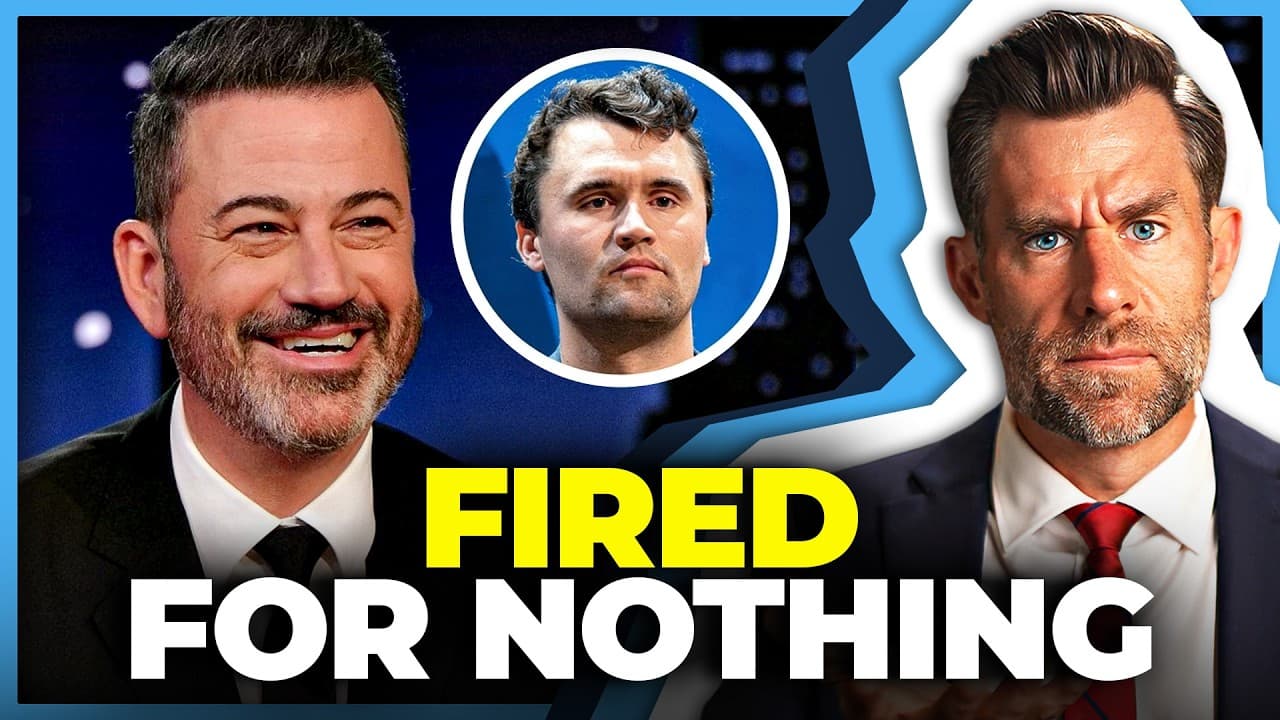
Is Jimmy Kimmel's Firing Government Censorship?
TL;DR
Jimmy Kimmel's removal from ABC affiliates may constitute government censorship by proxy if FCC pressure caused broadcasters to stop airing his show. On September 17th, FCC Chairman Brendan Carr raised the possibility of fines, license revocations and additional FCC action, and within hours an affiliate owner stopped carrying Jimmy Kimmel Live. Read on to understand the First Amendment test for government coercion and the broadcasters' stated reasons.
Transcript
A comedian tells a joke about the president. Days later, his show is gone from the airwaves. Not because of ratings, not because of advertisers, because the government hinted that bad things might happen if broadcasters didn't fall in line. This is not some overseas puppet regime. This is right here in America with ABC, Donald Trump, and Jimmy Kimm... Read More
Key Insights
- Jimmy Kimmel's show was removed from ABC affiliates after his comments on Charlie Kirk's death.
- The FCC's involvement raises questions about government censorship of media.
- The Trump administration's influence on media companies is a central issue.
- The First Amendment restricts government power, not private employers, but government coercion can make private actions state actions.
- The FCC has limited authority over broadcast content, mainly regulating obscenity and indecency.
- Bantam Books v. Sullivan established that government intimidation of private parties to suppress speech is unconstitutional.
- The Supreme Court's Vulo decision outlines factors to determine government coercion in free speech cases.
- Media consolidation and the need for FCC approval for mergers create pressure on networks to appease the government.
- "A comedian tells a joke about the president." (0:00)
- "This is right here in America with ABC, Donald Trump, and Jimmy Kimmel." (0:12)
- "But on Wednesday, September 17th, Federal Communications Commission Chairman Brendan Carr ripped Kimmel and threatened to take FCC action." (2:45)
Install to Summarize YouTube Videos and Get Transcripts
Explore YouTube Video Summarizer or Get YouTube Transcript Extractor
Questions & Answers
Q: Is Jimmy Kimmel's removal from ABC affiliates government censorship?
It may be government censorship by proxy if FCC pressure caused private broadcasters to stop airing Jimmy Kimmel Live. The transcript says FCC Chairman Brendan Carr discussed possible fines, license revocations and additional FCC work, and within hours an owner of many ABC affiliates announced it would stop airing the show.
Q: What did Jimmy Kimmel say about Charlie Kirk's death?
Kimmel initially called the shooting of another human "horrible and monstrous" and sent love to the Kirks and other victims of gun violence. Five days later, he criticized the MAGA response and accused Trump and his allies of trying to score political points from Kirk's death.
Q: When did the controversy over Jimmy Kimmel's comments occur?
Charlie Kirk was shot and killed on September 10th, 2025, while speaking at an outdoor event at Utah Valley University. Kimmel addressed the right-wing response on September 15th, and FCC Chairman Brendan Carr threatened possible action on September 17th.
Q: What did FCC Chairman Brendan Carr say about Jimmy Kimmel?
Carr said licensed broadcasters could face possible fines or license revocations if they continued carrying content that became a pattern of news distortion. He also said companies could change their conduct or face additional FCC work, describing the choice as doing it "the easy way or the hard way."
Q: Why did ABC affiliates stop airing Jimmy Kimmel Live?
One media group that owns many ABC affiliates said it strongly objected to Kimmel's comments about Charlie Kirk's killing and would replace the show with other programming. Sinclair also suspended the show on its affiliates, demanded an apology and ordered Kimmel to give money to Kirk's family and Turning Point USA.
Q: Did Jimmy Kimmel call Charlie Kirk's alleged killer a MAGA conservative?
The transcript says podcaster Benny Johnson claimed Kimmel told viewers that the alleged assassin was a MAGA conservative. The narrator disputes that description, saying Kimmel criticized Trump for exploiting Kirk's death rather than commenting on Kirk as a person.
Q: How does the First Amendment apply when a private broadcaster removes a show?
The First Amendment restricts government interference, not ordinary decisions by private employers. However, the existing page explains that government coercion can turn a private action into state action, making the government's pressure on broadcasters legally relevant.
Q: What legal precedents address government pressure on private media companies?
The existing page identifies Bantam Books v. Sullivan as establishing that government intimidation of private parties to suppress speech is unconstitutional. It also says the Supreme Court's Vulo decision provides factors for deciding whether government conduct amounts to coercion.
Summary & Key Takeaways
-
Jimmy Kimmel's show was pulled from ABC affiliates after he criticized the Trump administration's response to Charlie Kirk's death. This incident raises concerns about government censorship, as the FCC's involvement suggests potential regulatory pressure on media companies. The situation highlights the complex relationship between media consolidation and government influence.
-
The First Amendment limits government interference in free speech, but private companies can be coerced into taking actions that align with government preferences. The Supreme Court's decisions in Bantam Books and Vulo provide legal frameworks for assessing government coercion in such cases.
-
Media companies' need for FCC approval for mergers and acquisitions can lead to self-censorship to avoid regulatory backlash. This dynamic underscores the challenges of maintaining independent media in the face of government pressure, with implications for free speech and media diversity.
Read in Other Languages (beta)
Share This Summary 📚
Summarize YouTube Videos and Get Video Transcripts with 1-Click
Try YouTube Summary with ChatGPT & Claude or YouTube Transcript Generator
Explore More Summaries from LegalEagle 📚
Summarize YouTube Videos and Get Video Transcripts with 1-Click
Try YouTube Summary with ChatGPT & Claude or YouTube Transcript Generator