Q&A 100: When Will Earth Be Uninhabitable? And More, Featuring Anton Petrov
TL;DR
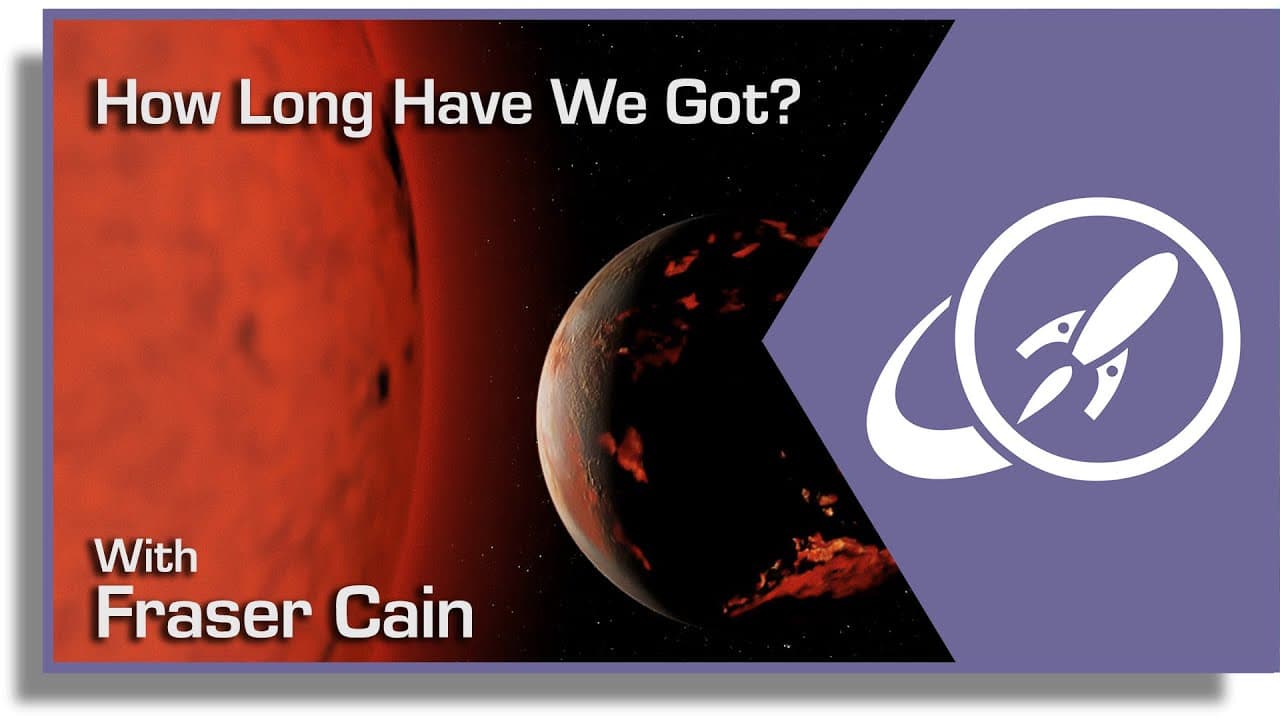
- Earth may become uninhabitable in 0.5-1 billion years due to the Sun's heating up, along with insights on galaxies, Mars, and space travel.
Transcript
it's question show time your questions my answers as always wherever you are on my channel question pops into your brain write it down I'll gather them up and I'll answer them here happy 100th question show people were wondering if we were gonna do anything special no nothing special except we've got an awesome guest answer this week and Tom Petrov... Read More
Key Insights
- 😪 The Sun will become a red giant in 5 billion years, affecting Earth's habitability in 0.5-1 billion years.
- 🖤 The Milky Way's warped structure suggests past galactic interactions, possibly absorbing supermassive black holes.
- 💡 The Sun's heating up poses a threat to Earth's habitability, proposing planetary relocation ideas to mitigate risks.
- 🤨 Mars replacing the moon raises challenges like atmospheric loss, increased solar wind, and massive tidal forces on Earth.
- 👋 Laser interferometry is a significant tool for detecting gravitational waves, with ongoing research exploring alternative measurement methods.
- 🖤 Quasars, originating from supermassive black holes, emit intense gamma radiation, potentially sterilizing life in their home galaxies.
- 🚀 Refueling in space offers cost-effective and flexible mission strategies compared to single, large rocket launches.
Install to Summarize YouTube Videos and Get Transcripts
Explore YouTube Video Summarizer or Get YouTube Transcript Extractor
Questions & Answers
Q: How long does the Sun have before it becomes a red giant and what impact will it have on Earth?
The Sun has 5 billion years left, becoming a red giant and affecting Earth's habitability in 0.5-1 billion years due to increased radiation.
Q: Could the Milky Way have absorbed other galaxies with supermassive black holes, and what would be the impact?
The Milky Way interacted with other galaxies, possibly absorbing supermassive black holes, with minimal risk to Earth due to stable orbital patterns.
Q: What implications would replacing the moon with Mars have on habitability and tidal forces?
Mars replacing the moon would pose challenges like atmospheric loss, increased solar wind, and massive tides affecting Earth's habitability negatively.
Q: Can bedbugs survive space travel to prevent an interplanetary outbreak?
Bedbugs may survive space travel given their adaptability, but NASA's research aims to determine the resilience of various life forms to space conditions.
Q: How can gravitational waves be measured beyond laser interferometry?
Gravitational waves may affect particle behavior or influence large-scale structures, potentially offering alternative detection methods beyond conventional laser interferometry.
Summary & Key Takeaways
-
The Sun has 5 billion years left before becoming a red giant and subsequently a white dwarf, affecting Earth's habitability in 0.5-1 billion years.
-
Our galaxy may be warped due to past collisions and could harbor undiscovered supermassive black holes.
-
Mars replacing the moon would bring challenges like atmospheric loss and massive tides affecting Earth's habitability.
Read in Other Languages (beta)
Share This Summary 📚
Summarize YouTube Videos and Get Video Transcripts with 1-Click
Try YouTube Summary with ChatGPT & Claude or YouTube Transcript Generator
Explore More Summaries from Fraser Cain 📚



Summarize YouTube Videos and Get Video Transcripts with 1-Click
Try YouTube Summary with ChatGPT & Claude or YouTube Transcript Generator