Kekule Structures and Condensed Structures
TL;DR
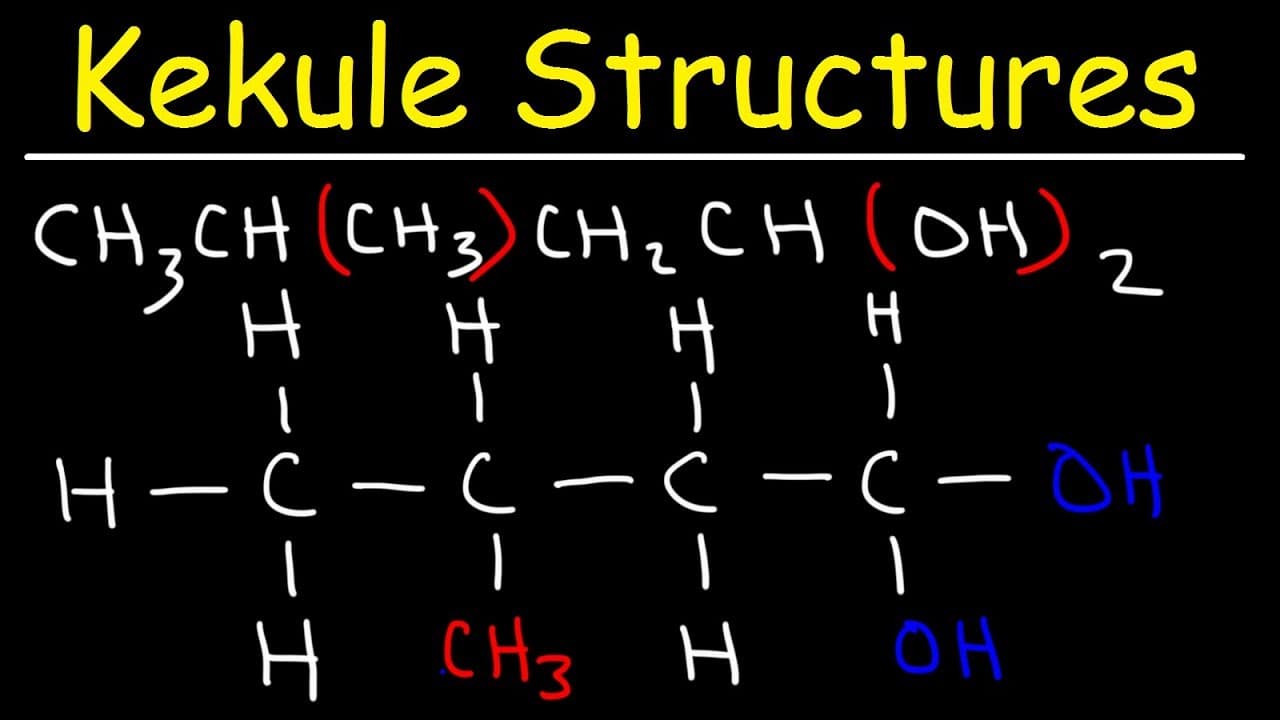
This content explains how to draw calculated structures from condensed structures and provides examples.
Transcript
consider this structure ch3 ch2 ch2 time stream ch2oh go ahead and draw the calculate structure of this particular condensed structure now a calculate structure is like a lewis structure with the exception that the lone pairs are usually omitted so we're not going to worry about drawing the lone pairs on oxygen so go ahead and draw the calculate st... Read More
Key Insights
- 🤮 Calculated structures are similar to Lewis structures but omit lone pairs of electrons.
- ❤️🩹 CH3 groups are always found at the end of a carbon chain, never in the middle.
- 👥 Correct placement of CH3 groups and expanding other groups is important for accurate calculated structures.
- ❓ Drawing calculated structures provides a clear representation of the molecular composition.
- 🫀 The number of bonds a carbon atom can form is limited, which influences how molecules are drawn.
- 👥 CH3 and CH2 groups have specific rules for their placement in calculated structures.
- 🆘 Accurate calculated structures help with understanding molecular properties and predicting reactions.
Install to Summarize YouTube Videos and Get Transcripts
Explore YouTube Video Summarizer or Get YouTube Transcript Extractor
Questions & Answers
Q: What is the difference between a calculated structure and a Lewis structure?
A calculated structure is similar to a Lewis structure but omits lone pairs of electrons. In a calculated structure, only the bonds between atoms are shown.
Q: Can CH3 groups be placed in the middle of a carbon chain?
No, CH3 groups are always found at the end of the chain and cannot be in the middle.
Q: How should a CH3 group be represented in a calculated structure?
A CH3 group should be placed outside the chain, adjacent to the carbon atom it is attached to.
Q: Why is it important to correctly draw calculated structures?
Drawing accurate calculated structures is crucial for understanding molecular properties, such as bond angles and reactivity patterns.
Summary & Key Takeaways
-
The content teaches how to draw calculated structures from condensed structures through clear step-by-step instructions.
-
It provides examples of drawing calculated structures for various molecules.
-
The importance of correctly placing CH3 groups outside the chain and expanding other groups is emphasized.
Read in Other Languages (beta)
Share This Summary 📚
Summarize YouTube Videos and Get Video Transcripts with 1-Click
Try YouTube Summary with ChatGPT & Claude or YouTube Transcript Generator
Explore More Summaries from The Organic Chemistry Tutor 📚


Summarize YouTube Videos and Get Video Transcripts with 1-Click
Try YouTube Summary with ChatGPT & Claude or YouTube Transcript Generator