Al Gore: This Is the Moment to Take On the Climate Crisis | TED
TL;DR
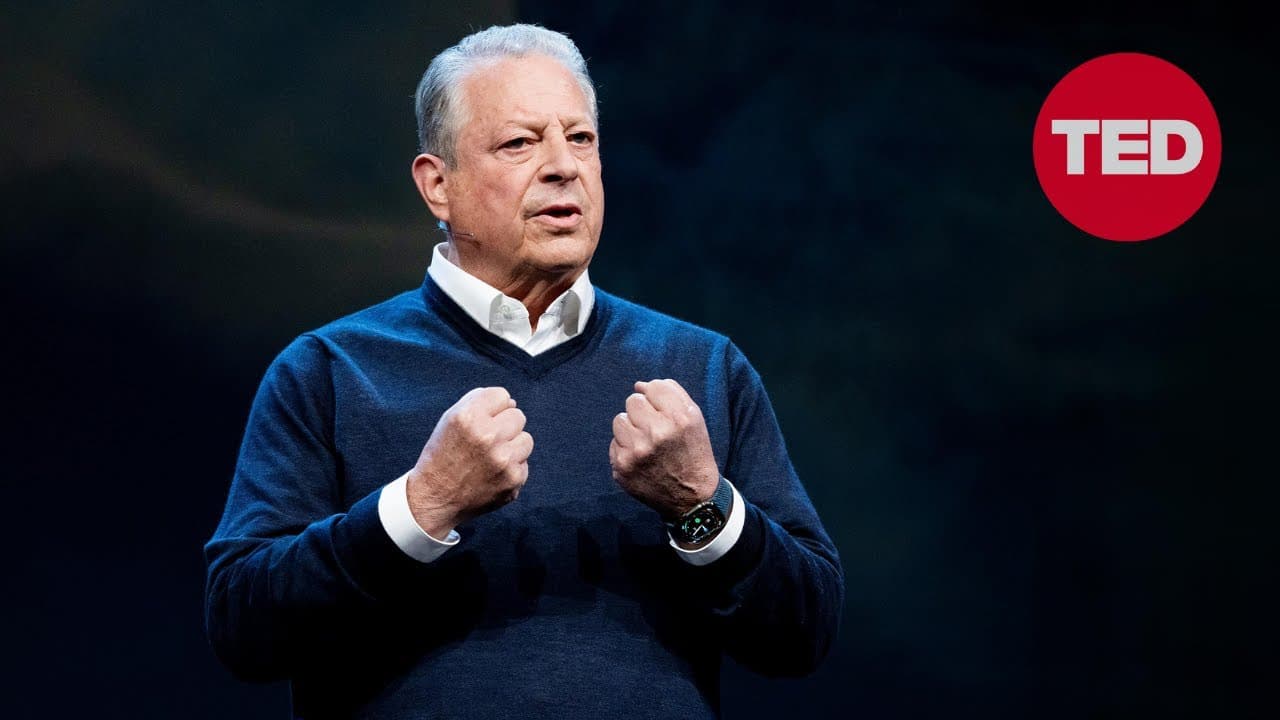
In this TED Talk, Al Gore discusses the urgency of addressing climate change, emphasizing the need for political will and action to combat the worsening crisis.
Transcript
Al Gore: Thank you very much. Whitney Pennington Rodgers: Hi, Al. Thank you so much for being here. Just as I mentioned, you gave a rousing talk at Climate Countdown last fall about all of the things that we need to do to transform climate change and to turn things around here. What would you say is the state of play with climate action now, six mo... Read More
Key Insights
- 🔥 Despite progress in developing sustainable solutions like solar and wind electricity, the climate crisis is worsening at a faster rate than predicted, and deployment of these solutions is lagging due to a lack of political will.
- 💰 Financial institutions and fossil fuel companies are still investing heavily in fossil fuels, hindering progress and exacerbating the crisis.
- 🌡️ Record-breaking high temperatures and extreme weather events, such as wildfires and superstorms, are clear signs of the climate crisis.
- 🌍 The fossil fuel war and energy security issues highlight the urgent need to transition away from fossil fuels for national and global security.
- 💨 Burning fossil fuels causes severe air pollution, resulting in the deaths of millions of people annually.
- 🔍 The IPCC report emphasizes the importance of peaking CO2 levels between 2020 and 2025 and achieving true net-zero emissions to stabilize global temperatures.
- 🛢️ Existing technologies and solutions can help stop the destruction caused by climate change and start the healing process, but political systems need to be freed from the influence of polluters.
- ⚡️ Breaking through the paralysis and taking action to address the climate crisis is crucial for the future of humanity, and hope should not be lost.
Install to Summarize YouTube Videos and Get Transcripts
Explore YouTube Video Summarizer or Get YouTube Transcript Extractor
Questions & Answers
Q: What progress has been made in developing sustainable solutions for climate change?
Thanks to the efforts of many individuals, including those in the TED community, there has been significant progress in the development of affordable solar and wind electricity, electric vehicles, batteries, regenerative agriculture, green hydrogen, and sustainable forestry. These solutions hold great potential for combating climate change.
Q: Despite the progress in developing sustainable solutions, why is the climate crisis worsening at a faster rate than predicted?
The crisis is getting worse because we lack sufficient political will to deploy these solutions at the necessary scale. Financial institutions and fossil fuel companies, who have captured the policy-making process, continue to invest in and promote fossil fuels, exacerbating the problem. Backsliding and false messaging contribute to the ongoing paralyzation of political decision-making.
Q: How does energy security and wars related to fossil fuels impact the urgency of transitioning to clean energy?
The conflict in Ukraine and the dependence on fossil fuels have highlighted the need for a global awakening to the significance of energy security. The United States, for example, requests more fossil fuels from petrostates like Saudi Arabia and Venezuela, further perpetuating the reliance on fuels that harm both national and global security. The transition to clean energy becomes imperative to safeguard disadvantaged communities and reduce coal pollution-related fatalities.
Q: What are the implications of the timeline given by the IPCC, stating that CO2 levels need to peak between 2020 and 2025?
The IPCC's timeline underscores the urgency for action. Achieving true net-zero emissions within this timeframe is crucial to halting the rise in global temperatures. If successful, temperatures could stabilize within three to five years, and half of the human-caused CO2 in the atmosphere could dissipate in 25 to 30 years. The necessary technologies exist, but breaking the capture of our political systems is vital to implementing them effectively.
Q: Should boycotts be considered as a means of pressuring financial institutions and banks to divest from fossil fuels?
The potential influence of boycotts on financial institutions and banks is a contentious topic. Some scientists and climate activists have resorted to direct action, such as gluing themselves to the gates of fossil fuel facilities, as they believe more facts and data alone are insufficient to confront large polluters. The question of whether to boycott these institutions remains open for debate.
Q: How can we combat the paralysis in political decision-making and take action to safeguard our future?
Breaking through the paralysis of political decision-making is crucial for combating climate change. Recognizing the moral imperative, mobilizing public pressure, and challenging the capture of our political systems are essential steps. We have the technologies and solutions to cut emissions by 50% in 2030 and beyond, but we must prioritize the long-term well-being of humanity and act decisively. Hope should not be abandoned, as political will is a renewable resource.
Summary & Key Takeaways
-
Al Gore discusses the progress and development of sustainable solutions such as solar electricity, wind electricity, electric vehicles, and regenerative agriculture.
-
He expresses concern that the climate crisis is escalating faster than the deployment of these solutions, in part due to financial interests of fossil fuel companies and the lack of political will.
-
Gore emphasizes the need to solve the democracy crisis in order to effectively address the climate crisis, and urges action to transition away from fossil fuels.
Read in Other Languages (beta)
Share This Summary 📚
Summarize YouTube Videos and Get Video Transcripts with 1-Click
Try YouTube Summary with ChatGPT & Claude or YouTube Transcript Generator
Explore More Summaries from TED 📚


Summarize YouTube Videos and Get Video Transcripts with 1-Click
Try YouTube Summary with ChatGPT & Claude or YouTube Transcript Generator