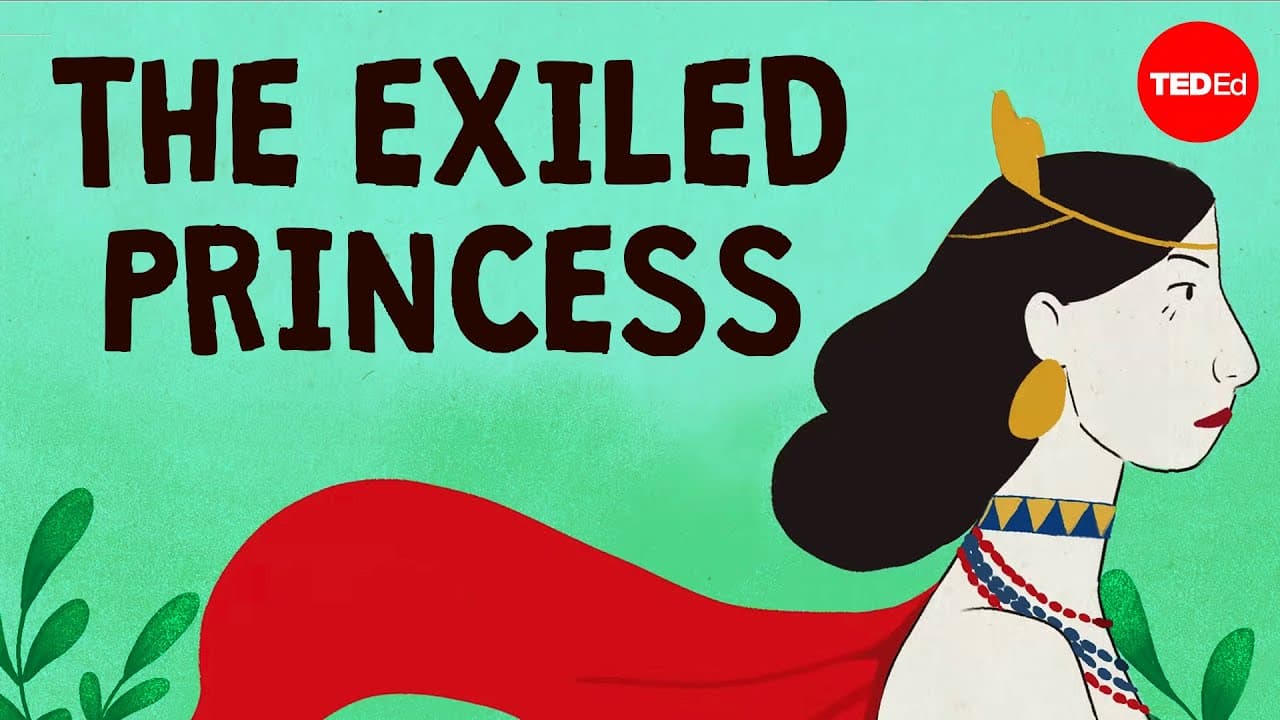
Who was the world's first author? - Soraya Field Fiorio
TL;DR
Enheduanna, history's first known author, high priestess, and influential poet in ancient Sumer 4,300 years ago.
Transcript
4,300 years ago in ancient Sumer, the most powerful person in the city of Ur was banished to wander the vast desert. Her name was Enheduanna. She was the high priestess of the moon god and history’s first known author. By the time of her exile, she had written 42 hymns and three epic poems— and Sumer hadn’t heard the last of her. Enheduanna lived... Read More
Key Insights
- ✋ Enheduanna was history's first known author, high priestess, and influential poet in ancient Sumer, writing hymns and epic poems that showcased humanized deities.
- 🖐️ She played a crucial role in bridging the gap between Sumerian and Akkadian cultures through her writings that honored various deities.
- ✋ Exiled but later restored as high priestess, Enheduanna's literary legacy influenced future religious texts, literature, and cultural practices.
- 😫 Her writings, notably odes to the goddess Inanna, explored deep emotions and set the foundation for using the pronoun "I" in literature.
- 🎭 Enheduanna's legacy endured for over 500 years, with her poetry being copied, studied, and performed throughout the empire.
- ✍️ Her influence extended to the Hebrew Old Testament, the epics of Homer, and Christian hymns, showcasing the lasting impact of her writings.
- 💋 As a powerful female figure in ancient Sumer, Enheduanna managed grain storage, oversaw temple workers, and presided over rituals, leaving a significant mark on religious and cultural practices of her time.
Install to Summarize YouTube Videos and Get Transcripts
Explore YouTube Video Summarizer or Get YouTube Transcript Extractor
Questions & Answers
Q: Who was Enheduanna, and what was her significance in ancient Sumer?
Enheduanna was the high priestess of the moon god, history's first known author, and an influential poet who unified Sumerian and Akkadian cultures through her writings. She played a crucial role in religious and cultural life in ancient Sumer.
Q: What were Enheduanna's literary contributions, and how did they impact future writings?
Enheduanna wrote 42 hymns and three epic poems, notably praising the goddess Inanna. Her writings humanized deities and explored deep emotions, setting the foundation for future religious texts and literature, influencing the Hebrew Old Testament, Homer's epics, and Christian hymns.
Q: How did Enheduanna bridge the gap between Sumerian and Akkadian cultures?
As the high priestess appointed by her father, King Sargon, Enheduanna wrote hymns that combined Sumerian and Akkadian mythologies, praising each city's ruling deity. Her writings aimed to unify the two cultures and showcase the gods' human characteristics.
Q: What was the fate of Enheduanna after her exile?
Despite being exiled by a coup after her father's death, Enheduanna's nephew, King Naram-Sin, later restored her as high priestess. She continued to serve for 40 years, leaving a lasting legacy through her poetry and writings that transcended her time.
Summary & Key Takeaways
-
Enheduanna, daughter of King Sargon the Great, was the high priestess of the moon god in ancient Sumer, who wrote 42 hymns and three epic poems.
-
She unified Sumerian and Akkadian cultures through her writings, notably honoring the goddess Inanna.
-
Exiled but later restored, Enheduanna's literary legacy influenced future religious texts and literature, lasting over 500 years.
Read in Other Languages (beta)
Share This Summary 📚
Summarize YouTube Videos and Get Video Transcripts with 1-Click
Try YouTube Summary with ChatGPT & Claude or YouTube Transcript Generator
Explore More Summaries from TED-Ed 📚





Summarize YouTube Videos and Get Video Transcripts with 1-Click
Try YouTube Summary with ChatGPT & Claude or YouTube Transcript Generator