The Physics of Falling Back in your Chair
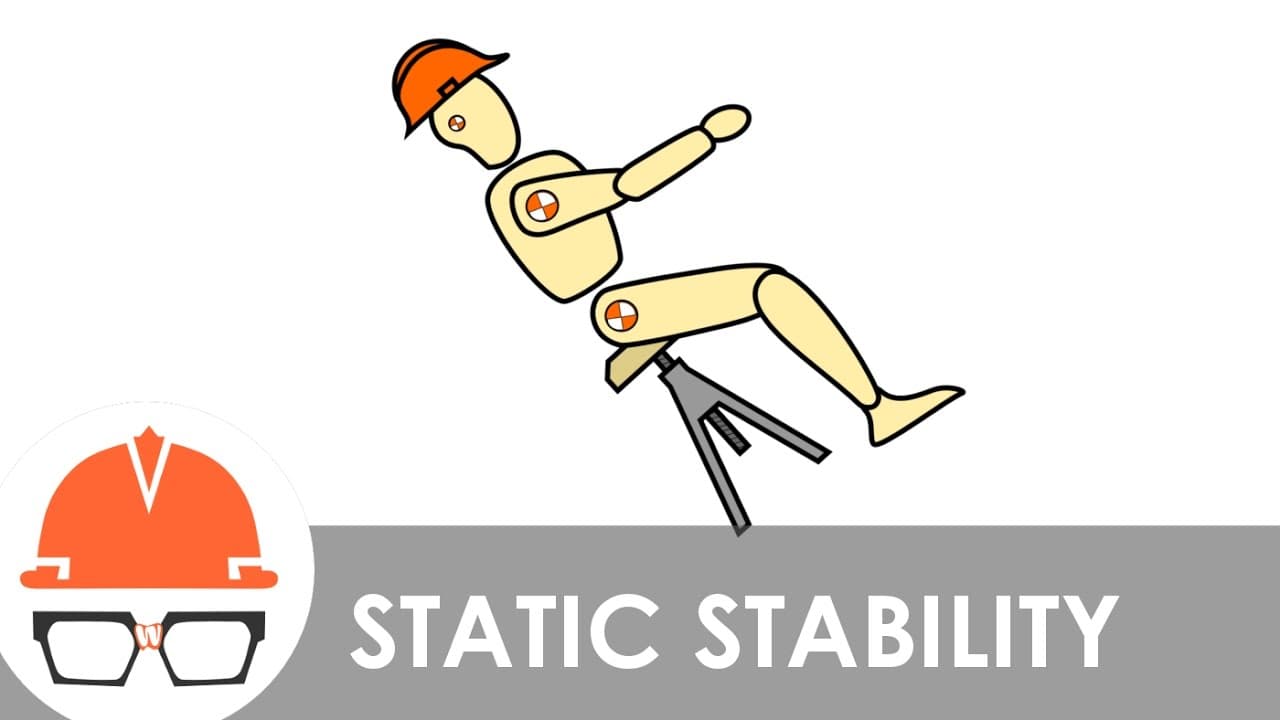
TL;DR
Explains static stability through chair-leaning analogy.
Transcript
It’s Friday afternoon, and you just sent your last email of the day. Your eyes move around the room and you slowly exhale, leaning back just one… tiny… inch and [crash]. It’s happened to all of us, and there’s a simple explanation to why something so clumsy can sneak up on you. I’m Grady, and this is Practical Engineering. On today’s episode, we’re... Read More
Key Insights
- Static stability is the study of objects at rest, crucial for ensuring structures like bridges and buildings remain stable and safe.
- Newton’s Second Law is foundational in engineering to ensure acceleration doesn’t occur in structures, maintaining static equilibrium.
- Static equilibrium requires both net forces and moments to sum to zero, ensuring an object remains at rest without rotation.
- Leaning back in a chair demonstrates static analysis, showing how balance is maintained until the center of gravity shifts too far.
- The point of rotation in a chair is the back legs, and gravity creates a moment that can cause tipping if not counteracted.
- Engineers use similar principles to design cranes, ensuring the center of gravity does not shift beyond the point of rotation.
- Statics principles are applicable beyond engineering, useful for anyone needing to maintain stability in various contexts.
- Understanding moments and forces helps in visualizing and solving real-world problems involving balance and stability.
Install to Summarize YouTube Videos and Get Transcripts
Explore YouTube Video Summarizer or Get YouTube Transcript Extractor
Questions & Answers
Q: What is static stability in engineering?
Static stability in engineering refers to the study of objects at rest, ensuring that structures like bridges, roads, and buildings remain stable and do not experience unwanted acceleration. This involves balancing forces and moments so that they sum to zero, maintaining the object in a state of equilibrium.
Q: How does Newton’s Second Law relate to static equilibrium?
Newton’s Second Law states that a net force on an object causes it to accelerate. In static equilibrium, engineers aim to prevent this acceleration by ensuring that the net forces and moments acting on a structure are balanced, resulting in a sum of zero. This keeps the structure stable and at rest.
Q: Why is leaning back in a chair an example of static analysis?
Leaning back in a chair demonstrates static analysis because it involves balancing forces and moments to prevent tipping. The point of rotation is the chair's back legs, and gravity creates a moment that can cause the chair to tip if not counteracted. This analogy helps illustrate how engineers analyze stability in structures.
Q: What happens when the center of gravity shifts in a chair?
When the center of gravity shifts beyond the point of rotation in a chair, the moments become unbalanced, leading to tipping. Initially, the feet and legs create an opposing moment to maintain balance, but once the center of gravity moves too far, this balance is lost, and the chair tips over.
Q: How do engineers apply static stability principles to cranes?
Engineers apply static stability principles to cranes by ensuring the center of gravity does not shift beyond the point of rotation. Cranes often have sensors to monitor pressure on the outriggers, preventing the system's center of gravity from moving to an unstable position, which could lead to tipping.
Q: What are the conditions for static equilibrium?
The conditions for static equilibrium require that both the net forces and the net moments acting on an object sum to zero. This ensures that the object remains at rest and does not experience any linear or rotational acceleration, maintaining stability and preventing movement.
Q: How does static analysis apply to everyday life?
Static analysis applies to everyday life by providing a framework for understanding balance and stability in various contexts. Whether it's ensuring a chair doesn't tip over or designing a stable structure, the principles of balancing forces and moments help solve real-world problems involving static stability.
Q: What role do moments play in static stability?
Moments, or torques, play a crucial role in static stability by determining the rotational forces acting on an object. For an object to remain stable and at rest, the sum of the moments must be zero. This balance prevents unwanted rotation and is essential in designing stable structures and systems.
Summary & Key Takeaways
-
Static stability, a key concept in engineering, ensures structures remain stable by balancing forces and moments. Leaning back in a chair exemplifies this principle, where the balance of forces and moments prevents tipping. Understanding these concepts is crucial for designing stable structures like bridges and cranes.
-
Newton’s Second Law underpins the concept of static equilibrium, where net forces and moments must sum to zero for an object to remain at rest. This principle is applied in engineering to prevent unwanted acceleration in structures, ensuring safety and stability in everyday applications.
-
The chair-leaning analogy illustrates how static analysis works, with the point of rotation at the chair's back legs and gravity creating a moment. When the center of gravity shifts too far, balance is lost, leading to tipping. Engineers use similar analyses to design stable structures.
Read in Other Languages (beta)
Share This Summary 📚
Summarize YouTube Videos and Get Video Transcripts with 1-Click
Try YouTube Summary with ChatGPT & Claude or YouTube Transcript Generator
Explore More Summaries from Practical Engineering 📚






Summarize YouTube Videos and Get Video Transcripts with 1-Click
Try YouTube Summary with ChatGPT & Claude or YouTube Transcript Generator