What Is Sampling from a Distribution and Why Is It Important?
TL;DR
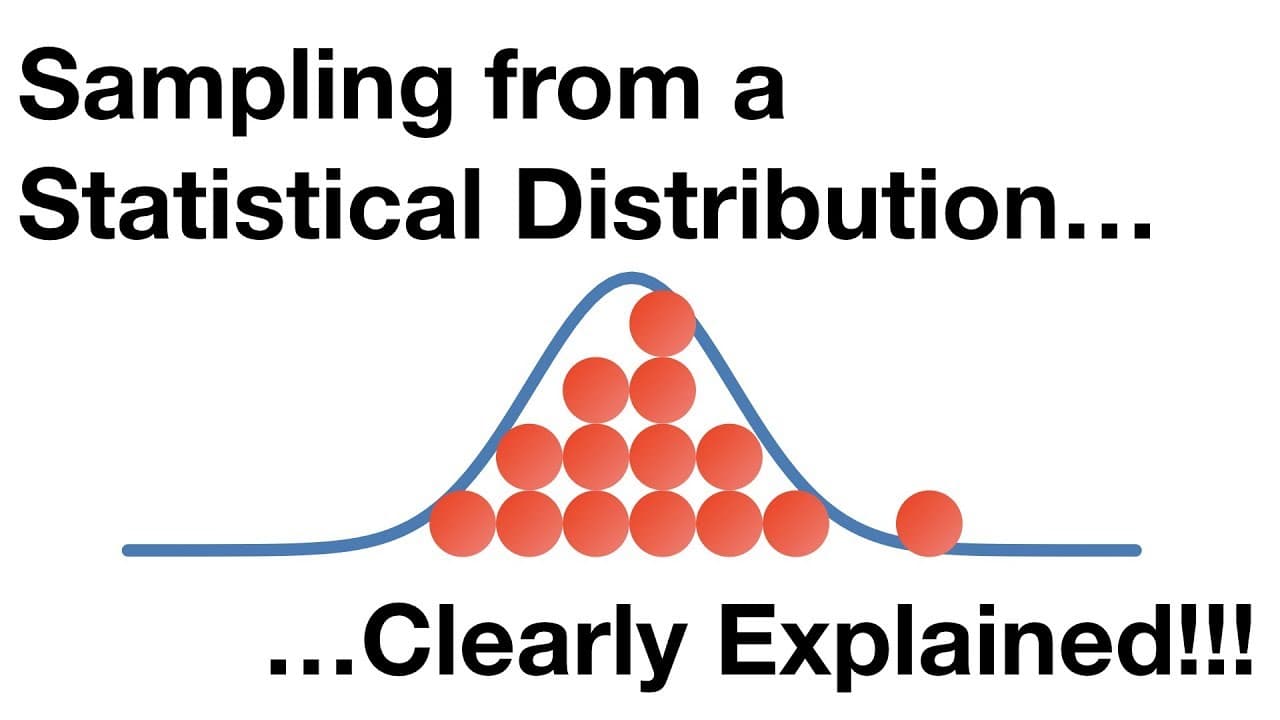
Sampling from a distribution involves generating random numbers that reflect the probabilities of the data. This technique is crucial for exploring statistics, as it allows for the evaluation of statistical tests and their accuracy without extensive real-world data collection. It helps users understand the capabilities and limitations of these tests by comparing expected outcomes to actual results.
Transcript
the state quest hello and welcome to stat quest stat quest is brought to you by the friendly folks in the genetics department in the University of North Carolina at Chapel Hill today we're going to be talking about sampling a distribution or getting samples from a distribution this is something that we do all the time and stack quest so I wanted to... Read More
Key Insights
- ⚾ Sampling from distributions involves generating random values based on probabilities.
- 🏆 Comparing expected outcomes to real results helps in evaluating statistical test accuracy.
- 🏆 Multiple samples from a distribution provide insights into test consistency and reliability.
- 🦻 Sampling from multiple distributions aids in assessing test generalizability and robustness.
- 🏆 Statistical tests can be tested without much real work by generating samples.
- 🏆 Sampling helps in understanding the capabilities and limitations of statistical tests.
- ❓ Sample size adjustments can be determined through comparing expectations to reality.
Install to Summarize YouTube Videos and Get Transcripts
Explore YouTube Video Summarizer or Get YouTube Transcript Extractor
Questions & Answers
Q: How does sampling from a distribution help in understanding statistical tests?
Sampling allows us to generate random values based on probabilities, helping us test statistical tests and compare them to actual distributions. This aids in understanding the capabilities and limitations of statistical tests.
Q: What is the significance of comparing expectations to reality in sampling from distributions?
By comparing expected outcomes to real results through sampling, we can assess the accuracy and effectiveness of statistical tests. This process helps in determining if adjustments to sample size are necessary.
Q: Why is it important to take multiple samples from a distribution?
Taking multiple samples allows us to conduct numerous statistical tests, providing insights into the consistency and reliability of the tests. This helps in understanding the behavior of statistical tests under different scenarios.
Q: How does sampling from multiple distributions contribute to statistical analysis?
Sampling from multiple distributions enables us to compare the performance of statistical tests across different datasets. This process aids in assessing the generalizability and robustness of statistical tests.
Summary & Key Takeaways
-
Stat Quest explains sampling from distributions using height measurements in a histogram.
-
Taking samples helps explore statistics and compare expectations to reality.
-
By generating samples, statistical tests can be tested without much effort.
Read in Other Languages (beta)
Share This Summary 📚
Summarize YouTube Videos and Get Video Transcripts with 1-Click
Try YouTube Summary with ChatGPT & Claude or YouTube Transcript Generator
Explore More Summaries from StatQuest with Josh Starmer 📚


Summarize YouTube Videos and Get Video Transcripts with 1-Click
Try YouTube Summary with ChatGPT & Claude or YouTube Transcript Generator