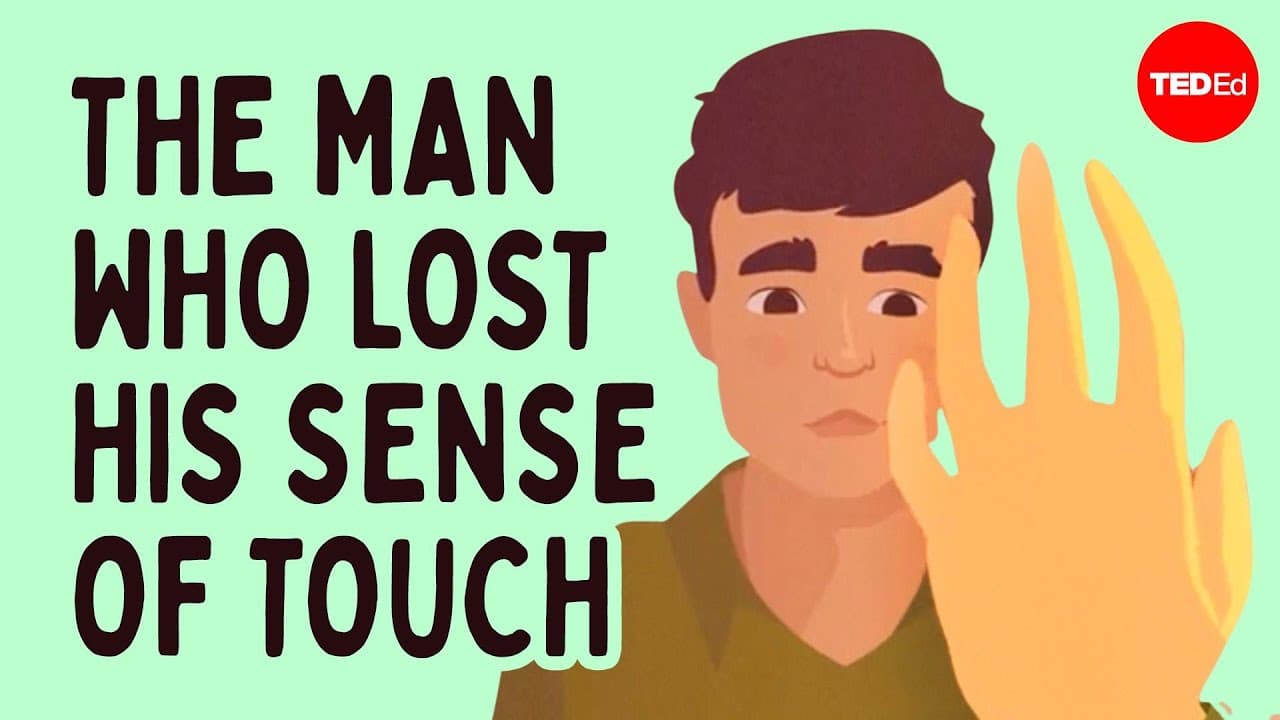
The man who lost his sense of touch - Antonio Cataldo
TL;DR
Ian Waterman lost touch and proprioception due to a rare neurological disorder, showcasing the vital role of somatosensory system.
Transcript
In 1971, Ian Waterman suddenly collapsed from a severe case of what seemed to be gastric flu. His illness passed after a few days, but a stranger set of symptoms lingered. Although his muscles and joints remained healthy, Waterman was unable to move. In fact, he was unable to feel anything from the neck down. Eventually, he was diagnosed with a rar... Read More
Key Insights
- 🛟 Ian Waterman's experience highlights the impact of somatosensory disorders on daily life.
- 👨🎨 The somatosensory system includes touch, pain, temperature, and proprioception, all vital for bodily functions.
- ❓ Damage to the somatosensory system can result in various disorders, affecting movement and overall well-being.
- ❓ Adapting to somatosensory disorders requires innovative approaches and resilience.
- 🌸 Loss of tactile sensations can create challenges in regulating strength and responding to injuries.
- 🥺 Social touch deprivation can lead to mental health issues and physical consequences.
- 💨 Innovative ways of adapting to somatosensory disorders showcase human resilience.
Install to Summarize YouTube Videos and Get Transcripts
Explore YouTube Video Summarizer or Get YouTube Transcript Extractor
Questions & Answers
Q: What is deafferentation, and how did it affect Ian Waterman?
Deafferentation is a neurological condition where signals from the nervous system are impaired, leading to loss of touch and proprioception. This left Ian Waterman unable to move or feel his body, demonstrating the critical role of the somatosensory system.
Q: How do mechanoreceptors, thermoreceptors, nociceptors, and proprioceptors contribute to the somatosensory system?
Mechanoreceptors sense mechanical deformation, thermoreceptors respond to temperature changes, nociceptors detect pain, and proprioceptors monitor body position. Together, they provide essential sensory information for movement and well-being.
Q: What are the consequences of damage to the somatosensory system?
Damage to the somatosensory system can result in various disorders, affecting movement, sensation, and overall health. Loss of tactile sensations can lead to difficulty in regulating strength, while social touch deprivation can contribute to mental health issues.
Q: How do individuals with somatosensory disorders adapt to their condition?
Individuals with somatosensory disorders often find innovative ways to adapt, utilizing other senses or technologies to navigate daily life. Adapting to these challenges showcases the resilience of the human spirit in the face of adversity.
Summary & Key Takeaways
-
Ian Waterman developed a rare neurological disorder that left him without the ability to feel anything from the neck down, showcasing the importance of the somatosensory system.
-
The somatosensory system includes touch, pain, temperature, and proprioception, which are essential for bodily movement and awareness.
-
Damage to the somatosensory system can lead to various disorders, impacting daily functions and overall well-being.
Read in Other Languages (beta)
Share This Summary 📚
Summarize YouTube Videos and Get Video Transcripts with 1-Click
Try YouTube Summary with ChatGPT & Claude or YouTube Transcript Generator
Explore More Summaries from TED-Ed 📚

Summarize YouTube Videos and Get Video Transcripts with 1-Click
Try YouTube Summary with ChatGPT & Claude or YouTube Transcript Generator