How Does Trump's Immunity Affect Legal Cases?
TL;DR
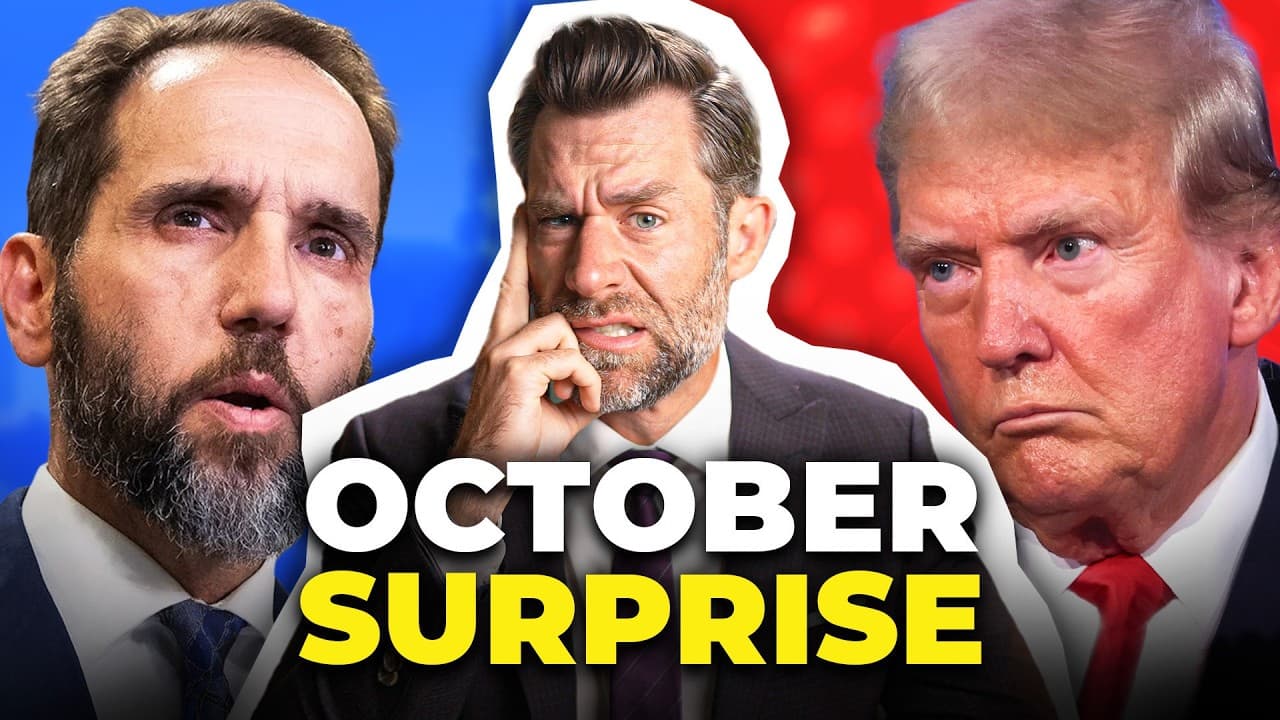
Jack Smith has re-indicted Donald Trump, presenting new evidence in a bid to overcome the Supreme Court's presumption of presidential immunity. The case hinges on distinguishing Trump's actions as a candidate from those as president, challenging the broad interpretation of immunity for official acts. The outcome will depend on judicial interpretations of these roles.
Transcript
- Instead of packing up his bags when the Supreme Court said the president is immune from almost everything, Jack Smith said, "Screw it," re-indicted the former president and included a whole bunch of new evidence for the foreign president's crimes. When life gives you lemons, you make lemonade. Even if it's criminal lemonade. I don't know, the met... Read More
Key Insights
- Jack Smith re-indicted Trump with new evidence to challenge presidential immunity.
- The Supreme Court ruled presidents have strong immunity for official acts.
- Smith's motion argues Trump's actions were as a candidate, not president.
- Presidential immunity complicates the use of official acts as evidence.
- Judge Chutkan must decide if Trump is immune for actions to overturn the election.
- Smith relies on the D.C. Circuit's Blassingame decision to counter immunity claims.
- Trump's alleged actions included pressuring Pence and inciting the Capitol riot.
- The case's outcome may influence interpretations of presidential campaign actions.
Install to Summarize YouTube Videos and Get Transcripts
Explore YouTube Video Summarizer or Get YouTube Transcript Extractor
Questions & Answers
Q: How does Jack Smith challenge Trump's immunity?
Jack Smith challenges Trump's immunity by arguing that Trump's actions to overturn the 2020 election were conducted as a candidate, not as president. This distinction is crucial because presidential immunity covers official acts, but not campaign activities. Smith's motion presents evidence and legal arguments to establish that Trump's conduct was outside the scope of presidential duties, aiming to bypass the immunity protections.
Q: What is the significance of the Supreme Court's decision in Trump v. US?
The Supreme Court's decision in Trump v. US is significant because it establishes a strong presumption of immunity for presidents regarding official acts. This ruling complicates prosecutions by preventing the use of official acts as evidence in criminal cases. However, it also leaves open the question of how to distinguish between official and campaign activities, which is central to Jack Smith's legal strategy against Trump.
Q: How does the Blassingame decision relate to Trump's case?
The Blassingame decision relates to Trump's case by providing a legal precedent that distinguishes between a president's official acts and campaign activities. In Blassingame, the court ruled that a president is not entitled to immunity when acting as a candidate. Jack Smith uses this decision to argue that Trump's actions to overturn the election were campaign-related, not presidential, and thus not covered by immunity.
Q: What role does Judge Chutkan play in this case?
Judge Chutkan plays a crucial role in determining whether Trump's actions to overturn the 2020 election are protected by presidential immunity. She must assess Smith's arguments and evidence to decide if Trump's conduct was as a candidate or president. Her ruling will influence whether the evidence can be admitted at trial, impacting the case's progression and potentially setting a legal precedent.
Q: What evidence does Smith present against Trump?
Smith presents evidence that Trump pressured Mike Pence to reject electoral votes and incited the Capitol riot, actions that Smith argues were as a candidate. The motion includes details of Trump's communications and decisions, aiming to demonstrate that these were not official presidential acts. Smith's evidence seeks to establish a narrative of private conduct, challenging the scope of presidential immunity.
Q: How might the Supreme Court's interpretation affect the case?
The Supreme Court's interpretation will significantly affect the case by determining the boundaries of presidential immunity. If the Court aligns with the D.C. Circuit's Blassingame decision, it may rule that Trump's campaign actions are not protected, allowing the case to proceed. Conversely, a broader interpretation of immunity could shield Trump from prosecution, influencing future legal actions against presidents.
Q: What are the potential implications of this case?
The potential implications of this case include setting a precedent for how presidential actions during campaigns are legally interpreted. A ruling against Trump's immunity could narrow the scope of protections for presidential conduct, impacting future prosecutions. The case also highlights the challenges of balancing presidential immunity with accountability, influencing legal strategies in cases involving former presidents.
Q: How is media coverage influencing public perception of the case?
Media coverage is influencing public perception by framing the case through partisan lenses. Left-leaning outlets emphasize the pursuit of justice against Trump, while right-leaning sources view it as election interference. This polarized reporting shapes audience views, potentially affecting public opinion on the legitimacy of the legal proceedings and the broader implications of presidential accountability.
Summary & Key Takeaways
-
Jack Smith's re-indictment of Donald Trump introduces new evidence challenging the Supreme Court's broad interpretation of presidential immunity. Smith argues that Trump's actions to overturn the 2020 election were as a candidate, not as president, aiming to bypass immunity protections. The case's progress depends on judicial interpretations of these distinctions, potentially impacting future legal proceedings involving presidential actions.
-
The Supreme Court's ruling in Trump v. US grants presidents strong immunity for official acts, complicating prosecutions. Smith's motion seeks to delineate between Trump's campaign actions and presidential duties, highlighting his efforts to overturn the election results as private conduct. The case will test the boundaries of presidential immunity and its applicability to campaign-related activities.
-
Smith's legal strategy involves leveraging the D.C. Circuit's Blassingame decision, which differentiates between a president's campaign and official acts. The motion presents evidence of Trump's pressure on Pence and involvement in the Capitol riot, arguing these were campaign-related. The case's outcome could set a precedent for how presidential actions during campaigns are legally interpreted.
Read in Other Languages (beta)
Share This Summary 📚
Summarize YouTube Videos and Get Video Transcripts with 1-Click
Try YouTube Summary with ChatGPT & Claude or YouTube Transcript Generator
Explore More Summaries from LegalEagle 📚

Summarize YouTube Videos and Get Video Transcripts with 1-Click
Try YouTube Summary with ChatGPT & Claude or YouTube Transcript Generator