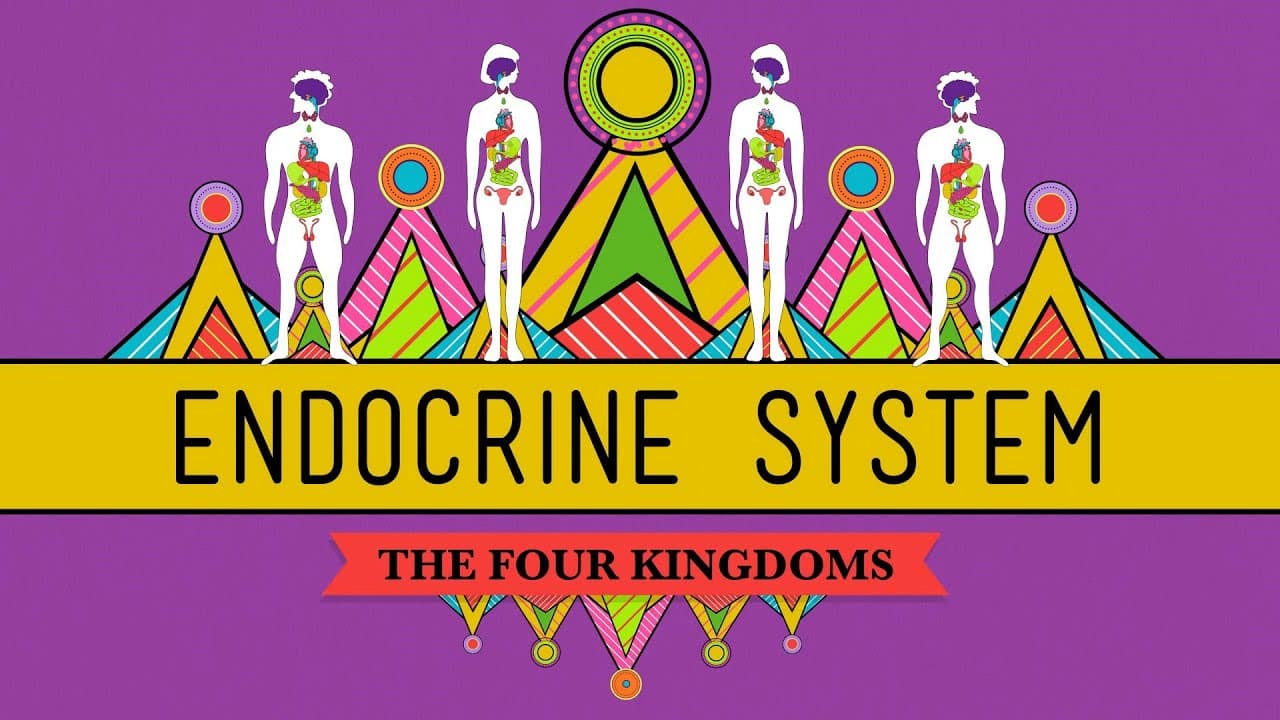
Great Glands - Your Endocrine System: CrashCourse Biology #33
TL;DR
Overview of hormone functions and the endocrine system.
Transcript
Hormones! Those things that make teenagers moody and miserable, and they cause growth spurts and acne, and they can make a perfectly normal student totally obsessed with his algebra teacher. Not that I have any real, boots-on-the-ground experience with that last one. But all that mayhem is just the handiwork of your sex hormones. The fact is that t... Read More
Key Insights
- The endocrine system uses hormones to regulate bodily functions, contrasting with the nervous system's rapid, short-lived responses.
- Hormones are secreted by endocrine glands and travel through the bloodstream to target organs, affecting processes like metabolism and growth.
- Steroid hormones can penetrate cell membranes and bind to receptors inside cells, while peptide and amine hormones bind to surface receptors.
- The pituitary gland, often called the 'master gland,' regulates other glands and is influenced by the hypothalamus, linking the nervous and endocrine systems.
- Negative feedback loops, like the thyroid-pituitary interaction, help maintain hormone balance by adjusting hormone secretion levels.
- Adrenal glands respond to stress by releasing adrenaline, which prepares the body for 'fight or flight' by affecting heart rate and blood flow.
- The pancreas regulates blood glucose levels by releasing insulin and glucagon, essential for cellular respiration and energy balance.
- Sex hormones influence physical development and emotional states, playing crucial roles during fetal development and puberty.
Install to Summarize YouTube Videos and Get Transcripts
Explore YouTube Video Summarizer or Get YouTube Transcript Extractor
Questions & Answers
Q: What is the primary function of the endocrine system?
The primary function of the endocrine system is to regulate various bodily functions through the secretion of hormones. These hormones are chemical messengers that travel through the bloodstream to target organs, affecting processes such as growth, metabolism, and sexual development. Unlike the nervous system, which provides quick and short-lived responses, the endocrine system's effects are slower to initiate but longer-lasting.
Q: How do steroid hormones differ from peptide and amine hormones?
Steroid hormones differ from peptide and amine hormones in their solubility and mode of action. Steroid hormones are lipid-soluble, allowing them to pass through cell membranes and bind to receptors inside the cell, often in the nucleus. In contrast, peptide and amine hormones are water-soluble and cannot penetrate cell membranes. Instead, they bind to receptors on the cell surface, triggering a cascade of intracellular events.
Q: What role does the pituitary gland play in the endocrine system?
The pituitary gland, often referred to as the 'master gland,' plays a crucial role in the endocrine system by regulating the activity of other endocrine glands. It is influenced by the hypothalamus, which acts as a bridge between the nervous and endocrine systems. The pituitary gland releases hormones that instruct other glands, like the thyroid and adrenal glands, to produce and secrete their respective hormones, thus controlling various physiological processes.
Q: How do negative feedback loops function in hormone regulation?
Negative feedback loops in hormone regulation function by maintaining homeostasis through a self-regulating mechanism. When a hormone's level in the bloodstream reaches a certain threshold, it signals the gland that produces it to reduce or stop its secretion. For example, the pituitary gland monitors thyroid hormone levels and adjusts its release of thyroid-stimulating hormone (TSH) accordingly, ensuring that hormone levels remain balanced and stable.
Q: What is the adrenal gland's response to stress?
In response to stress, the adrenal glands secrete adrenaline (also known as epinephrine) into the bloodstream. This hormone prepares the body for a 'fight or flight' response by increasing heart rate, redirecting blood flow to essential organs like muscles and lungs, and shutting down non-essential functions such as digestion. The release of adrenaline ensures that the body can react quickly and effectively to perceived threats or emergencies.
Q: How does the pancreas regulate blood glucose levels?
The pancreas regulates blood glucose levels by secreting two key hormones: insulin and glucagon. When blood glucose levels rise, such as after eating, the pancreas releases insulin, prompting cells to absorb glucose and store it as glycogen or fat. Conversely, when blood glucose levels drop, the pancreas secretes glucagon, which stimulates the liver and muscles to convert stored glycogen back into glucose, ensuring a steady supply of energy for the body's needs.
Q: What are the functions of sex hormones during puberty?
During puberty, sex hormones play a vital role in physical development and maturation. In males, androgens like testosterone promote the development of secondary sexual characteristics such as deeper voice, increased muscle mass, and facial hair. In females, estrogens and progestins stimulate breast development, the onset of menstruation, and prepare the body for potential pregnancy. These hormones also influence emotional and psychological changes during adolescence.
Q: How do hormones influence fetal development and sex differentiation?
Hormones significantly influence fetal development and sex differentiation. During embryonic development, the presence or absence of specific hormones determines whether the fetus develops male or female characteristics. For instance, the secretion of androgens by the gonads leads to the development of male reproductive structures. Without these hormones, the default development pathway is female. This hormonal influence extends to secondary sexual characteristics and reproductive functions later in life.
Summary & Key Takeaways
-
The endocrine system regulates body functions through hormones, which are secreted by glands and travel through the bloodstream to target organs. This system works alongside the nervous system, but with longer-lasting effects.
-
Hormones are categorized into steroids, peptides, and monoamines, each interacting differently with target cells. The pituitary gland, influenced by the hypothalamus, is central to hormone regulation.
-
Negative feedback loops maintain hormone balance, while adrenal glands handle stress responses. The pancreas manages blood glucose levels, and sex hormones drive development and emotional states.
Read in Other Languages (beta)
Share This Summary 📚
Summarize YouTube Videos and Get Video Transcripts with 1-Click
Try YouTube Summary with ChatGPT & Claude or YouTube Transcript Generator
Explore More Summaries from CrashCourse 📚





Summarize YouTube Videos and Get Video Transcripts with 1-Click
Try YouTube Summary with ChatGPT & Claude or YouTube Transcript Generator