The 4 greatest threats to the survival of humanity
TL;DR
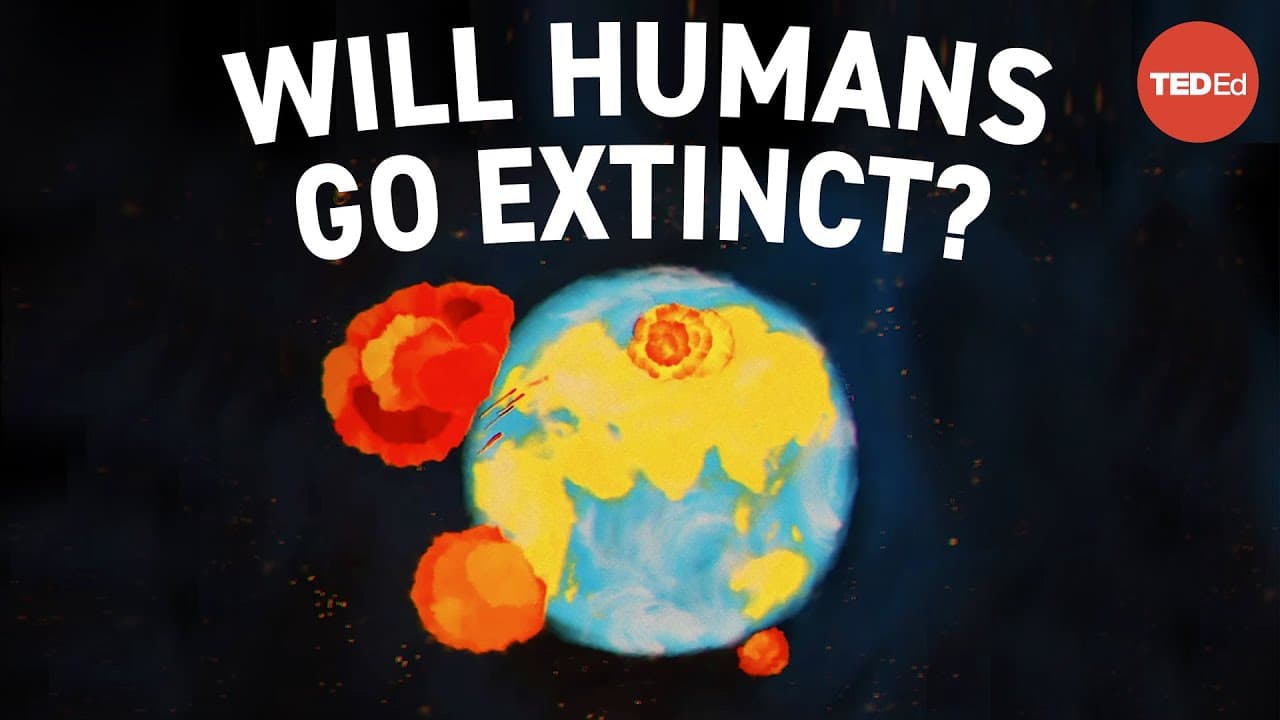
The world faces increasing existential risks, including nuclear war, climate change, engineered pandemics, and unaligned AI, but we have the power to reduce these risks through human action.
Transcript
In January of 1995, Russia detected a nuclear missile headed its way. The alert went all the way to the president, who was deciding whether to strike back when another system contradicted the initial warning. What they thought was the first missile in a massive attack was actually a research rocket studying the Northern Lights. This incident happen... Read More
Key Insights
- ✊ Humanity has the power to reduce existential risks if we prioritize and address them through human action.
- 🔫 Nuclear weapons and climate change are significant risks, but it's uncertain whether they directly cause extinction.
- ✳️ Emerging technologies like biotechnology and unaligned AI pose potential catastrophic risks and require careful management.
- ✳️ Anthropogenic existential risk is estimated to be more than 100 times higher than natural risk, emphasizing the need for human intervention.
Install to Summarize YouTube Videos and Get Transcripts
Explore YouTube Video Summarizer or Get YouTube Transcript Extractor
Questions & Answers
Q: What was the closest humanity came to a global nuclear war?
In 1995, Russia received a false missile warning, nearly triggering a nuclear war.
Q: What is the main existential risk posed by nuclear weapons?
The primary existential risk of nuclear weapons is the possibility of a global nuclear war leading to a nuclear winter, causing widespread crop failure.
Q: How does climate change increase existential risk?
While it's uncertain if climate change alone can cause extinction, its disruption can make us more vulnerable to other existential risks.
Q: What are some emerging technologies that pose potential existential risks?
Engineered pandemics through biotechnology and the development of unaligned artificial intelligence are two emerging technologies that could have catastrophic consequences for humanity.
Key Insights:
- Humanity has the power to reduce existential risks if we prioritize and address them through human action.
- Nuclear weapons and climate change are significant risks, but it's uncertain whether they directly cause extinction.
- Emerging technologies like biotechnology and unaligned AI pose potential catastrophic risks and require careful management.
- Anthropogenic existential risk is estimated to be more than 100 times higher than natural risk, emphasizing the need for human intervention.
- Safeguarding humanity's future is a crucial task that requires collective effort and consideration.
Summary & Key Takeaways
-
In 1995, Russia nearly launched a global nuclear war in response to a false missile alarm, highlighting the inherent risk of nuclear weapons.
-
Climate change poses a significant threat and could lead to catastrophic consequences, although it is uncertain if it would directly cause extinction.
-
Emerging technologies like biotechnology and unaligned artificial intelligence could potentially create deadly pandemics and place humanity at risk.
Read in Other Languages (beta)
Share This Summary 📚
Summarize YouTube Videos and Get Video Transcripts with 1-Click
Try YouTube Summary with ChatGPT & Claude or YouTube Transcript Generator
Explore More Summaries from TED-Ed 📚



Summarize YouTube Videos and Get Video Transcripts with 1-Click
Try YouTube Summary with ChatGPT & Claude or YouTube Transcript Generator