Q&A 147: The Night Sky at the Center of the Milky Way? And More...
TL;DR
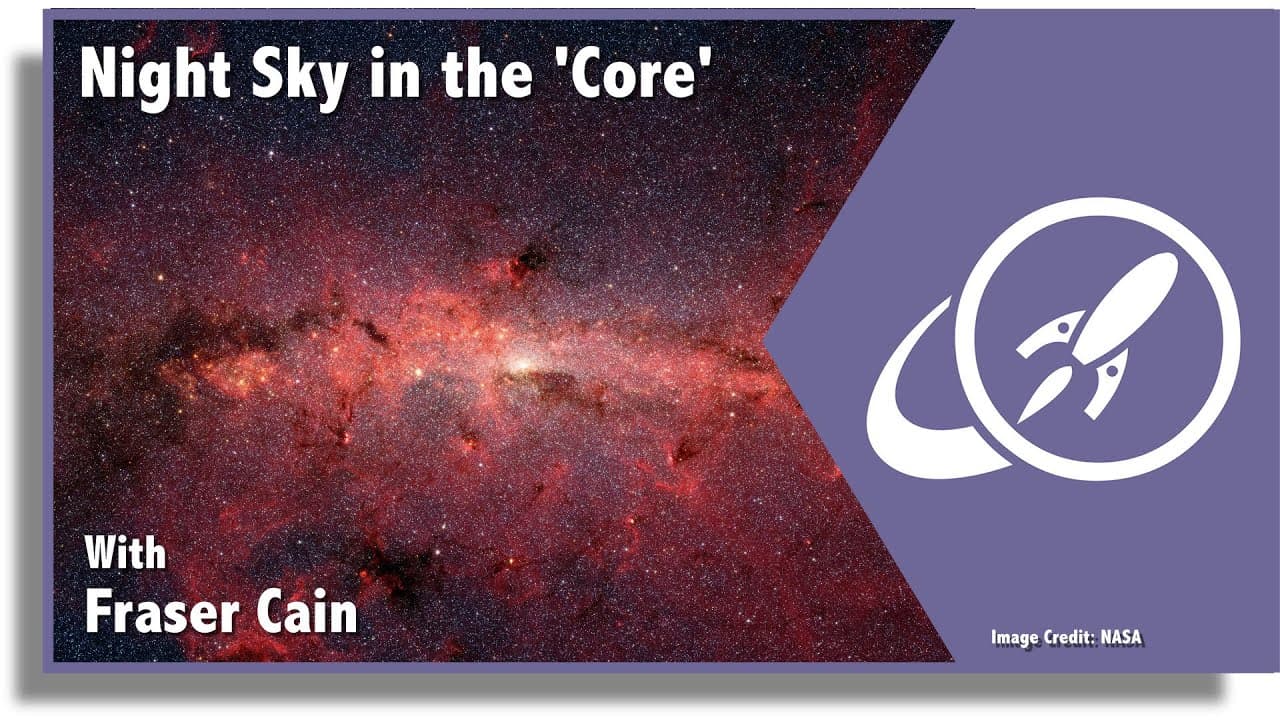
A planet close to the Milky Way's center would have a sky filled with bright stars due to their proximity and radiation levels.
Transcript
hey everyone welcome to the question show your questions my answers as always wherever you are across my channel if a question pops in your brain just write it down i'll gather them up and i will answer them here now i am recording this show on monday may the 10th 2021 so again all kinds of really interesting things could happen in the upcoming wee... Read More
Key Insights
- 🤩 Stars are closer in the Milky Way's center, creating a sky densely filled with stars.
- 😀 Rocket Lab's Neutron aims at small satellite launches to compete with Falcon 9 but faces challenges from SpaceX's Starship.
- 🛟 Microbial life in the universe remains a debated topic, with opinions varying on its abundance.
- 🔭 Using interferometry, telescopes spaced apart can act like a larger telescope, enhancing resolution.
- ❓ SpaceX's partnership with NASA has been crucial for its growth and success.
- 🔫 Early detection and action are crucial against asteroid threats, with nuclear weapons as a last-resort option.
- 😀 Elon Musk's push for affordable Mars trips faces infrastructure hurdles and long-term challenges.
Install to Summarize YouTube Videos and Get Transcripts
Explore YouTube Video Summarizer or Get YouTube Transcript Extractor
Questions & Answers
Q: What would the sky look like on a planet close to the center of the Milky Way?
The sky on a planet near the Milky Way's center would be filled with bright stars due to stars being significantly closer together. However, intense radiation makes it less habitable.
Q: Will Rocket Lab's Neutron Rocket compete with Falcon 9?
Rocket Lab's Neutron aims to cater to small satellite launches and may compete with Falcon 9, but SpaceX's Starship, with reusability, poses a significant challenge to competitors.
Q: Do all stars have Oort clouds like our Sun?
While it's theorized other stars may have Oort clouds, direct evidence is challenging to obtain. Kuiper belts in other star systems have been detected, hinting at potential icy structures.
Q: Is Elon Musk's cost promise for Mars colonization realistic?
Musk's promise of affordable Mars trips is plausible in the long run, but creating infrastructure to support colonists may take decades and significant investment.
Q: Is microbial life common in the universe?
There is debate about microbial life's abundance beyond Earth. While some astrobiologists believe it's prevalent, others, like the speaker, hold the opinion that life may be rarer than assumed.
Q: Can nuclear weapons stop an asteroid from hitting Earth?
Using nuclear weapons on an asteroid to break it apart may mitigate damage, but early detection and action remain critical. Breaking up an asteroid to scatter debris reduces impact risk.
Q: Can Earth's orbit size telescope become a reality?
Through interferometry, combining light from multiple widely spaced telescopes can simulate a telescope with Earth's orbit size. Challenges exist for coordination and real-time alignment in space.
Q: Does SpaceX need NASA to achieve goals?
NASA and SpaceX enjoy a symbiotic relationship, with SpaceX's cost-effective solutions benefiting NASA's missions. While SpaceX could operate without NASA, their collaboration has been mutually beneficial.
Summary & Key Takeaways
-
Stars are closer in the center of the Milky Way, making the sky filled with bright stars.
-
The intense radiation in the central region makes it less habitable.
-
Depending on distance from the supermassive black hole, stars would move rapidly.
Read in Other Languages (beta)
Share This Summary 📚
Summarize YouTube Videos and Get Video Transcripts with 1-Click
Try YouTube Summary with ChatGPT & Claude or YouTube Transcript Generator
Explore More Summaries from Fraser Cain 📚

Summarize YouTube Videos and Get Video Transcripts with 1-Click
Try YouTube Summary with ChatGPT & Claude or YouTube Transcript Generator