Electric Current, An Explanation
TL;DR
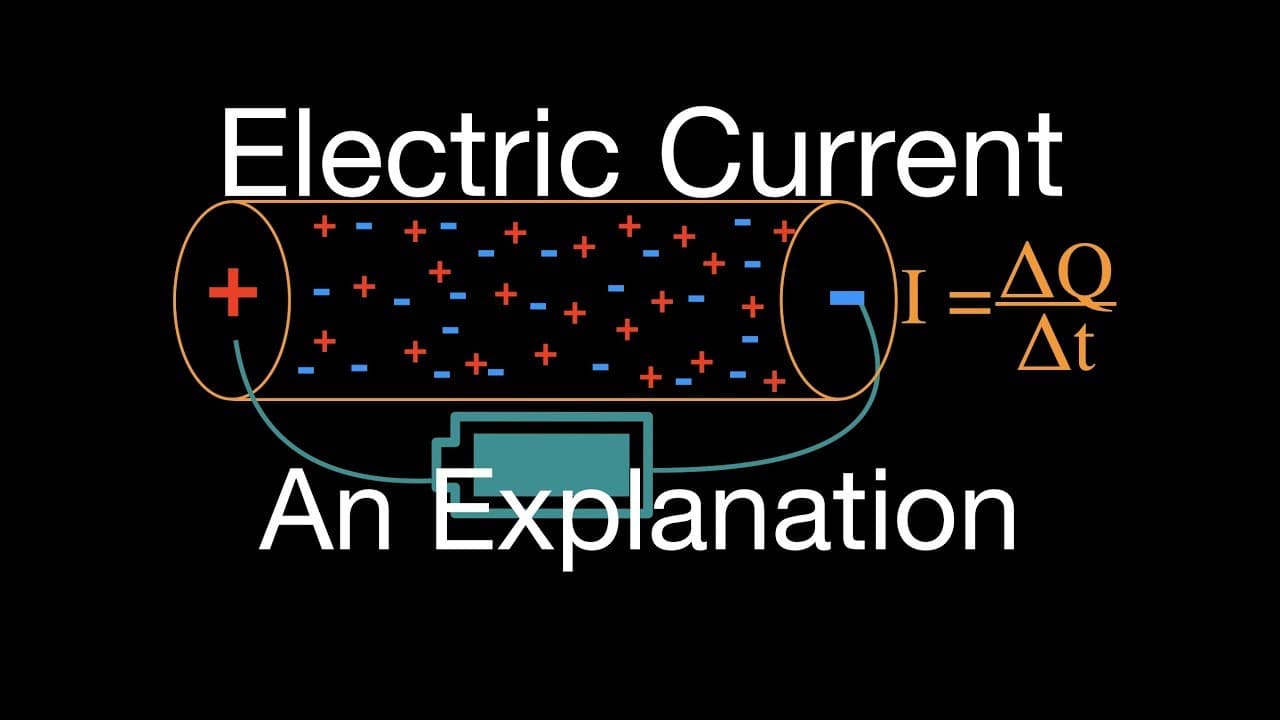
Electric current is the flow of charge through a circuit with examples and calculations explained.
Transcript
okay in today's video I'm gonna be going over an explanation introduction to what we mean by electric current what is electric current now before you do that don't forget subscribe to my channel get all of my excellent physics chemistry and math videos you can click on that little red icon in the bottom right hand corner of your screen there subscr... Read More
Key Insights
- 😚 Electric current is the flow of charge through a closed circuit, with a voltage source providing the necessary potential difference.
- ⚡ Current is measured in amperes and follows Ohm's Law with V = IR for calculating voltage, current, and resistance.
- 🔋 Electrons are the charge carriers in a wire, moving in response to the potential difference created by a battery.
- 💐 Conventional current flows from the positive to negative terminal, opposite to the actual flow of electrons in a wire.
- 😥 Calculating current involves finding the amount of charge passing a point per unit of time, quantitatively defined as amperes.
- 🔌 Understanding electric current involves grasping the movement of electrons in a circuit due to a potential difference.
- 🧭 Current calculations involve determining the charge passing through a circuit and the number of electrons involved.
Install to Summarize YouTube Videos and Get Transcripts
Explore YouTube Video Summarizer or Get YouTube Transcript Extractor
Questions & Answers
Q: What is electric current and how is it defined?
Electric current is the flow of charge through a circuit. It is measured in amperes and symbolized by I in equations like V = IR.
Q: How do electrons move in a wire to create current?
Electrons move through a wire due to a potential difference provided by a voltage source, where they are repelled by positive charges and attracted to negative ones.
Q: What is the difference between the flow of electrons and conventional current?
While electrons actually move through a wire, conventional current assumes positive charges flow from the positive to the negative terminal.
Q: How is current quantitatively measured and calculated?
Current is measured in amperes and calculated as the amount of charge passing a point per unit of time, with examples showing how to find charge and electrons.
Summary & Key Takeaways
-
Electric current is the flow of charge through a circuit, with a closed circuit allowing current flow and lighting up a bulb.
-
Current is measured in amperes (amps), symbolized by I in equations like V = IR (Ohm's Law).
-
Electrons are the charge carriers in a wire, moving due to a potential difference provided by a voltage source like a battery.
Read in Other Languages (beta)
Share This Summary 📚
Summarize YouTube Videos and Get Video Transcripts with 1-Click
Try YouTube Summary with ChatGPT & Claude or YouTube Transcript Generator
Explore More Summaries from Step by Step Science 📚

Summarize YouTube Videos and Get Video Transcripts with 1-Click
Try YouTube Summary with ChatGPT & Claude or YouTube Transcript Generator