British & American English: Cars & Driving Vocabulary
TL;DR
Learn the differences in vocabulary and expressions between British and North American English when it comes to cars and driving.
Transcript
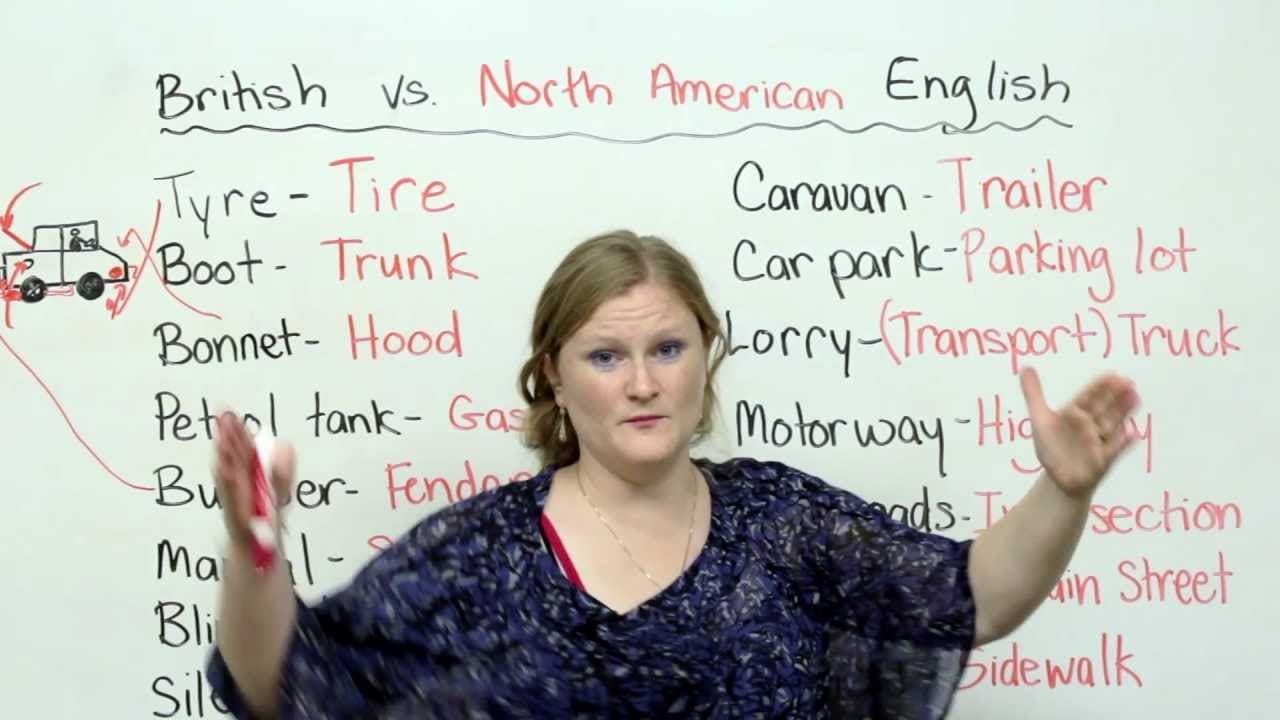
Hi there, my name's Ronnie, and today I'm going to teach you, by special request, a lesson about British versus North American English. The reason why it is indeed North American and not just American is because it includes Canada, the great country, and America. So British and North American English are different in vocabulary, expressions, accent... Read More
Key Insights
- 😨 British and North American English have notable vocabulary differences when it comes to car and driving terminology.
- 🌎 North America itself has differences within its regions, such as US vs. Canada.
- 😪 Some differences in vocabulary include tire (UK) vs. tire (NA), boot (UK) vs. trunk (NA), bonnet (UK) vs. hood (NA), petrol tank (UK) vs. gas tank (NA), bumper (UK) vs. fender (NA), manual (UK) vs. standard (NA), and blinker (UK) vs. winker (NA).
- 🍹 Caravans are referred to as trailers in North American English, while in British English, caravans are often used as vacation houses.
- 🅿️ Other differences include car park (UK) vs. parking lot (NA), lorry (UK) vs. truck (NA), motorway (UK) vs. highway (NA), crossroads (UK) vs. intersection (NA), high street (UK) vs. Main Street (NA), and pavement (UK) vs. sidewalk (NA).
- 😨 Understanding these vocabulary differences can help avoid confusion and foster effective communication between British and North American English speakers when discussing cars and driving.
- 😨 It's important to be aware of these differences to ensure safety and clarity in car-related conversations.
Install to Summarize YouTube Videos and Get Transcripts
Explore YouTube Video Summarizer or Get YouTube Transcript Extractor
Questions & Answers
Q: What are some differences in car and driving vocabulary between British and North American English?
Some differences include the words used for tire (tyre in UK), trunk (boot in UK), hood (bonnet in UK), gas tank (petrol tank in UK), fender (bumper in UK), standard (manual in UK), and winker (blinker in UK).
Q: How are caravans and trailers referred to in British and North American English?
In British English, these portable houses are called caravans, while in North American English, they are referred to as trailers. However, in North America, trailers are more commonly associated with trailer parks.
Q: What do British and North American English speakers call a parking area for cars?
In British English, it is called a car park, while in North American English, it is referred to as a parking lot.
Q: What is the difference between a lorry and a truck in British and North American English?
In British English, a lorry refers to a truck, but in North American English, a truck typically refers to a larger transport truck. A lorry in North America could be a delivery truck or a minivan used for business purposes.
Summary & Key Takeaways
-
British and North American English differ in vocabulary, expressions, accents, and even differences within North America (US vs. Canada).
-
Examples of vocabulary differences include tire (UK) vs. tire (NA), boot (UK) vs. trunk (NA), bonnet (UK) vs. hood (NA), and petrol tank (UK) vs. gas tank (NA).
-
Other differences include bumper (UK) vs. fender (NA), manual (UK) vs. standard (NA) for transmission, and blinker (UK) vs. winker (NA) for directional signal.
Read in Other Languages (beta)
Share This Summary 📚
Summarize YouTube Videos and Get Video Transcripts with 1-Click
Try YouTube Summary with ChatGPT & Claude or YouTube Transcript Generator
Explore More Summaries from English with Ronnie · EnglishLessons4U with engVid 📚






Summarize YouTube Videos and Get Video Transcripts with 1-Click
Try YouTube Summary with ChatGPT & Claude or YouTube Transcript Generator