Why we still need courtroom sketch artists
TL;DR
Courtroom sketches remain vital due to camera bans in trials.
Transcript
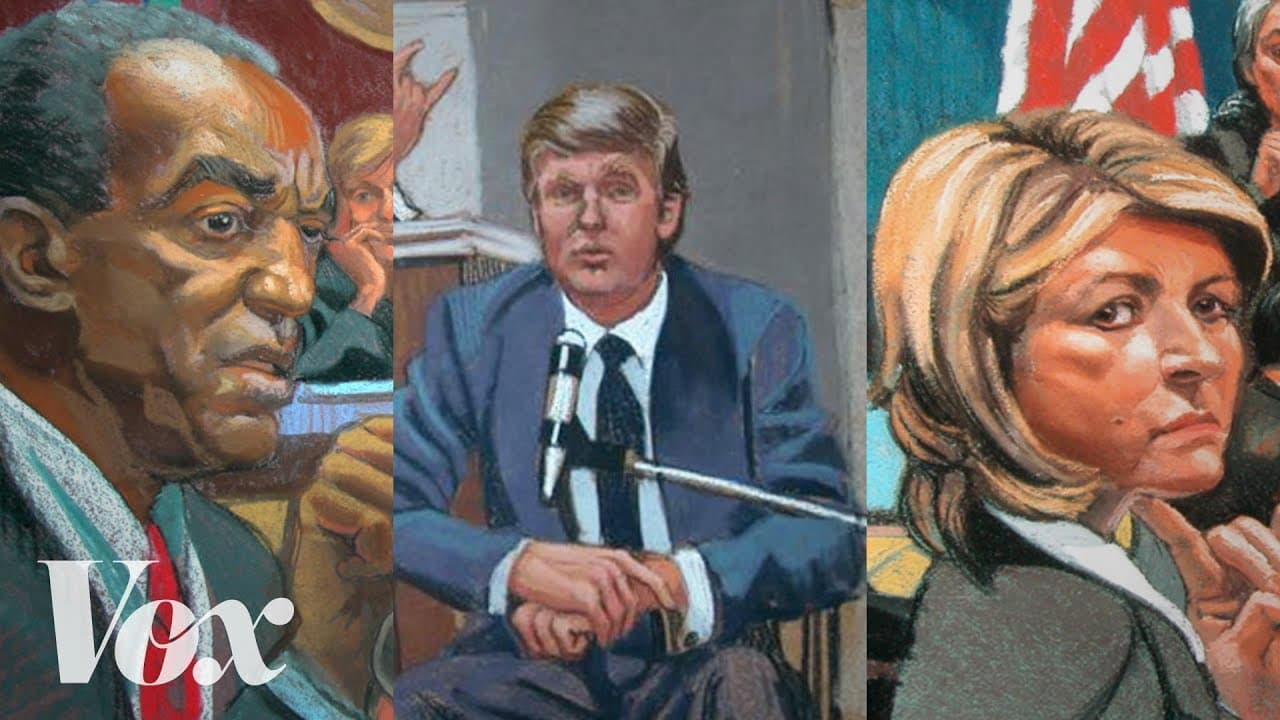
What do P Diddy, Donald Trump, and Martha Stewart all have in common? Christine Cornell. She's a courtroom artist who's captured all of them at their trials. I’ve been covering trials for the last 1,000 years, which is about 1975. I did Woody Allen and Mia Farrow. I’ve drawn Mick Jagger a couple of times. I’ve drawn Mike Tyson. I did just come off ... Read More
Key Insights
- Courtroom sketch artists like Christine Cornell capture trials where cameras are banned, preserving an old tradition in the legal system.
- Federal Rule of Criminal Procedure 53 prohibits broadcasting or photographing criminal proceedings in federal courts, maintaining the need for courtroom artists.
- The ban on cameras in courtrooms originated from the sensationalized coverage of the 1935 Bruno Hauptmann trial.
- Courtroom photography is debated; some argue it enhances transparency, while others fear it could sensationalize trials like the O.J. Simpson case.
- Sketch artists provide a human touch, offering a softer portrayal of defendants compared to the harshness of cameras.
- Courtroom artists can creatively depict scenes by adjusting spatial relationships to emphasize drama and emotion.
- Christine Cornell emphasizes the importance of compassion to capture the essence and humanity of those she sketches.
- The introduction of cameras in state courts has reduced the demand for courtroom artists, impacting their traditional role.
Install to Summarize YouTube Videos and Get Transcripts
Explore YouTube Video Summarizer or Get YouTube Transcript Extractor
Questions & Answers
Q: Why are courtroom sketch artists still needed in modern trials?
Courtroom sketch artists are still needed due to the prohibition of cameras in federal courtrooms, as mandated by Federal Rule of Criminal Procedure 53. This rule prevents the broadcasting or photographing of criminal proceedings, preserving the role of artists to document and humanize trial events.
Q: What historical event influenced the ban on cameras in courtrooms?
The ban on cameras in courtrooms is often linked to the sensational coverage of the 1935 trial of Bruno Hauptmann, accused of the Lindbergh baby murder. The media frenzy surrounding this trial prompted concerns over courtroom decorum and fairness, leading to the eventual adoption of camera bans.
Q: How do courtroom sketch artists provide a different perspective than cameras?
Courtroom sketch artists offer a more humanized and softer portrayal of trial participants compared to the harsh exposure of cameras. Artists can creatively adjust spatial relationships in their drawings to emphasize drama and emotion, providing a unique narrative perspective that cameras cannot capture.
Q: What qualities does Christine Cornell believe are essential for a courtroom sketch artist?
Christine Cornell believes that compassion is a key quality for courtroom sketch artists. This empathy allows artists to capture the soul and essence of the individuals they draw, producing true likenesses that convey the emotional depth and humanity of those involved in the trial.
Q: How has the role of courtroom sketch artists changed over the years?
The role of courtroom sketch artists has diminished due to the experimental introduction of cameras in state courts, which has reduced the demand for their work. While they once had prominent positions in courtrooms, the presence of cameras has shifted the landscape, impacting their traditional roles.
Q: What challenges do courtroom sketch artists face in their work?
Courtroom sketch artists face the challenge of capturing fast-paced, fleeting moments during trials. They must rely on their knowledge of anatomy and artistic skill to recreate scenes from memory, often producing multiple detailed sketches in a single day to document the proceedings accurately.
Q: Why is the debate over courtroom cameras significant?
The debate over courtroom cameras is significant because it touches on issues of transparency and fairness in the judicial process. Proponents argue that cameras could enhance public understanding and trust, while opponents fear that they could sensationalize trials and compromise the dignity of the proceedings.
Q: What impact did the introduction of cameras have on courtroom sketch artists?
The introduction of cameras in state courts on an experimental basis significantly impacted courtroom sketch artists by reducing the demand for their services. As cameras began to document trials, the traditional role of artists in capturing courtroom scenes diminished, affecting their livelihoods and presence in courtrooms.
Summary & Key Takeaways
-
Courtroom sketch artists remain essential due to camera bans in federal courts, preserving a tradition that offers a human touch. Christine Cornell, a veteran artist, discusses her experiences capturing high-profile trials and the importance of compassion in her work.
-
Federal Rule of Criminal Procedure 53 prohibits cameras in federal courtrooms, a rule stemming from concerns over sensationalism in high-profile cases. While some advocate for cameras to increase transparency, others warn of potential trial spectacle.
-
Christine Cornell's career as a courtroom sketch artist spans over 40 years, covering trials of figures like Bill Cosby and Donald Trump. Despite technological advances, her work remains relevant, capturing the emotional essence of courtroom proceedings.
Read in Other Languages (beta)
Share This Summary 📚
Summarize YouTube Videos and Get Video Transcripts with 1-Click
Try YouTube Summary with ChatGPT & Claude or YouTube Transcript Generator
Explore More Summaries from Vox 📚


Summarize YouTube Videos and Get Video Transcripts with 1-Click
Try YouTube Summary with ChatGPT & Claude or YouTube Transcript Generator