Why Did Decades of Fire Suppression Worsen Wildfires?
TL;DR
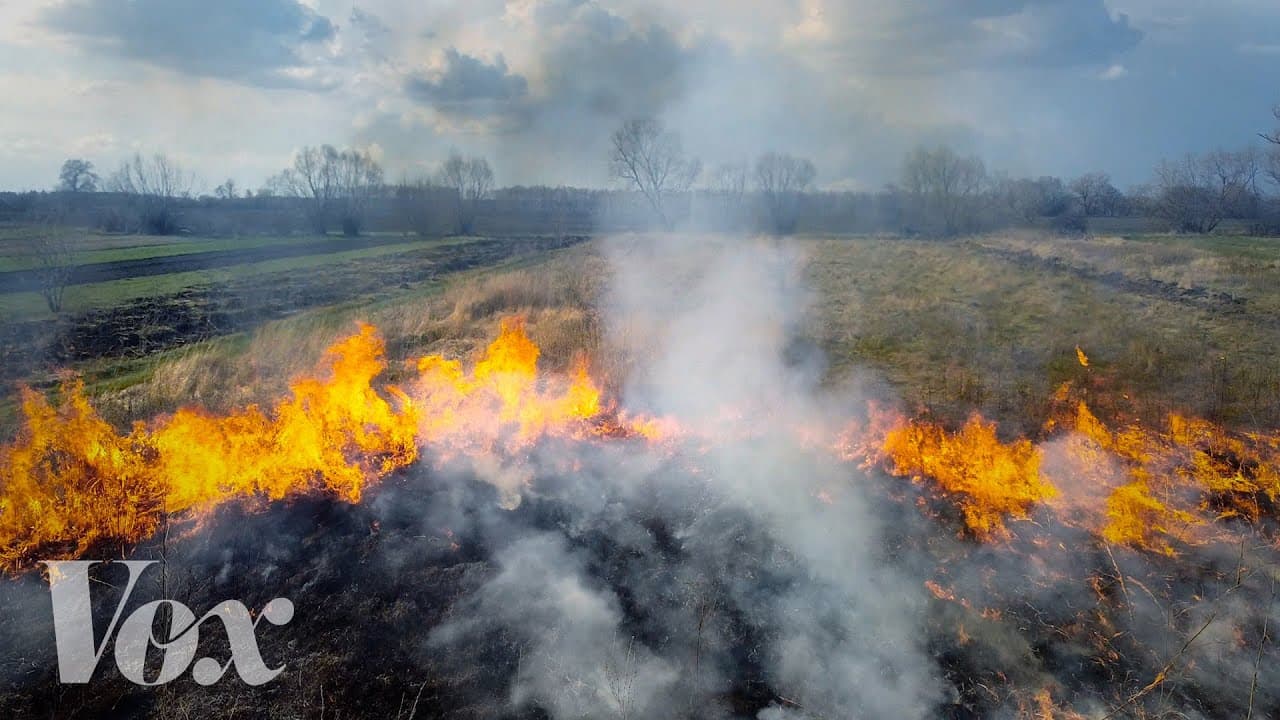
Decades of fire suppression have led to dense forests filled with dry, dead material, increasing the risk of severe wildfires. Controlled burns, a practice long used by Indigenous peoples, can help restore forest health by clearing excess fuel, promoting new growth, and maintaining natural fire cycles, which are essential in adapting to climate change.
Transcript
In the summer of 1910, the western United States ignited. A perfect blend of hot, dry weather, and hurricane force winds fed the blazes - eventually resulting in a terrifying firestorm. In just two days, 3 million acres burned, full towns were turned to ash, and nearly 90 people died. Its devastation was so dramatic that it shaped US forest policy ... Read More
Key Insights
- The 1910 wildfire disaster led to a century-long policy of fire suppression, which inadvertently increased the risk of severe wildfires due to fuel buildup.
- Fire suppression policies were effective initially but have resulted in dense forests that are now more susceptible to catastrophic fires.
- Controlled burns, a practice used by Indigenous peoples for centuries, can help manage forest health and reduce the risk of severe wildfires.
- Fire plays a crucial ecological role by clearing dead material, promoting new growth, and enhancing biodiversity in forest ecosystems.
- Decades of fire suppression have disrupted natural fire cycles, resulting in forests that are not adapted to current fire conditions exacerbated by climate change.
- Indigenous fire management practices are being revisited as a means to restore forest health and resilience against wildfires.
- Climate change is intensifying wildfire conditions, making it imperative to adopt fire management strategies that include controlled burns and community resilience.
- Public education on fire safety and the ecological benefits of fire is essential to shift perceptions and policy towards more sustainable forest management.
Install to Summarize YouTube Videos and Get Transcripts
Explore YouTube Video Summarizer or Get YouTube Transcript Extractor
Questions & Answers
Q: What was the impact of the 1910 wildfire on US forest policy?
The 1910 wildfire disaster, known as the 'Big Blow Up,' led to a policy of fire suppression in the US. This policy aimed to prevent wildfires by stopping them as quickly as possible, which was initially effective but eventually resulted in the buildup of dense, dry, and dead material in forests, increasing the risk of severe wildfires.
Q: How have controlled burns been historically used by Indigenous peoples?
Indigenous peoples have historically used controlled burns to manage forest health, promote biodiversity, and maintain ecosystems. These burns were conducted intentionally to clear dead material, promote new growth, and create ideal conditions for various plant and animal species. This practice was criminalized by colonists but is now being revisited as a sustainable forest management strategy.
Q: Why is fire considered an important ecological factor in forests?
Fire is considered an important ecological factor because it helps clear dead and dry material, promotes new growth, and enhances biodiversity. It acts as a 'reset button' for forests, creating a mosaic of vegetation ages and species diversity. Some species, such as sequoia trees, even rely on fire for reproduction, as it helps open their cones to release seeds.
Q: What challenges do modern fire management strategies face?
Modern fire management strategies face challenges such as the buildup of fuel from decades of suppression, changing climate conditions that exacerbate fire risks, and the need to balance public safety with ecological benefits. Implementing controlled burns requires careful planning, permits, and coordination with various agencies, and there is a need for public education on the role of fire in ecosystems.
Q: How does climate change affect wildfire conditions?
Climate change affects wildfire conditions by creating hotter, drier weather that extends wildfire seasons and increases the frequency and intensity of fires. These conditions make forests more susceptible to burning, especially when combined with the buildup of fuel from past fire suppression policies. This highlights the need for adaptive fire management strategies and resilient communities.
Q: What role did the Smokey the Bear campaign play in public perception of fires?
The Smokey the Bear campaign played a significant role in shaping public perception by promoting the idea that all fires are dangerous and should be prevented. While it successfully raised awareness about fire safety, it also contributed to the misunderstanding that all fire is harmful, overlooking its ecological benefits and the need for controlled burns to manage forest health.
Q: What legislative actions have been proposed to increase controlled burning?
In 2020 and 2021, lawmakers introduced bills to increase the use of controlled burning nationwide. These legislative actions aim to incorporate Indigenous fire management practices and prescribed burns into modern fire management strategies, addressing the buildup of fuel in forests and reducing the risk of severe wildfires. However, these measures alone are not sufficient, and comprehensive approaches are needed.
Q: How can communities build resilience against wildfires?
Communities can build resilience against wildfires by adopting fire-resistant materials in construction, implementing fire management strategies like controlled burns, and educating the public about fire safety and the ecological role of fire. Building resilient communities involves preparing for the inevitable presence of fire in the landscape and adapting to changing climate conditions that affect fire behavior.
Summary & Key Takeaways
-
The 1910 wildfire disaster in the US led to a policy of fire suppression that has inadvertently increased the risk of severe wildfires. The buildup of dead and dry material in forests, coupled with climate change, has created conditions for more frequent and intense fires.
-
Controlled burns, a practice used by Indigenous peoples, are being reconsidered as a solution to manage forest health. These burns help clear dead material, promote new growth, and reduce the risk of severe wildfires by maintaining natural fire cycles.
-
Decades of fire suppression have disrupted the natural role of fire in forest ecosystems, leading to denser forests that are more susceptible to catastrophic fires. Climate change exacerbates these conditions, highlighting the need for adaptive fire management strategies and public education on fire safety.
-
(Content reviewed on 2026-08-27.)
Read in Other Languages (beta)
Share This Summary 📚
Summarize YouTube Videos and Get Video Transcripts with 1-Click
Try YouTube Summary with ChatGPT & Claude or YouTube Transcript Generator
Explore More Summaries from Vox 📚


Summarize YouTube Videos and Get Video Transcripts with 1-Click
Try YouTube Summary with ChatGPT & Claude or YouTube Transcript Generator